
As the first female chair in the 150-year history of KPMG, Bina Mehta could be forgiven for resting on her laurels, thinking she had reached her Everest. But the 52-year-old is determined to continue her fight to breakdown ‘cultural biases’ and see more people like her climb their Everest.
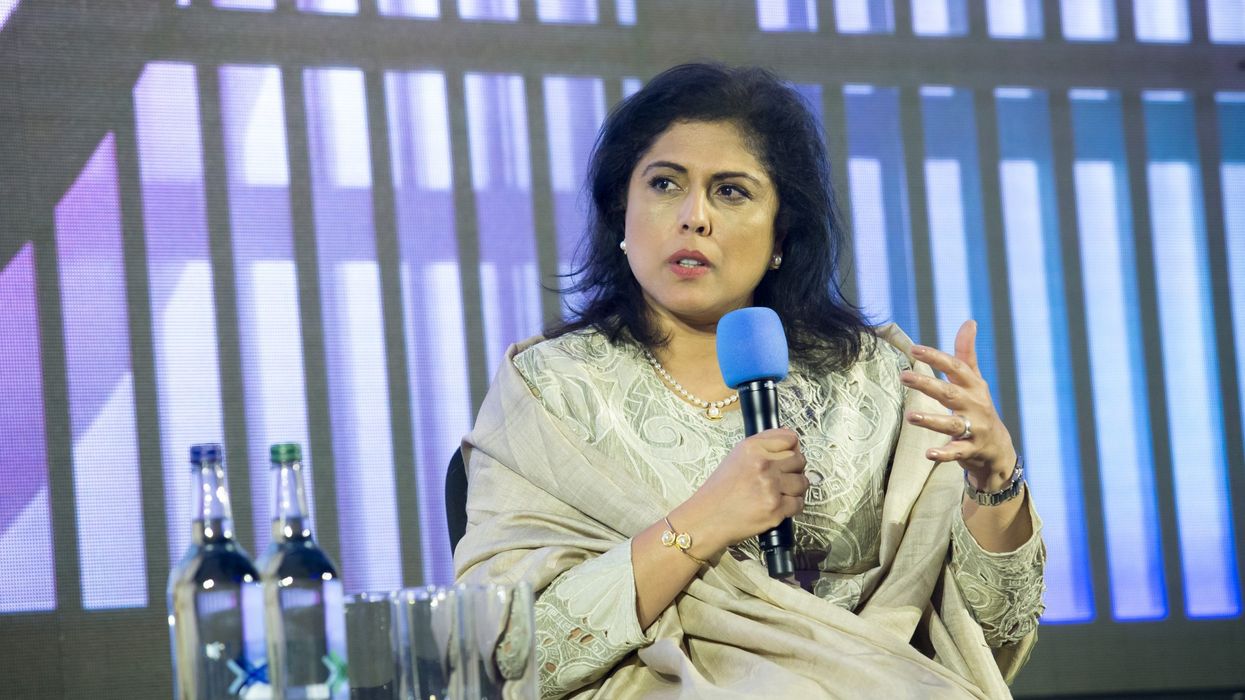
“I do feel in a really privileged position that when you're in these roles, you can really make a difference,” she said during a panel interview at the GG2 Leadership and Diversity Awards.
“I'm very proud to be leading our firm and I've got a very diverse board in terms of gender, ethnicity and social mobility - that for me is the role-modelling we want to achieve. But that is not reflected all through our organisation.”
Mehta said the organisation has introduced the strategy Our KPMG: A fairer future for all, which has set diversity and inclusion targets for 2030, that includes having a leadership team that consists of at least 40 per cent women, 20 per cent from ethnic minorities, and 29 per cent from lower socio-economic background.
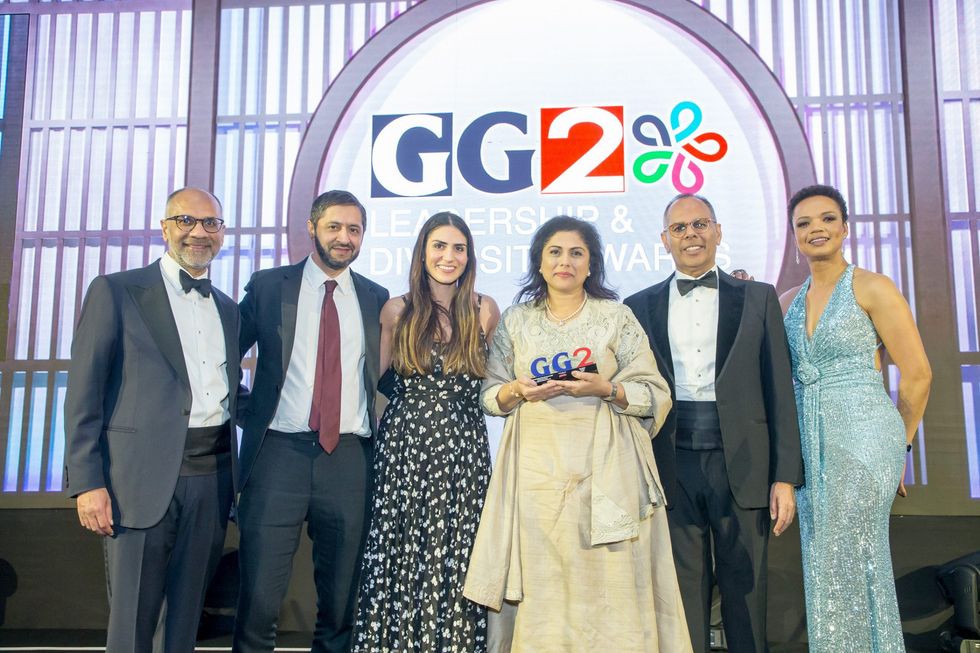 Bina Mehta claimed the coveted Hammer Award at the GG2 Leadership and Diversity Awards
“When I joined 30 years ago, the male-female ratio of our intake of graduates was 50/50, which is roughly the same now. But back then there were only two-three female partners. One in four of our partners are now female. We still have a long way to go, but that's progress,” she said.
Another member of the panellist, Air Vice-Marshal Maria Byford of the Royal Air Force, gave a first-hand account of how she has seen a ‘traditional male organisation’ make inroads into becoming more ‘gender-diverse’.
“We are really challenging ourselves and have the ambition of increasing the number of women in the Air Force to 30 per cent by 2040. It probably still isn't good enough when you look at a society which is 51 per cent female, but it certainly is better than where we are now were there are 15 per cent women in the organisation,” said AVM Byford.
Since joining in 1991, AVM Byford has seen progression in diversity and inclusion within the organisation, something which is reflected in her appointment as chief of staff personnel and air secretary.
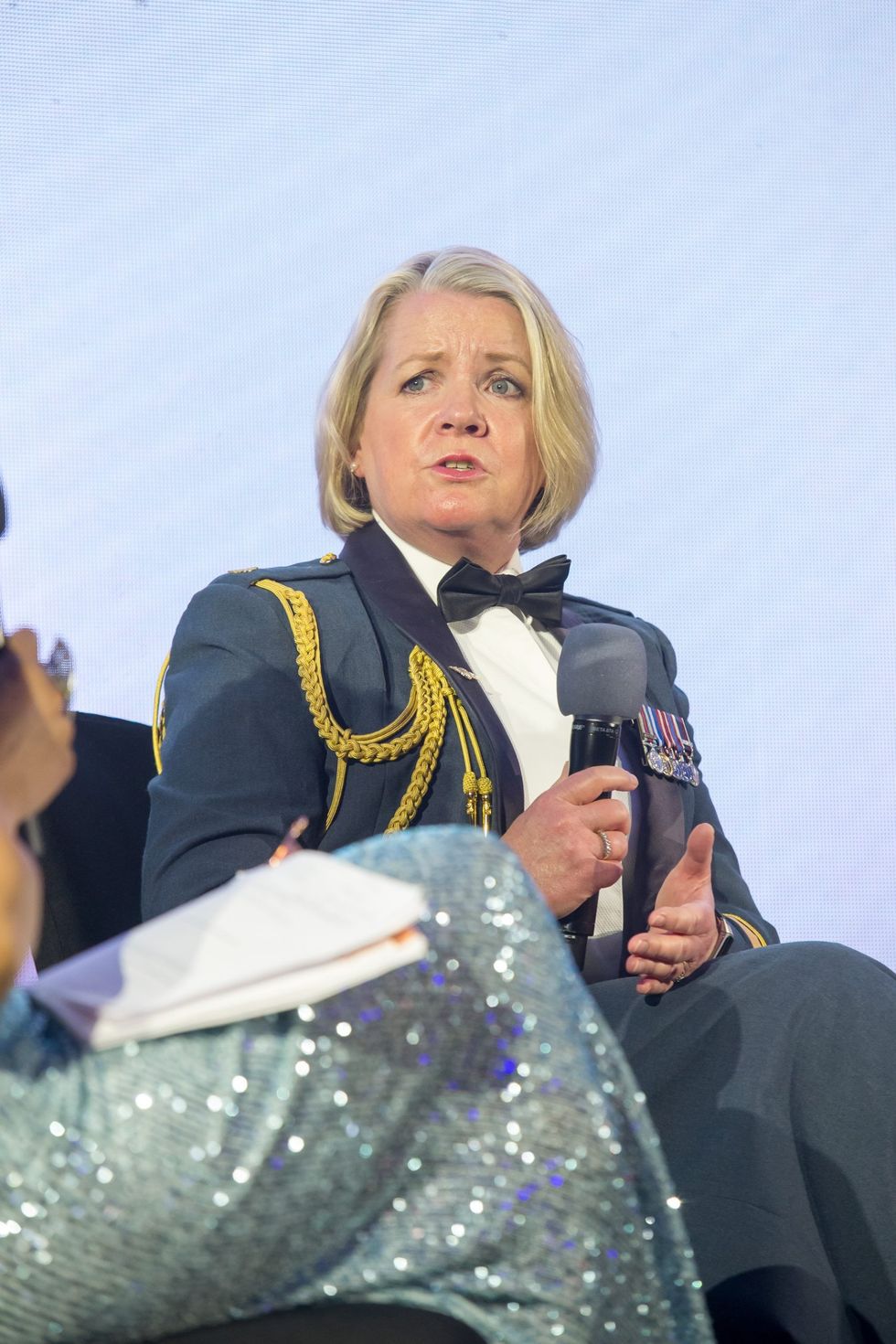 Air Vice-Marshal Maria Byford
“When I joined over three decades ago, if you wanted to have a family, you couldn't as it wasn't allowed in the policies. And now, you look and we are a fantastic, family-friendly employer that really encourages women to have a wider, enriched family life and come back to a really rewarding career. Ninety-eight per cent of all our women who leave to have a family come back and work with us full time.
“It's it's absolutely clear to be that unless we have an inclusive and nourishing culture within our organisation, we won’t attract, recruit and retain a diverse workforce and that's exactly what we need,” added AVM Byford, who is the RAF’s deputy diversity and inclusion champion.
The panel, which included Lord Karan Bilimoria, agreed that whilst progress is being, the continued need to challenge engrained cultural biases remains.
In 1993, Mehta travelled to India to set up KPMG in the country. She told the audience that the opportunity almost never came her way to due to cultural bias.
Her predecessor at KPMG, Bill Michael, had called unconscious bias ‘complete and utter crap’.
She said: “There are so many biases that are ingrained in society. I almost didn’t go to India because my manager at the time thought that as an unmarried Asian woman, my family wouldn’t allow me to go.
“I think we are a lot more aware of these biases now and as businesses we have a huge responsibility to lead change in society.
“We want to recruit talent from all backgrounds, right? We have to do specific, focused work with areas of cultural and social mobility. We have to create pathways to attract different people with different interests so we can have an inclusive, supportive and diverse culture.”
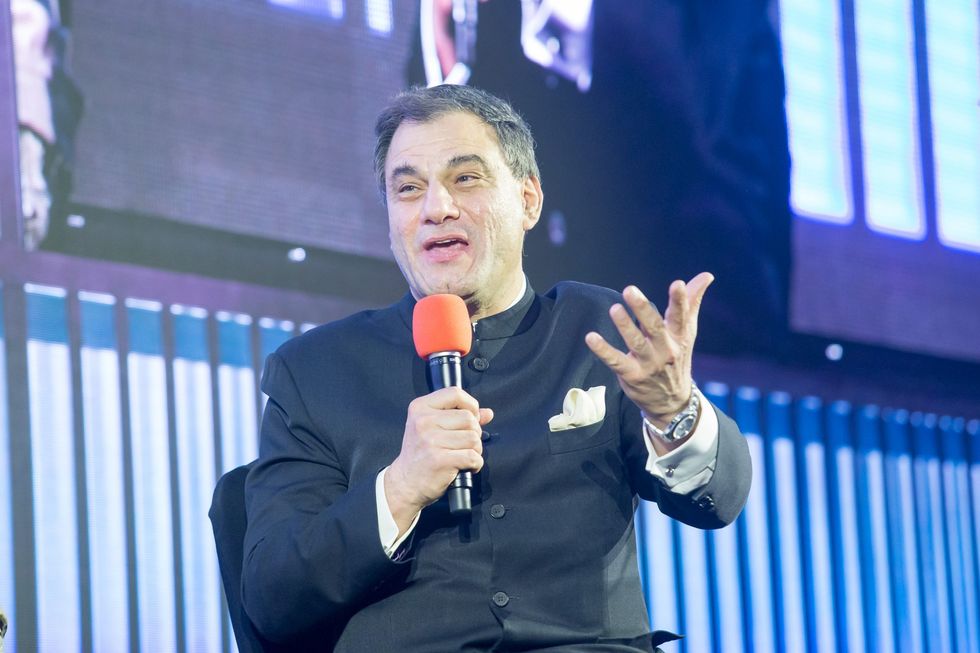 Lord Karan Bilimoria
Lord Bilimoria said that having Mehta at the top of KPMG, the first woman to lead one of the ‘big four’ accountancy firms which includes PwC, Deloitte and EY, would act as the catalyst to inspire others to follow in her footsteps.
“Diversity and inclusion really matters to young people. When they're applying for jobs, they will look to see who's at the top. Is there a Bina at the top of this company?
“What you are getting there is inspiration. This inspiration creates aspiration, that aspiration creates achievement, which then creates inspiration, so it’s then a virtuous circle. It's so important that we have these role models, and that's when you see this virtuous circle taking place,” said Lord Bilimoria, who is the chairman and founder of Cobra Beer Partnership and president of the Confederation of British Industry (CBI).
Lord Bilimoria pointed to a 2019 inclusion and diversity report by McKinsey that found that the most diverse companies are now more likely than ever to outperform non-diverse companies on profitability.
Having followed the trajectory of hundreds of companies, the report found that companies in the top quartile of gender diversity on executive teams were 25 per cent more likely to experience above-average profitability than peer companies in the fourth quartile.
Companies with more than 30 percent women on their executive teams are significantly more likely to outperform those with between 10 and 30 percent women.
In the case of ethnic and cultural diversity, the findings were equally compelling. Companies in the top quartile of outperformed those in the fourth by 36 per cent in terms of profitability in 2019.
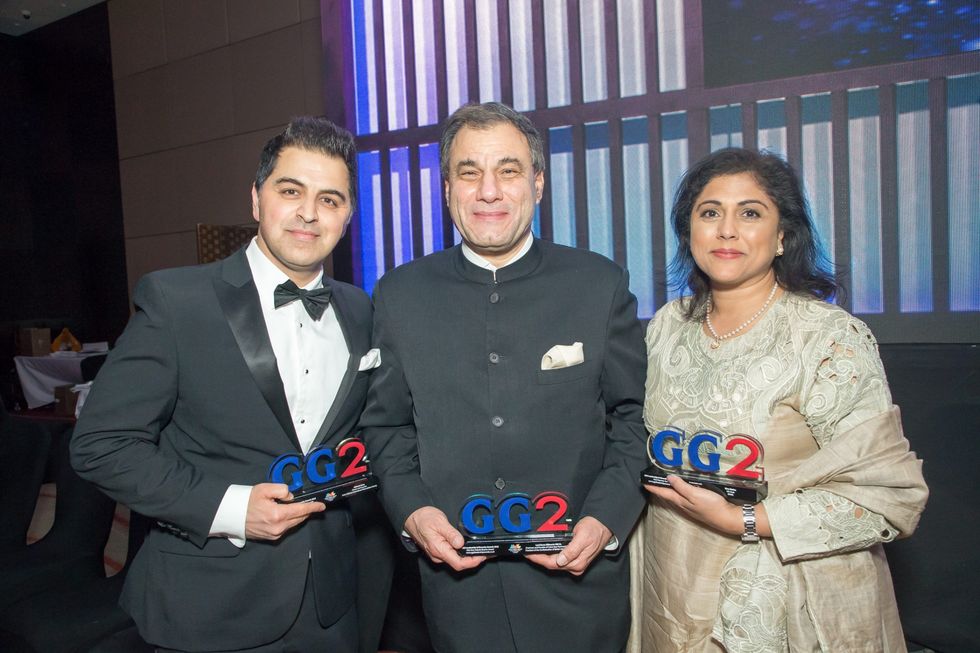 Winners: Dr Waheed Arian, Lord Karan Bilimoria and Bina Mehta
According, to Lord Bilimoria, these stats should be taken on board by FTSE companies to increase diversity in their boardrooms.
“I'm the first ethnic minority president of the CBI. Dame Carolyn Fairbairn, who I started with, was the first woman to be director general of the organisation. So it's taken a long time.
“That's one of the things I said to myself, ‘well if I'm the first in this position, what can I do to champion ethnic minority participation across all professions’.
“I have launched an initiative called Change the Race Ratio. And one of our targets is to have every FTSE company to have at least one ethnic minority board member. I think out of the FTSE 100 companies, 20 of them don’t have an ethnic minority board member and just 50 of FTSE 250 companies have one.
“We also want greater transparency. The gender pay gap reporting is now compulsory. The ethnic minority pay gap reporting is still not compulsory - it needs to be compulsory. Because what gets measured gets done. We need that transparency.”