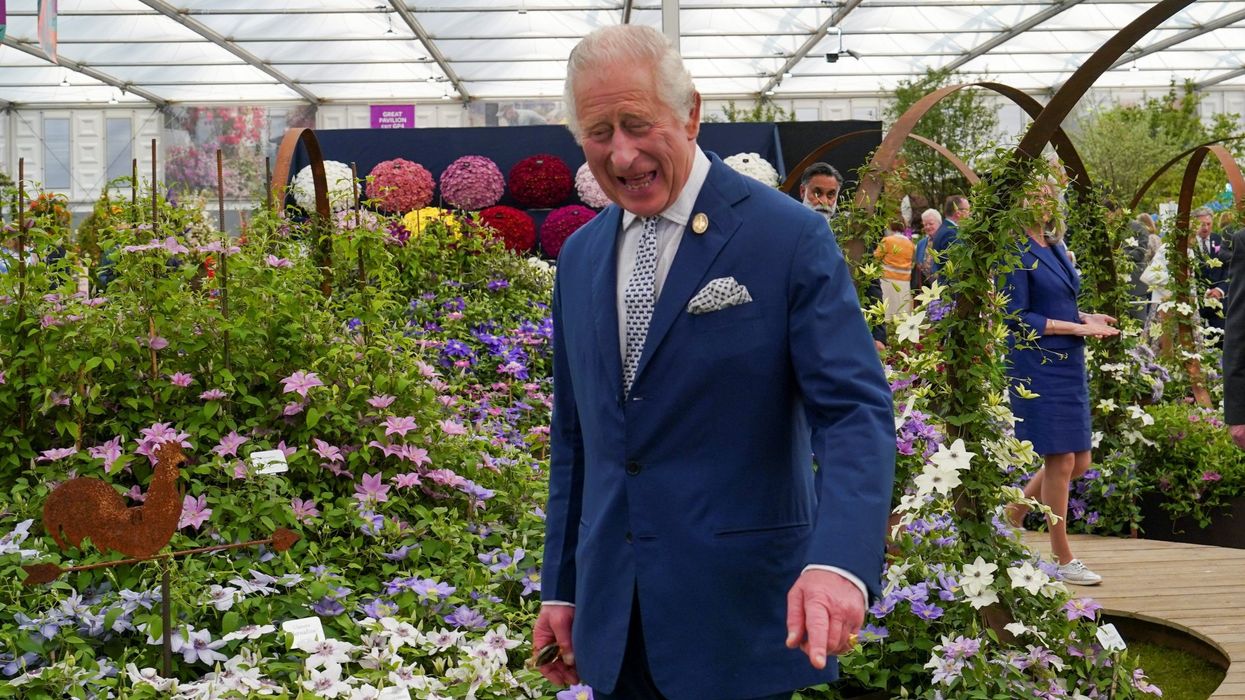

The King and Queen, accompanied by members of the Royal Family, attended the RHS Chelsea Flower Show, held at the Royal Hospital Chelsea on Tuesday (23).
Their majesties were greeted by Keith Weed, president of the Royal Horticultural Society, the official site of the British Royal Family said.
They embarked on a tour of the gardens, marveling at a variety of captivating displays. Some of the notable highlights according to the site included:
London Square Community Garden, designed by James Smith: This garden aims to foster a sense of community, providing a space for people to connect with one another, relax, share food and embrace nature. A welcoming meeting area nestled under a pergola featured an outdoor kitchen and a large communal table adorned with chess and draughts boards. Each chair was individually styled, utilising upcycled materials.
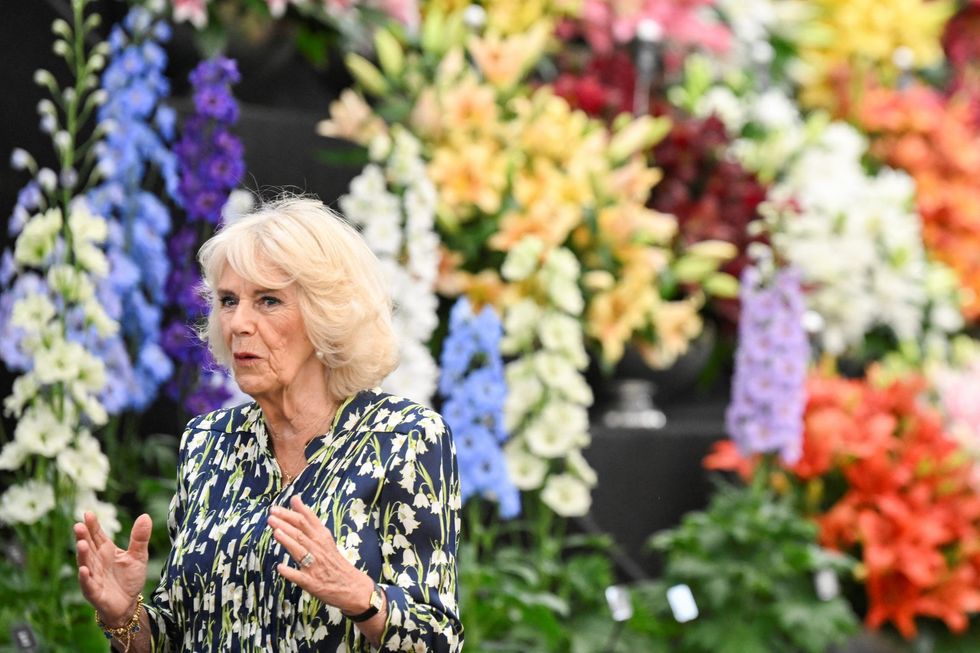 Britain's Queen Camilla views floral displays at Chelsea Flower Show in London, Britain, May 22, 2023. (REUTERS/Toby Melville/Pool)
Samaritans’ Listening Garden, designed by Darren Hawkes: Inspired by courageous individuals who reached out to Samaritans during their darkest moments, this garden seems to have captivated visitors. Suspended concrete panels hover above a layer of spiny plants and dark hues at the garden's entrance.
As visitors journey through the garden, a tranquil and open space emerge, boasting a collection of Ulmus minor trees and a sunken level with a sculptural bench. This area provides an intimate setting for two people to engage in heartfelt conversations, listening and being heard. The garden is especially meaningful as it celebrated Samaritans' 70 years of invaluable support.
The Garden of Royal Reflection and Celebration, designed by Dave Green: Their Majesties were honoured in The Garden of Royal Reflection and Celebration. This garden commemorates the coronation of the King and Queen, serving as a joyous tribute to Her Majesty Queen Elizabeth II.
RHS and Eastern Eye Garden of Unity, designed by Manoj Malde: The RHS and Eastern Eye have collaborated to create the Garden of Unity at the 2023 RHS Chelsea Flower Show. With award-winning garden designer Manoj Malde, the RHS' Ambassador for Diversity and Inclusivity, leading the design, this vibrant community garden celebrates the harmonious unity of cultures, traditions, and backgrounds.
The garden aims to highlight the uplifting and inclusive nature of community gardening while showcasing elements of Asian culture. Inspired by his Indian heritage, Manoj has incorporated a colour palette of orange and pink, reminiscent of the vibrant sari colors worn by Indian women.
The garden features marigolds used in Hindu worship, spices, and Asian fruits and vegetables, symbolising the significance of food in Asian households. By integrating his expertise in fashion, Manoj has also paid homage to Indian artisan's skills through hand-embroidered scatter cushions and a kuba cloth, reflecting his African roots.
Shailesh Solanki, Executive Editor of Eastern Eye, told the RHS, “We are thrilled to be collaborating with the RHS and having an Eastern Eye “Garden of Unity” at the RHS Chelsea Flower Show this year. Many Eastern Eye readers already are keen gardeners and we would like many more to take up gardening and also consider becoming RHS members.
“Gardening is part of the British Asian DNA and many Asians recognise the therapeutic values of landscaped gardens and growing vegetables and flowers.
“Over the last few years, Eastern Eye has been writing about the Chelsea and Hampton Court Palace Flowers shows and generally about the joys of gardening. Many Asians are property owners and gardening is becoming increasingly popular, growing everything from dhaniya (coriander) to beans, lettuce and potatoes to squashes, chillies and karela (bitter gourd).
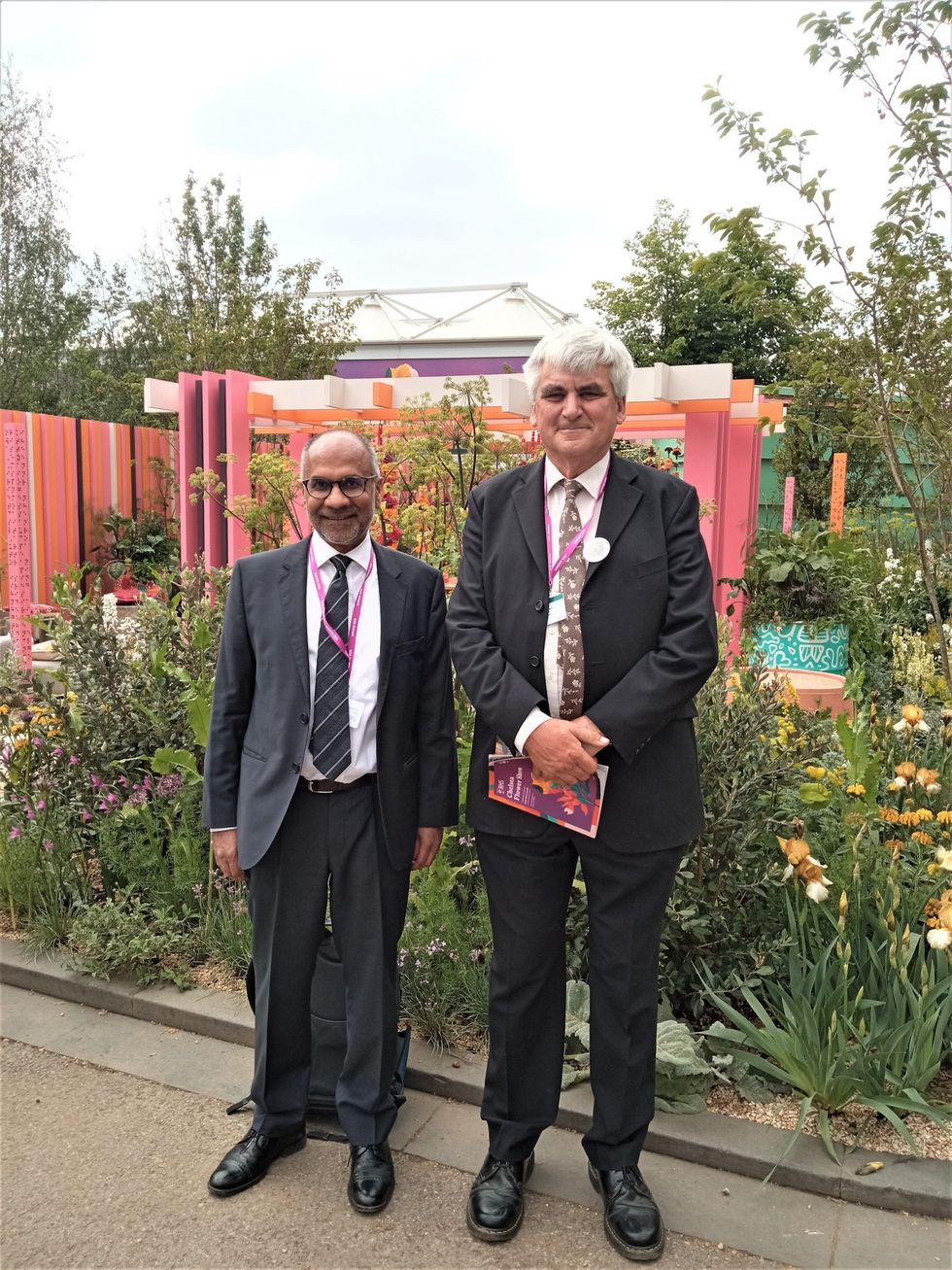 Shailesh Solanki and Guy Barter, Chief Horticulturalist at the RHS
“It became quite apparent during the pandemic that even a short time spent gardening is good for mental health. With the help of the RHS, Eastern Eye wants to encourage its readers to belong to the wider community of gardeners.”
Throughout the five-day horticultural extravaganza, visitors will have the opportunity to admire a selection of meticulously crafted gardens, each reflecting unique themes and trends.
The 12 main gardens in competition, out of a total of 36, boast an average of 3,000 different plant varieties. From gardens focused on edible plants with a culinary twist to those centered around Korean herbal medicine, wellness, and listening, there is something to captivate every visitor.
It's worth noting that all the gardens will be recycled after the show, generously donated to institutions such as hospitals or communities.
Since its establishment in 1913, the RHS Chelsea Flower Show has evolved into a globally renowned platform for showcasing horticultural excellence. Set on the picturesque grounds of the Royal Hospital Chelsea in London, the show has experienced remarkable growth, expanding from 244 exhibitors in 1913 to over 500 today.
With gardens, nurseries, floristry, educational displays, and trade stands, the show attracts approximately 168,000 visitors annually. The Royal Horticultural Society (RHS), founded in 1804, is the UK's largest gardening charity. For 70 years, Queen Elizabeth II served as their Patron and regularly attended the show.
(With inputs from RHS & AFP)






 Curator Emma Slocombe with ikat robes and arabachi coats in the Peter the Great Room in Blickling Hall Amit Roy
 View of the entrance to Blickling Hall on a rainy autumn dayAmit Roy
 Kente cloth from Ghana in the Long Gallery in Blickling Hall
 Decoration in the Great Hall at Blickling Hall Amit Roy
 Palampore fragment made in coastal south-east India in the Brown Room in Blickling Hall Amit Roy
 Bed valance dating from early 1700s in the Italian Print Room at Blickling Hall Amit Roy
 Indian inspired fabric draped on sofas in the South Drawing Room in Blickling Hall Amit Roy
 Indian inspired fabric draped on sofas in the South Drawing Room with Indian carpet in Blickling Hall Amit Roy
 Karun Thakar has picked out the geometric patterns in the bookcase and the Kente cloth in the Long Gallery in Blickling Hall Amit Roy
 Large tapestry depicting Peter the Great defeating the Swedish army at the Battle of Poltava in 1709 Amit Roy
 ikat robes and arabachi coats in the Peter the Great Room in Blickling Hall Amit Roy
 Baghs and kanthas made by women provide contrast to the men only portraits in the Great Hall at Blickling Hall Amit Roy
 Baghs and kanthas in the entrance Great Hall at Blickling Hall Amit Roy
 Baghs and Kanthas in the Great Hall in harmony with stained glass window at Blickling Hall Amit Roy
 Kimonos reflect Japanese influence in Upper Ante Room in Blickling Hall Amit Roy
 Kimono in Upper Ante Room in Blickling Hall
 A view of the Palace and fort at Agra shows romantic side of India Amit Roy
 Blickling Hall Amit Roy
 Table carpet, European 1670-1680 Amit Roy
 Unfinished 17th century Italian embroidery in the Print Room at Blickling Hall Amit Roy
 Picture of Kashmir shows a romantic view of India Amit Roy
 A panel of Ashburnham bed hangings made in Gujarat for sale in Europe in the Brown Room in Blickling Hall Amit Roy
 Colcha made in the 1600s by women in Bengal for the Portuguese market in the Long Gallery at Blickling Hall Amit Roy




