
- India is now ranked sixth globally, slipping behind the UK again.
- GDP revisions and a weaker rupee have reduced its dollar size.
- The setback may be temporary, with recovery projected by 2027.
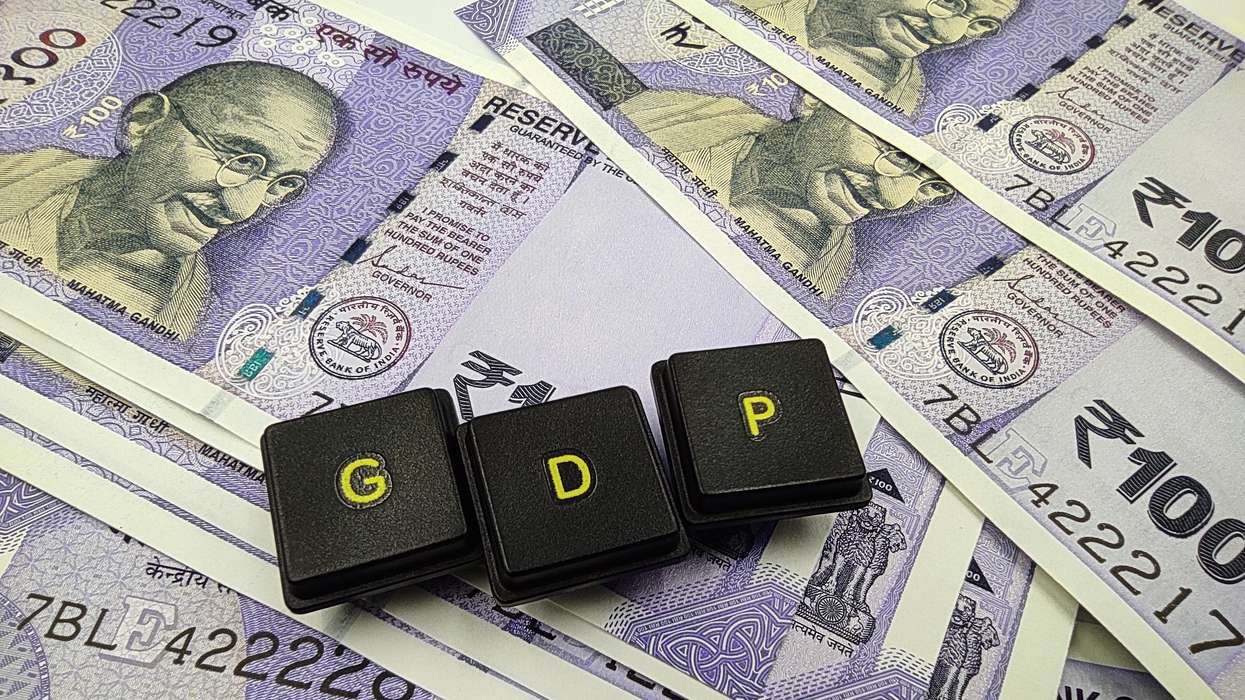
A shift in the numbers has changed a headline India had been celebrating. According to the latest estimates from the International Monetary Fund, India has slipped behind the United Kingdom in the global GDP rankings, moving down to sixth place.
The change is not about a sudden slowdown in growth. It is largely about how the economy is measured and how the rupee has performed. India’s GDP at current prices is now estimated at about £3.1 trillion ($3.92 trillion) for 2025 and £3.3 trillion ($4.15 trillion) for 2026. The UK, by comparison, is projected at roughly £3.2 trillion ($4 trillion) and £3.4 trillion ($4.26 trillion) over the same period, enough to push it ahead.
A fall driven more by maths than momentum
This reversal comes after a period when India was widely reported to have overtaken the UK and even projected to move ahead of Japan. Those earlier estimates have now been revised.
One reason is a long-pending update in India’s GDP calculation. The base year has been shifted from 2011-12 to 2022-23, which has effectively recalibrated the size of the economy. Official data suggests nominal GDP was revised down by between 2.8 per cent and 3.8 per cent across recent years. That may sound technical, but it has a direct impact. A smaller base translates into a smaller economy on paper.
The second factor is currency. The rupee has weakened by nearly 10 per cent over the past year. Since global rankings are calculated in dollar terms, that depreciation reduces India’s GDP when converted, even if domestic growth remains steady. The British pound, meanwhile, has been relatively stable against the dollar, giving the UK an edge without any dramatic shift in underlying growth.
The IMF’s April update reflects both these adjustments. Its projections for India have been marked down compared to its October outlook. For instance, the estimate for 2027 has been cut to around £3.6 trillion ($4.58 trillion), down from earlier expectations of nearly £3.9 trillion ($4.96 trillion).
A temporary slip or a delayed milestone
Despite the downgrade, the broader trajectory has not changed dramatically. Current projections suggest India could regain lost ground and move back to fourth place by 2027, overtaking both the UK and Japan.
The margins, however, are thin. The gap with the UK is projected at around £90 billion ($113 billion), and with Japan at just about £14 billion ($17 billion). That leaves little room for further currency shocks or revisions.
Japan remains ahead for now, with its economy estimated at about £3.5 trillion ($4.43 trillion) in 2025, easing slightly in the following year. India’s climb up the rankings is still expected, but it appears less certain and slightly delayed compared to earlier projections.
Looking further ahead, India is still on track to become the world’s third-largest economy by around 2031, overtaking Germany. But even that milestone has been pushed back by a year or two.
Big economy, different reality
There is also a broader point that often gets lost in these rankings. GDP size reflects the total weight of an economy, not how wealth is distributed or how people live.
On a per capita basis, India remains far behind countries like the UK or Japan. That gap is unlikely to close quickly, regardless of where the country sits in global rankings.
Becoming the fourth or third-largest economy will matter for geopolitical influence and investor perception. It signals scale and potential. But whether it translates into better living standards is a separate question, and a more complex one.
For now, the latest data is a reminder that rankings can shift quietly. Not always because economies grow or shrink dramatically, but because of how they are measured and how currencies move.