By Amit Roy
THE chancellor Rishi Sunak, who is also “master of the mint”, is said to have decided that the first-ever ethnic minority figure on a British coin is to be Mahatma Gandhi.
In a letter to former Conservative candidate Zehra Zaidi, who is leading the ‘We Too Built Britain’ campaign for non-white people to feature on currency, Sunak acknowledged on behalf of the government: “Black, Asian and other ethnic minority communities have made a profound contribution to the shared history of the United Kingdom.”
The chancellor’s decision may not meet with universal approval from the Black Lives Matter protestors who defiled Gandhi’s statue in Parliament Square in London in early June during demonstrations held after the death of George Floyd in America.
This attack on the statue had the effect of alienating many Indians in Britain and other countries from the Black Lives Matter movement. White paint was thrown on the statue and the word “racist” daubed on the steps leading up the bronze, which was unveiled in March 2015 at a high-profile ceremony attended by, among others, the-then prime minister David Cameron; Arun Jaitley, who was India’s finance minister at the time; the Mahatma’s grandson Gopalkrishna Gandhi; Bollywood star Amitabh Bachchan; and Lord Meghnad Desai.
Among the donors present was the Infosys founder NR Narayana Murthy, whose son-in-law Sunak was then not even an MP – he entered the Commons in the May 2015 general election.
On that sunny day in March, it was Sajid Javid, then the culture secretary, who acted as master of ceremonies. As chancellor, he instructed the Royal Mint in October 2011 to start working on a Gandhi coin.
Gandhi visited Britain on five occasions. It was understood the coin would mark the 90th anniversary of his final visit in 1931 to attend the Second Round Table Conference.
Javid said: “You might not know this, but when you become chancellor you also become master of the mint. And being in charge of the nation’s coins is not an opportunity I’m going to pass up!”
He revealed he had “asked the team at the Royal Mint to bring forward proposals for a new coin to commemorate Gandhiji”, who “taught us that power doesn’t just come from wealth or high office”.
The decision to have a Gandhi coin was “warmly welcomed” at the weekend by the former Labour MP for Leicester East, Keith Vaz, who told me: “Of all the ethnic minorities in world history, he is the person who should be honoured. It’s a lovely idea to honour a man whose principles have shaped humanity.”
In Leicester, there has been a petition calling for the removal of a Gandhi statue, started by one “Kerri P” from “Derby, ENG, United Kingdom” about whom nothing is known, not even the petitioner’s full name. Happily, this malevolent campaign been successfully resisted by Vaz, ]\who said: “We have heard nothing more from the petitioners. The matter is now closed.”
It is worth pointing that for all his faults – and no one was more critical of Gandhi than the man himself – the Mahatma inspired both Martin Luther King Jnr and Nelson Mandela.

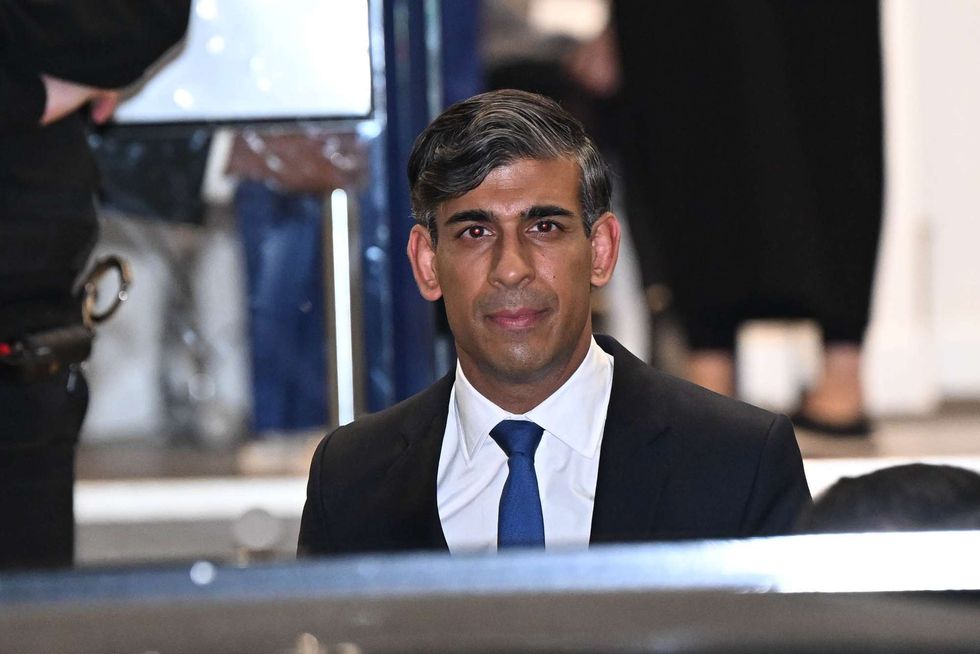 Rishi SunakLeon Neal/Getty Images