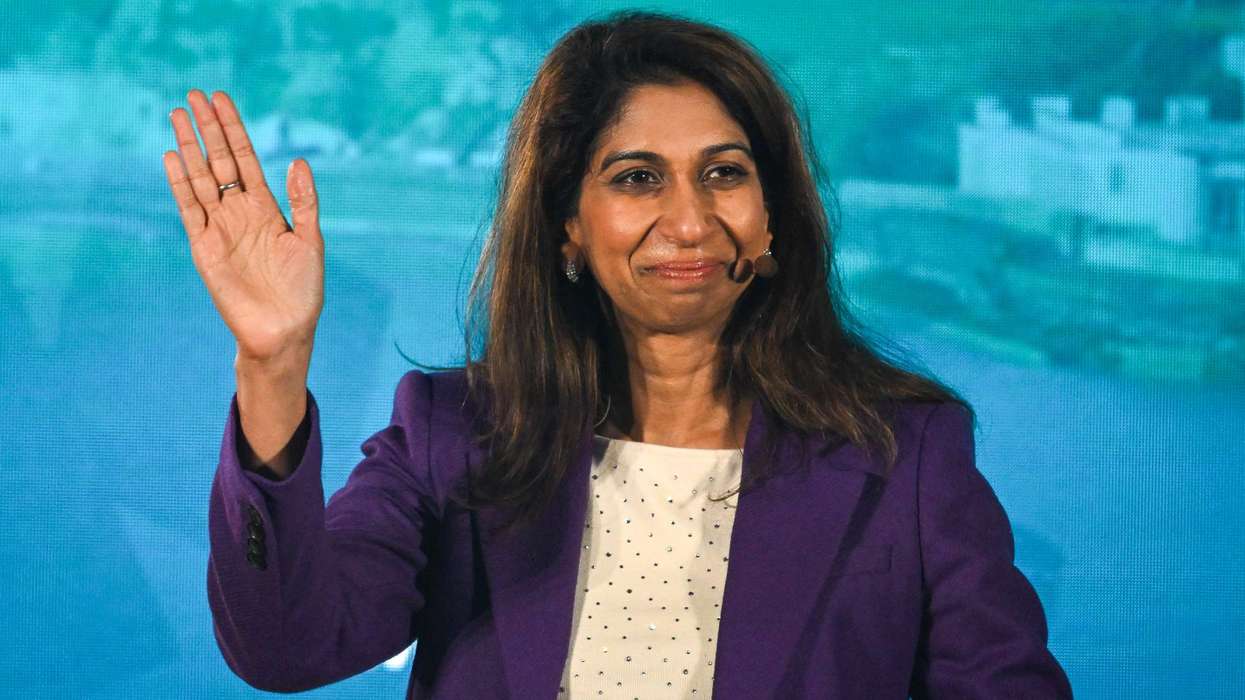

A PROMINENT voice on the right of British politics, Suella Braverman has built influence by combining legal authority with a willingness to challenge party orthodoxies – positioning herself at the centre of debates on immigration, sovereignty and the future of conservatism.
Her decision to join Reform UK in January this year marked one of the most striking political defections in recent years, ending a three-decade association with the Conservative Party and immediately reshaping the smaller party’s parliamentary standing. A former home secretary, her move brought both experience and visibility to Nigel Farage’s insurgent project, while underlining the fragmentation of the Conservative right following the party’s 2024 electoral defeat.
Framing her defection as a response to systemic failure, Braverman has argued that Britain faces multiple crises of governance. “Britain is broken … and we stand at a crossroads,” she said, later expanding that critique to include what she described as an immigration system “out of control”, historically high taxation, declining confidence in policing and broader cultural tensions in major cities. Reform UK, she maintained, offered “a credible vehicle for real change” at a time when, in her view, the traditional party system had lost direction.
Her critique of her former party has been equally direct. The Conservatives, she said, were “too weak to save themselves, let alone the country”, and had failed to deliver on key pledges, including on Brexit and immigration, leaving her feeling “politically homeless” in her final years within the party. At her first Reform rally, she told supporters: “I feel like I’ve come home.”
For Reform UK, founded in 2018 as the successor to the Brexit Party, Braverman’s arrival represents a step towards greater political credibility. As one of its most senior parliamentary figures, she is tasked with articulating policy in Westminster and broadening the party’s appeal among centre-right voters. Her presence signals an attempt to move beyond protest politics towards a more structured policy platform, particularly on issues such as border control, constitutional reform and the role of the European Convention on Human Rights – a long-standing concern she has argued limits the UK’s ability to enforce immigration policy.
Braverman’s influence, however, was established well before her break with the Conservatives. Born Sue-Ellen Cassiana Fernandes in April 1980 in Harrow, north-west London, to parents of Indian heritage, she grew up in a household shaped by migration and public service. Her mother, a nurse of Tamil Mauritian origin, later became a councillor in Brent, while her father, of Goan ancestry, had migrated to Britain from Kenya.
Educated at Heathfield School, where she was head girl, she read law at Queens’ College, Cambridge, and chaired the university’s Conservative Association. Postgraduate study in European and French law at Panthéon-Sorbonne University in Paris broadened her legal grounding, while her professional career saw her qualify as a barrister in England and Wales and as an attorney in New York. This legal background would later underpin her political positioning, lending authority to her arguments on constitutional and regulatory matters.
Elected as MP for Fareham in 2015, she quickly aligned herself with the Eurosceptic wing of the Conservative Party and became a prominent supporter of Brexit. She served as parliamentary under-secretary of state at the Department for Exiting the European Union, resigning in 2018 in opposition to Theresa May’s withdrawal agreement, which she described as “a betrayal”.
Her subsequent rise was rapid. Appointed attorney general in 2020 by Boris Johnson, she became the government’s chief legal adviser, a role in which she attracted both support and criticism, notably for backing the Internal Market Bill – setting post-Brexit customs and trade rules – that acknowledged breaching international law in a “specific and limited way”. In 2022 she became home secretary under Liz Truss, placing her at the centre of contentious debates on immigration, policing and public order.
Her tenure in that office was marked by a series of controversies that both defined and amplified her political profile. She resigned after sending official documents from a personal email account, only to be reappointed days later under a new prime minister, Rishi Sunak - a decision that drew scrutiny within Westminster. Later, she was dismissed following criticism of an article in which she accused the Metropolitan Police of bias in its handling of protests, prompting wider debate about political rhetoric and public order.
Throughout her time in office, Braverman’s language and policy positions – particularly on immigration and multiculturalism – attracted strong reactions. Supporters viewed her as a politician willing to address difficult issues directly; critics argued that her rhetoric risked deepening divisions. These tensions have followed her into her new political home, where her arrival has been welcomed by some as a sign of seriousness, and questioned by others wary of importing internal Conservative divisions into Reform’s ranks.
Her defection itself was not without controversy. A statement initially issued by the Conservative Party referencing her “mental health” was swiftly withdrawn after criticism from across the political spectrum, with figures from multiple parties condemning the language as inappropriate. Braverman dismissed the episode as reflective of “a bitter and desperate party”, adding: “It says more about them than it does me.”
Amid the realignment, what remains consistent is her ability to command attention and shape debate. Whether through her legal interventions, ministerial roles or high-profile defection, Braverman has demonstrated a capacity to influence the direction of political discourse on the right. Her move to Reform UK represents both a personal recalibration and a broader test of whether a figure associated with government can help transform an insurgent party into a credible electoral force.
ENDS