Skip to content
Search

Latest Stories

Submit Guest Post

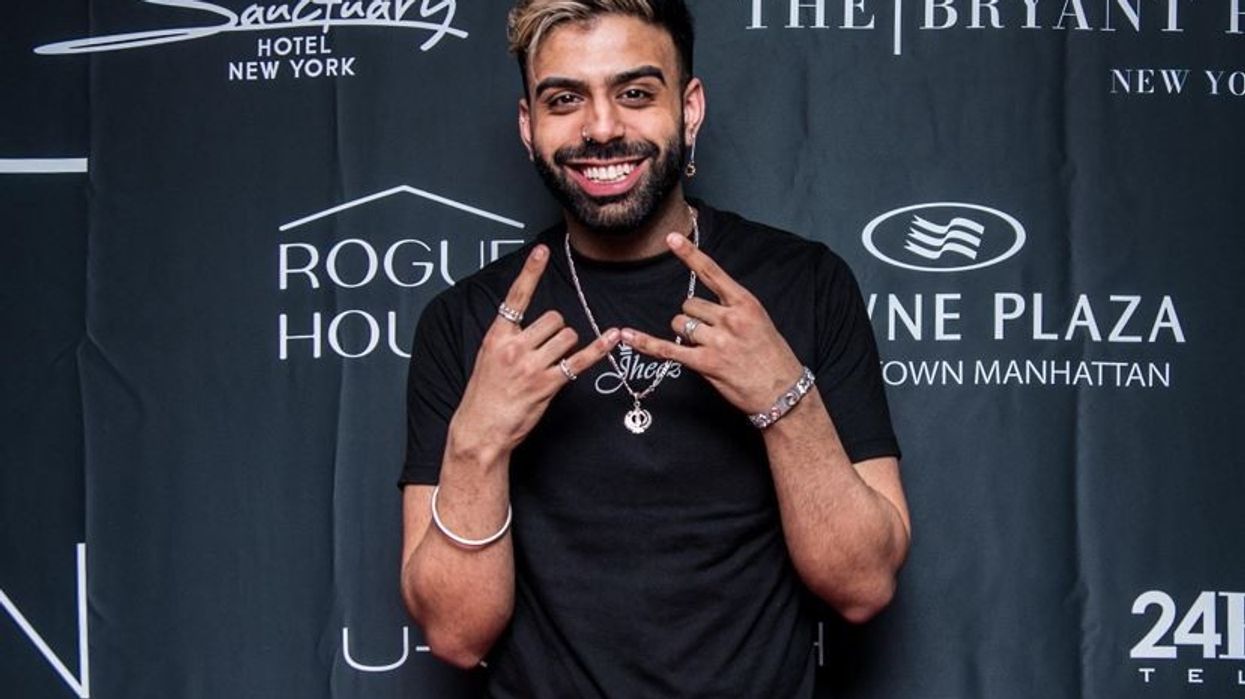
Jashaan Gill: From working-class background to world’s fashion capitals

Birmingham-based Gill's journey into the world of fashion commenced with a dream that his teachers dismissed and mocked

Jashaan Gill: From working-class background to world’s fashion capitals

BRITISH ASIAN designer Jashaan Gill has urged youngsters to start pursuing their dreams, assuring them that they will ‘find their way’ in the process.

Birmingham-based Gill’s journey into the world of fashion commenced with a dream that his teachers dismissed and mocked. Now, aged 26, this resilient designer from Oldbury stood triumphantly on the global fashion stage at LA Fashion Week earlier this month, a testament to unwavering determination, reported MailOnline.


His saga began over a decade ago when, as a schoolboy, he faced skepticism and laughter for harbouring dreams of a career in fashion. Undaunted by the initial lack of support, he founded his brainchild, Jheez, at the tender age of 17.

Despite being laughed out of boardrooms and encountering dismissiveness due to his youth, he has emerged as a one-man powerhouse, recently showcasing his designs at the prestigious LA Fashion Week and collaborating with none other than American rapper The Game.

He was the first British Asian man of Punjab heritage to headline a show in NYC fashion week in 2022.

Despite the challenges he faced, Gill remains unwavering in his advice to aspiring individuals. “Just start. You will find your way. Focus on the people who are supporting you from the very start,” he urges, emphasising the importance of perseverance and a strong support system.

He, however, acknowledged the importance of having an alternative plan, regardless of the nature of a person’s aspirations.

From converting his bedroom into a makeshift stockroom for his burgeoning clothing line to gracing the glossy pages of major fashion magazines like GQ, Gill’s meteoric rise has been nothing short of extraordinary.

Reflecting on his journey, he told MailOnline, “It’s absolutely unbelievable, coming from a working-class background to ending up in one of the fashion capitals of the world.”

His recent showcase at LA Fashion Week solidified his status as an independent designer to watch. With an eye on the future, Gill, armed with a law degree and a tenacious work ethic cultivated in a working-class background, envisions his brand, Jheez, ascending to the heights of popularity akin to fashion giants like Louis Vuitton.

He acknowledges the surreal nature of his journey, expressing aspirations to feature in Paris or Milan Fashion Weeks—the epitome of the fashion world.

“New York Fashion Week was surreal to be on that platform, it sold out with 2,000 people attending. Joe Budden also attended, to have that was a heartwarming experience,” he said.

“I was highlighted as an independent designer to watch out for. I was then invited to Japan, Paris or LA so I took LA as it is the home of streetwear fashion.

“It was out of eight brands I was chosen so I am starting to believe in myself more. I want to represent Birmingham, the UK and Europe as I don’t know if other European brands were chosen.”


Add EasternEye As Your Trusted Source
preferred source on google news

More For You

Tackling hostility against Muslims matters for everyone

Anti immigration protesters attend the 'Glasgow Reclaims The Streets From Far-right Hatred And Violence' anti-racism protest on June 13, 2026 in Glasgow, Scotland.

Getty Images

Tackling hostility against Muslims matters for everyone

Sunder Katwala

Born in the mid-1970s I felt part of a lucky generation, which gained from pushing back the overt racism of that era. When we talk about stronger “social norms”, what we mean is that few people thought that monkey chants at the football or racist jokes on the telly were normal anymore – while more had Asian and black colleagues, neighbours and friends.

That past progress is put to the test today. A terrible crime in Belfast saw organised efforts at indiscriminate racist attacks on migrants and ethnic minorities, whose only connection to the crime was the colour of their skin. Those seeking to make racism fashionable again have the online megaphone of the world’s richest man, Elon Musk, on their side.

Past progress could be experienced unevenly, too. Being of mixed Indian and Irish Catholic parentage, I saw both identities rise in status once the BBC comedy Goodness Gracious Me inverted who could tell the jokes, and peace broke out in Northern Ireland. Yet, British Muslims of my generation felt under more intense scrutiny after the 9/11 terrorist attacks.

Efforts to tackle anti-Muslim hatred risked being stalled by arguments over what to call it and how to define it. The government’s new definition of anti-Muslim hostility seeks to transcend the confusion that the term “Islamophobia” could generate. But the challenge is not just to define the prejudice – but to find effective ways to shrink it.

There are sobering findings on the starting points in new research from British Future and the British Muslim Trust. More than half of British Muslims report experiencing prejudice based on their religion last year – a quarter in person and over a third online. A third of the public hold mostly negative views. One in six endorse sweeping and often indiscriminate hostility. Anti-Muslim hostility can have about twice the social reach as prejudice against other faith or ethnic minorities.

Tackling this hostility cannot be the responsibility of Muslims alone. It will take a whole-of-society effort. After all, this is foundationally about the attitudes towards a six per cent minority group, held among the 94 per cent of us who are not Muslim.

Keep ReadingShow less