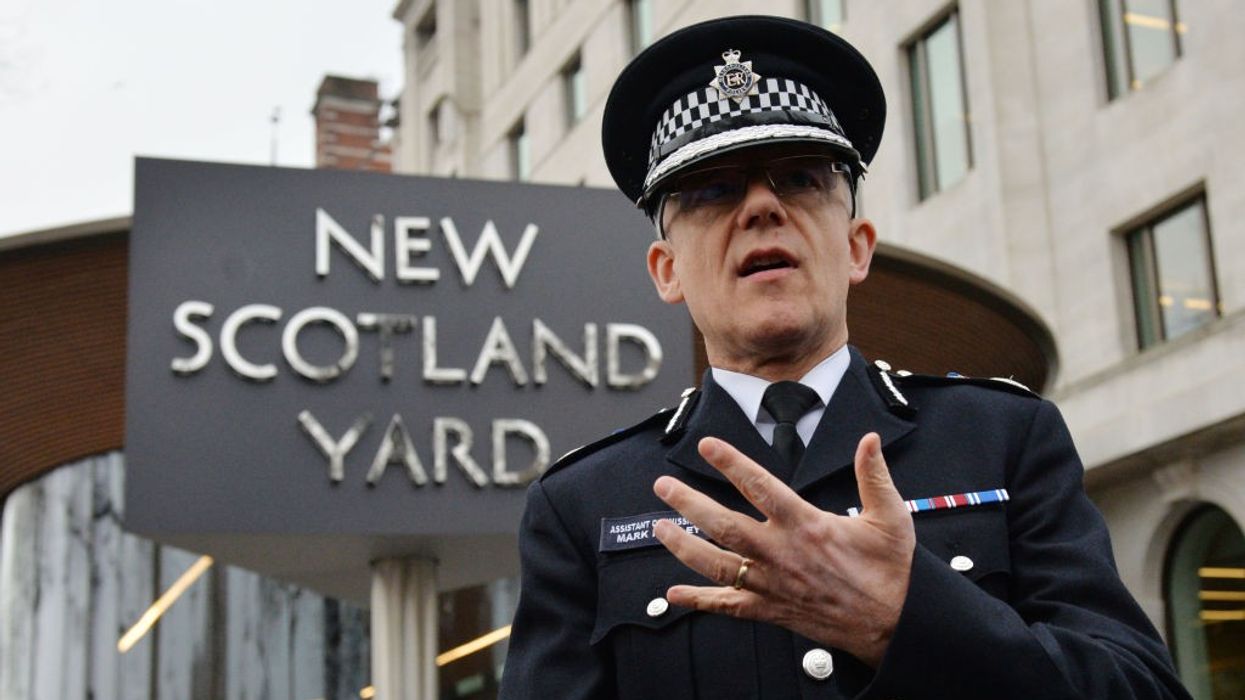

The Metropolitan Police on Tuesday (21) welcomed a report into its culture and standards and has called for it to be a catalyst for police reform.
Commissioner Sir Mark Rowley said: “This report sparks feelings of shame and anger but it also increases our resolve. I am proud of those people, our officers and staff, whose passion for policing and determination to reform moved them to share their experiences with such honesty.
“This is, in many ways, their report. It must be a catalyst for police reform. This report needs to lead to meaningful change. If it only leads to pillory and blame of the exceptional majority of officers then only criminals will benefit.
“We need it to galvanise Londoners, the dedicated police majority and politicians to coalesce around reform and the renewal of policing by consent for the 21st century.”
The review by Baroness Casey of Blackstock, published on Tuesday, explored a wide range of issues including the Met’s organisation, its support for officers and staff, discrimination, standards, its approach to protecting women and children and its wider operational effectiveness.
The Met said that the findings will be taken forward to inform and shape an ambitious plan to reform and rebuild trust while delivering for Londoners.
Sir Mark added: “The appalling examples in this report of discrimination, the letting down of communities and victims, and the strain faced by the frontline, are unacceptable.
“We have let people down and I repeat the apology I gave in my first weeks to Londoners and our own people in the Met. I am sorry. I want us to be anti-racist, anti-misogynist and anti-homophobic. In fact, I want us to be anti-discrimination of all kinds.
“There are external factors – funding, governance, growing demand and resource pressures that shouldn’t sit with policing – that the report has identified. Baroness Casey is right to identify the impact these have had on our ability to police London, but there can be no excuses for us.
“The core of the problems are for policing to determinedly confront.”
The Met’s draft Turnaround Plan published in January marked the start of a conversation and a programme of meaningful engagement with communities and partners with a revised and final version to be published in late Spring.
“Our Turnaround Plan is already building momentum across the Met. I am reassured that a number of issues highlighted by Baroness Casey – our service to victims, rebuilding neighbourhood policing and how we protect the most vulnerable for example – are priorities we too had identified," Sir Mark added.
“Baroness Casey’s insights, alongside feedback from the public, will greatly influence the next version. We know that the challenges ahead of us are not simple, but we have tens of thousands of inspiring and hard-working officers and staff and we will be determined and relentless in taking them on. I am confident we will succeed.”






 Curator Emma Slocombe with ikat robes and arabachi coats in the Peter the Great Room in Blickling Hall Amit Roy
 View of the entrance to Blickling Hall on a rainy autumn dayAmit Roy
 Kente cloth from Ghana in the Long Gallery in Blickling Hall
 Decoration in the Great Hall at Blickling Hall Amit Roy
 Palampore fragment made in coastal south-east India in the Brown Room in Blickling Hall Amit Roy
 Bed valance dating from early 1700s in the Italian Print Room at Blickling Hall Amit Roy
 Indian inspired fabric draped on sofas in the South Drawing Room in Blickling Hall Amit Roy
 Indian inspired fabric draped on sofas in the South Drawing Room with Indian carpet in Blickling Hall Amit Roy
 Karun Thakar has picked out the geometric patterns in the bookcase and the Kente cloth in the Long Gallery in Blickling Hall Amit Roy
 Large tapestry depicting Peter the Great defeating the Swedish army at the Battle of Poltava in 1709 Amit Roy
 ikat robes and arabachi coats in the Peter the Great Room in Blickling Hall Amit Roy
 Baghs and kanthas made by women provide contrast to the men only portraits in the Great Hall at Blickling Hall Amit Roy
 Baghs and kanthas in the entrance Great Hall at Blickling Hall Amit Roy
 Baghs and Kanthas in the Great Hall in harmony with stained glass window at Blickling Hall Amit Roy
 Kimonos reflect Japanese influence in Upper Ante Room in Blickling Hall Amit Roy
 Kimono in Upper Ante Room in Blickling Hall
 A view of the Palace and fort at Agra shows romantic side of India Amit Roy
 Blickling Hall Amit Roy
 Table carpet, European 1670-1680 Amit Roy
 Unfinished 17th century Italian embroidery in the Print Room at Blickling Hall Amit Roy
 Picture of Kashmir shows a romantic view of India Amit Roy
 A panel of Ashburnham bed hangings made in Gujarat for sale in Europe in the Brown Room in Blickling Hall Amit Roy
 Colcha made in the 1600s by women in Bengal for the Portuguese market in the Long Gallery at Blickling Hall Amit Roy




