
Highlights
- Government says all three satellite internet licence holders are at broadly the same regulatory stage
- Security assessments are under way before companies can move to the next stage
- Starlink has faced a four-year wait to launch in India
- Reliance Jio and Bharti Airtel have also secured early approvals but are awaiting further clearances
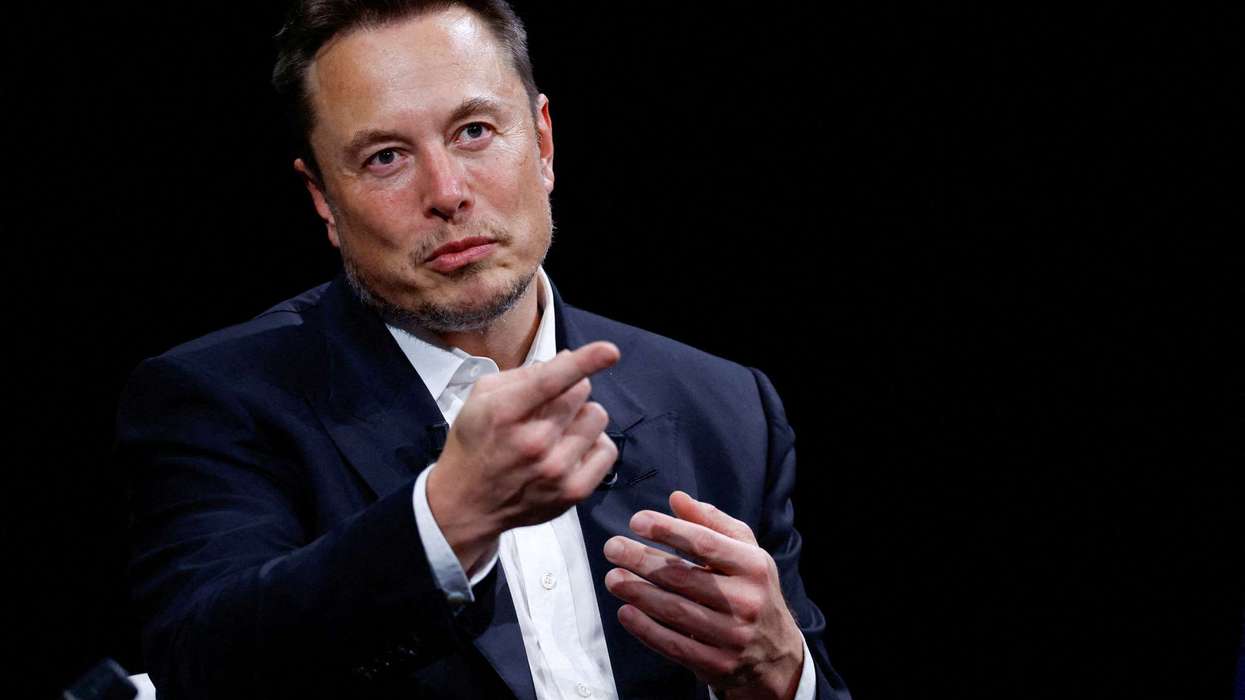
INDIA has rejected Elon Musk’s accusation that unnamed “oligarchs” are preventing his Starlink satellite internet service from launching in the country, saying its regulatory system is fair and applies equally to all operators.
Musk, the billionaire founder of SpaceX, which owns Starlink, accused unnamed business interests of trying to protect their dominance in India’s telecom market.
“Unfortunately, we are being blocked by certain oligarchs in order to maintain their monopolistic chokehold on the Indian people,” Musk wrote on X on Wednesday (7).
“You can guess who they are... This is a crime against the people of India!”
India’s Ministry of Communications responded on Thursday (8), without directly naming Musk, saying the government had a “fair and non-discriminatory authorisation framework for all telecommunication services”.
It said the response was prompted by a social media post being circulated about the fairness of India’s regulatory framework for satellite communication services.
“The suggestion that the framework or its application is unfair or discriminatory is baseless and misconceived,” the ministry said.
Three companies at similar stage
India’s telecom market is dominated by billionaire-led Reliance Jio and Bharti Airtel, which are also seeking to provide satellite internet services.
The government said telecom licences had been granted to satellite service providers as part of its effort to enable satellite communications in India. It did not identify the companies, but said security assessments were currently underway for all three licensees.
“As and when this process is completed for a licensed entity, it may proceed to the next step,” the ministry said.
This means Starlink, Jio and Airtel are broadly at the same stage of the regulatory process, rather than Starlink being singled out for additional restrictions.
Airtel and Jio did not immediately respond to requests for comment.
Starlink has been waiting for around four years to begin commercial operations in India. Its application has faced scrutiny over security requirements and the allocation of spectrum needed to provide satellite services.
Musk has clashed with Indian rivals before
Musk’s latest comments revive a dispute over how India should allocate spectrum for satellite internet services.
He has previously clashed with Mukesh Ambani and Sunil Mittal over the issue, with Indian telecom companies favouring a different approach to spectrum allocation.
Despite those disagreements, the companies moved towards cooperation in 2025. Musk’s SpaceX signed separate deals with Jio Platforms and Bharti Airtel to distribute Starlink equipment and services in India.
In March 2025, Jio Platforms announced a deal with SpaceX to offer Starlink’s satellite internet service to its customers. Airtel also reached an agreement with SpaceX.
Neither service has yet launched commercially in India.
Security concerns remain
Security has been another major issue surrounding Starlink’s proposed entry into the Indian market.
Indian authorities said Starlink equipment was found during two separate operations in late 2024. One device was recovered by police during a drug seizure in the Andaman and Nicobar Islands, while another was found during an Army search operation in Manipur.
Following those incidents, Musk said Starlink’s satellite beams had been “turned off over India” and were “never on in the first place”. He repeated that claim on Wednesday.
The Indian government’s current position is that security assessments remain part of the approval process for all three licensed satellite service providers.
Major market for satellite internet
India is an important potential market for Starlink because satellite broadband could provide internet access in remote and poorly connected areas without relying entirely on conventional ground-based telecom infrastructure.
Consultancy Deloitte has forecast that India’s satellite broadband market could be worth $1.9 billion by 2030.
The dispute also comes at a sensitive time for India-US economic relations. Washington has pushed for Starlink to gain market access in countries including India as part of broader trade discussions.
New Delhi and Washington have struggled to complete a trade agreement after reaching a framework in February, with tariff issues remaining part of the negotiations.
(with inputs from agencies)