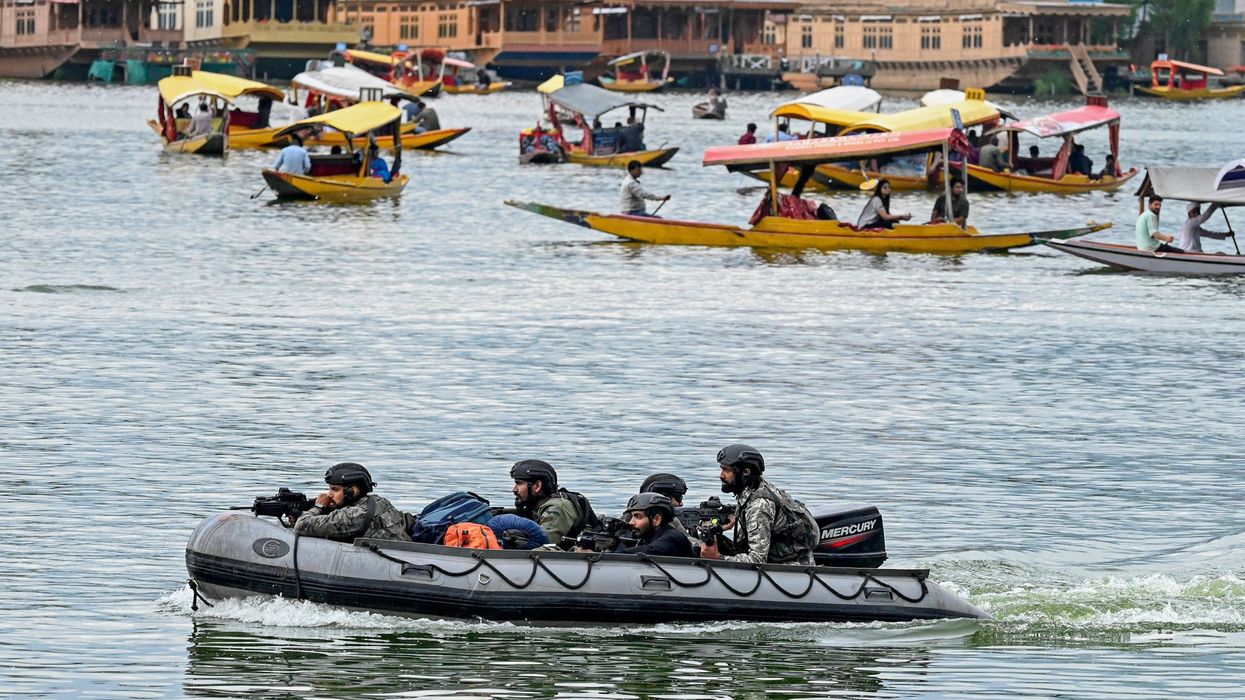

Security measures in the Jammu and Kashmir region have been heightened by Indian authorities due to a surge in militant attacks leading up to a G20 meeting focusing on tourism in the Himalayan territory.
Officials confirmed the increased security measures on Wednesday (17), as the city of Srinagar, the summer capital of the federal territory, is set to host a tourism working group meeting of G20 members from May 22 to 24.
These meetings are part of a series of preparatory events leading up to the G20 summit scheduled to take place in New Delhi in September. In recent times, there has been a rise in attacks carried out by Islamist militants in the Jammu region, situated across the mountains from the Kashmir Valley where Srinagar is situated.
These attacks have resulted in the loss of ten soldiers and seven civilians in four separate incidents this year.
According to security officials, there is concern that separatist militants may attempt to advance their cause through an attack either prior to or during the G20 meeting.
"The timing of these attacks is worrisome as they are planned just before the G20 meeting," said a senior Indian army officer in the region.
The officer, who preferred not to be named due to a lack of authorization to speak to the media, revealed that military and police officers have received intelligence indicating that militants may have intentions to target a military-operated school in Jammu and potentially hold students as hostage.
In response to the potential threat, officials announced the temporary closure of such schools in the area, with classes being conducted online until after the conclusion of the G20 meeting.
Security agencies are leaving no room for compromise in Srinagar, officers said.
Vijay Kumar, the chief of police in the Kashmir Valley, informed Reuters that commandos have been deployed in the city, and members of a specialised counter-terrorism force will be stationed at various locations.
Srinagar has long been a focal point of the insurgency led by Muslim militants against Indian rule since 1989. While tens of thousands of lives have been lost during the conflict, the intensity of violence has diminished in recent years.
India and Pakistan engage in a blame game over support for Muslim insurgents in Kashmir. While India accuses Pakistan of backing the insurgents, Pakistan denies the allegation and accuses India of violating the rights of Kashmir's Muslim population.
Both countries claim the region in full but govern it partially. As nuclear-armed neighbours with a history of three wars, including two over Kashmir, tensions persist between them.
(Reuters)