
Highlights
- HMS Queen Elizabeth arrived in Belfast Lough on Wednesday morning
- It is one of the largest and most powerful warships built for the Royal Navy
- The carrier can carry up to 40 aircraft and has a four-acre flight deck
- It is due to become the country's flagship and high-readiness strike carrier in late 2027
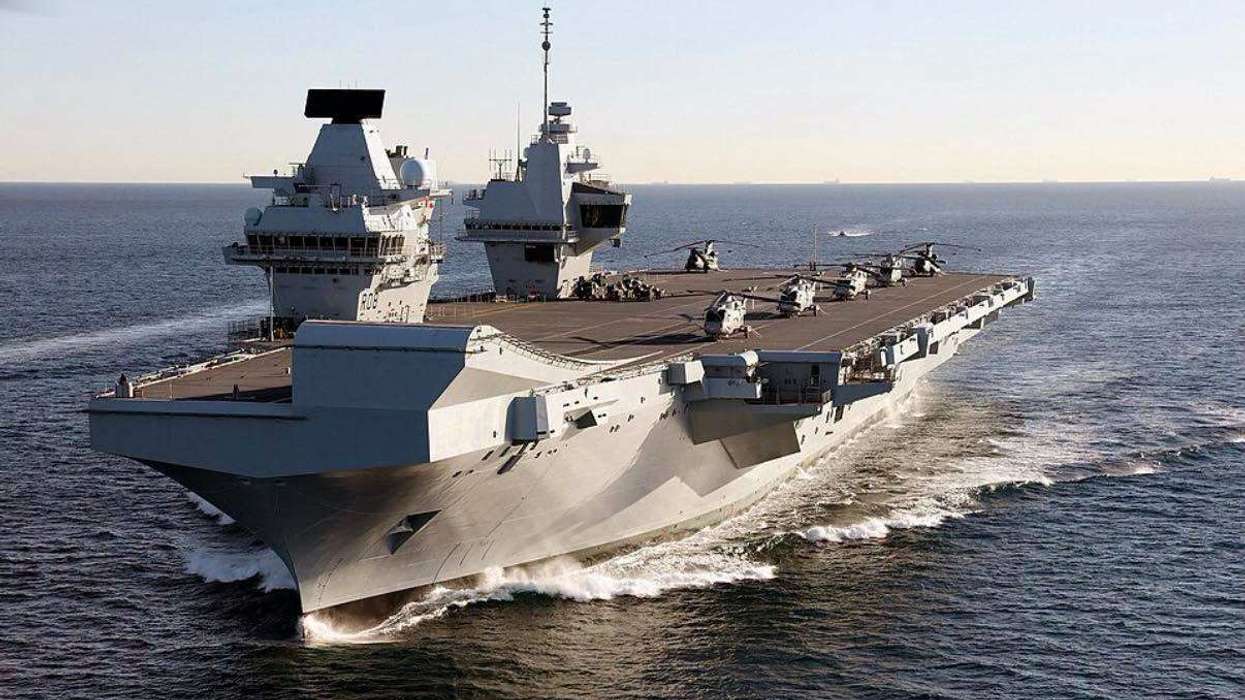
HMS QUEEN ELIZABETH has arrived in Belfast, bringing one of the Royal Navy’s largest warships to the city for the first time.
The 65,000-tonne aircraft carrier sailed into Belfast Lough on Wednesday (7) morning as part of a scheduled visit during a wider programme of training around the UK and Northern Europe.
For the ship, the visit also reminds people of its connection to the late Queen Elizabeth II, who launched the carrier at Rosyth in Scotland in 2014.
The launch marked the beginning of a new era for the Royal Navy’s aircraft carrier fleet and placed the late monarch’s name on one of Britain’s most advanced warships.
Belfast Harbour said ahead of the arrival: “Belfast Harbour will be welcoming HMS Queen Elizabeth into port tomorrow [Wednesday].”
It encouraged people to watch for the carrier from sunrise as it approached Belfast Lough and said it looked forward to welcoming the crew during their stay.
The visit is particularly notable because it is the first time an aircraft carrier has visited Belfast since 1965.
One of the Royal Navy’s biggest warships
HMS Queen Elizabeth is one of two Queen Elizabeth-class aircraft carriers operated by the Royal Navy.
The carrier can carry up to 40 aircraft and has a four-acre flight deck designed to operate F-35 Lightning II fast jets.
Four aircraft can be moved from the hangar to the flight deck in just one minute, highlighting the scale of the carrier’s aviation operations.
Despite its size, HMS Queen Elizabeth is designed to operate as more than an aircraft platform. It has advanced weapons and communications systems, along with five gyms, a chapel and a medical centre.
Its two propellers weigh 33 tonnes each, while its powerplant produces enough electricity to power about 1,000 family cars.
The ship normally operates with around 700 crew members, rising to a full complement of about 1,600 when aircraft are embarked.
NATO command role
HMS Queen Elizabeth has arrived in Belfast while carrying out an important role within NATO.
In July, the carrier became the command ship for NATO’s Allied Response Force. It is the first time either of the two Queen Elizabeth-class carriers has taken on the role.
The ship is now taking part in planned training and operations around the British Isles and Northern Europe, working with NATO allies to strengthen collective security, deterrence and readiness.
Training is being conducted under the Royal Navy’s Flag Officer Sea Training organisation and covers a broad range of modern naval warfare.
As part of its NATO role, HMS Queen Elizabeth is also rehearsing how allied naval forces would work together during a crisis.
Preparing for its next major role
The carrier began its latest period of training after setting sail in early September.
HMS Queen Elizabeth and its crew of more than 800 sailors are scheduled to undertake an intensive programme of training and operations, with the work continuing into next year.
That programme will include participation in major NATO exercises. HMS Queen Elizabeth is due to take over from HMS Prince of Wales as the UK’s flagship and high-readiness strike carrier in late 2027.
The Royal Navy describes the carrier as a major symbol of British influence and a key part of the country’s defence capability.
When it carries out its role as the Nation’s Flagship, it can also serve as a command and control centre for naval forces and aircraft operating alongside it.
For Belfast, however, Wednesday’s arrival offered a rare opportunity to see the huge vessel at close quarters.