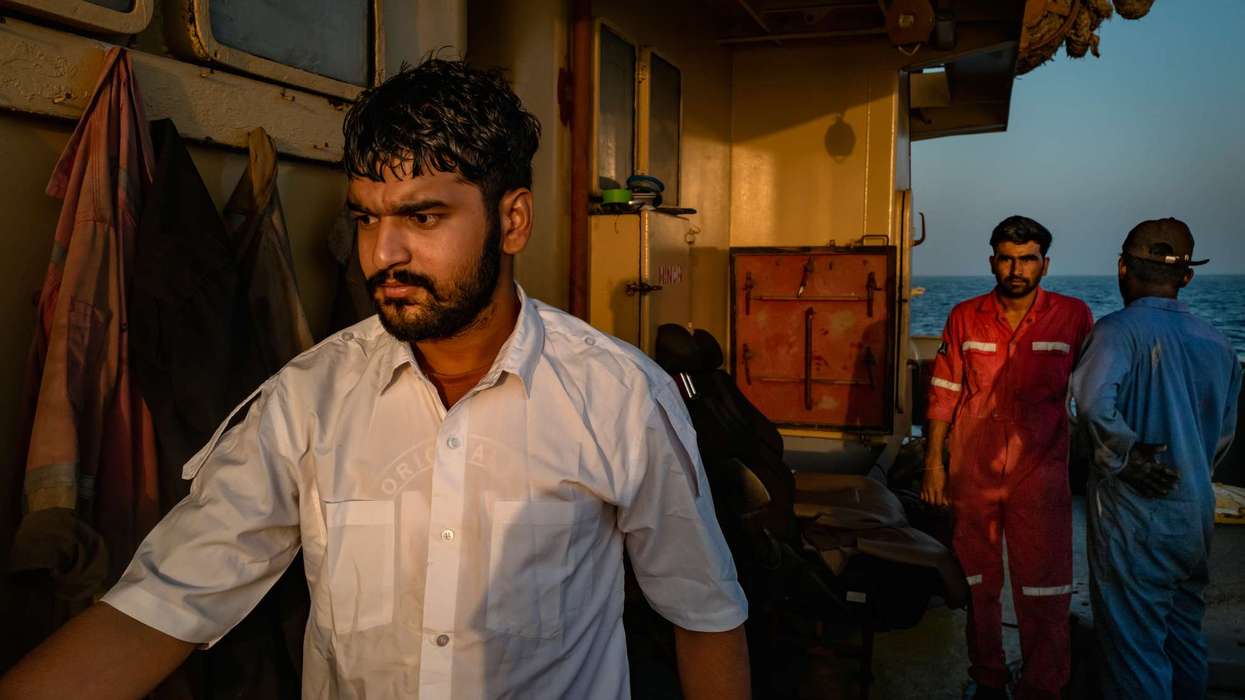

INDIAN sailors who spent months trapped in the Gulf during the Middle East war are wary of returning to the region, even as an interim ceasefire has allowed commercial traffic to resume through the Strait of Hormuz.
India sends out hundreds of thousands of seafarers each year and is one of the largest contributors of crew to global merchant shipping. More than 320,000 Indians (nearly 12 per cent of the global workforce) were working in the sector in 2025, according to the shipping ministry.
War between the US and Iran, which began in February, turned the Gulf into a flashpoint for commercial shipping. Several vessels came under attack, killing crew members and leaving thousands of sailors stranded for weeks, sometimes months, at anchor.
At least seven Indian seafarers have lost their lives during the conflict, while more than 1,100 Indian sailors aboard at least 37 Indian-linked vessels remain in the Strait of Hormuz, one of the world’s most dangerous shipping routes.
Since the fighting began in February, more than 40 commercial ships have come under attack, which claimed the lives of at least 14 foreign seafarers and 44 Iranian maritime workers.
More than 3,600 Indian seafarers were evacuated from the region with help from the shipping ministry. Many who returned home say they remain reluctant to go back, despite the truce.
Sitaram Tandel, 31, from a fishing village in Gujarat, was aboard a Marshall Islands-flagged bulk carrier, when his vessel was struck.
Days earlier, another ship owned by the company, the crude tanker Safesea Vishnu, had been hit in a separate attack that killed an Indian crew member.
Tandel said, “Our luck ran out. It was early morning, I was getting ready for my shift when we were struck.”
He said his family was “relieved” he was back home safely, but added that the crew’s ordeal had left a mark.
“No one died, but the entire crew slipped into depression after that. It was a life-changing experience, unimaginably scary,” he said. “I don’t know what lies next. The attack has left me shaken and too scared to go back to the Gulf, but I also have a family to feed.”
Ratheesan Kuttiyan, 45, from Kerala, in south India, joined Marshall Islandsflagged cargo vessel in March. “The previous crew refused to cross. We tried hard to cross, but the fighting was too intense,and another vessel from the company was attacked,” he said.
Crew members were asked to sign documents confirming they were willing to make the crossing. “Finally, in the dead of the night we sailed through the danger zone,” he said.
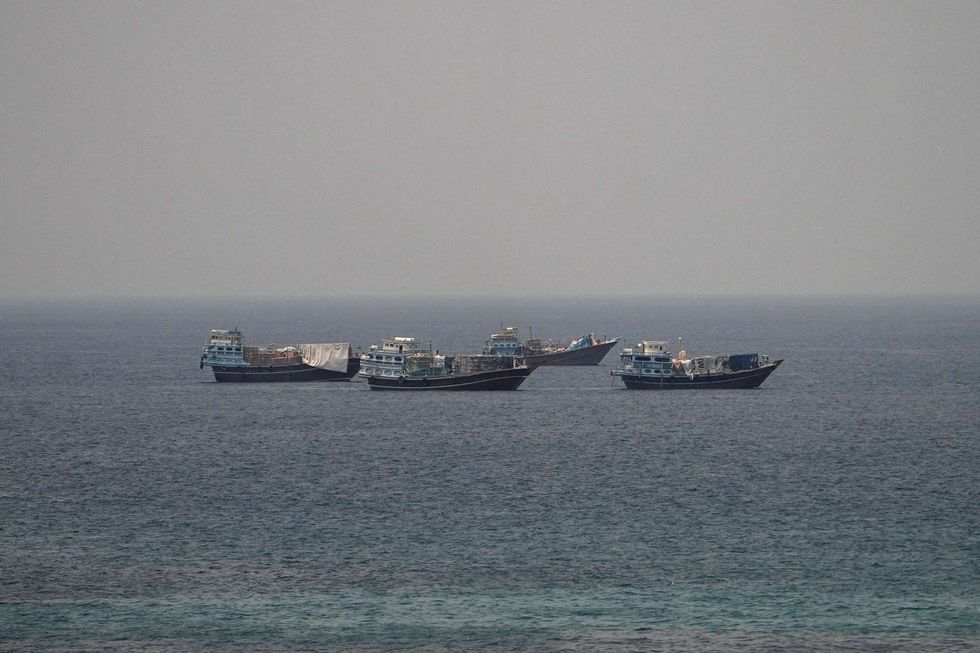 Vessels in the Strait of Hormuz on July 1, 2026Reuters
Kuttiyan said he would return only if conditions improved.
Another sailor from Kerala, Haridas Puthiyakodi, 49, was aboard a cargo ship heading towards Hormuz when the vessel ahead came under attack, forcing his ship to turn back to Abu Dhabi.
“I didn’t tell my wife I was in the war zone,” he said after returning home. “Now that she knows finally, she says I should never go to the Gulf. If I had my way, I wouldn’t either – but then, I know as a seafarer, you have to sail everywhere.”
Tanel Hirenkumar Praveenbhai, 42, a veteran seafarer with more than two decades at sea, joined the crew of a Panamaflagged oil tanker in Dubai in February. His crew remained at anchor for close to three months.
“Of course, we were scared, but there was nothing we could do,” he said. “I am never going back to Hormuz again. No money is worth more than my life.”
More than 8,000 seafarers from outside the region remained stranded in the Gulf as of early July, according to the International Maritime Organisation (IMO), the United Nations body that regulates global shipping.
At the peak of the crisis, roughly 11,000 non-regional seafarers were trapped, the IMO said. Captain Abhijit Chopra, who oversees a 21-strong crew on a crude oil tanker, has been at anchor since late January. His crew, mostly Indian with one Ukrainian national, marked the festival of Holi on board, painting each other’s foreheads with turmeric taken from the ship’s kitchen. “When they said the Strait of Hormuz was open, we were a bit optimistic that the vessel might transit,” Chopra told Bloomberg, recalling repeated false dawns.
“There was a little bit of disappointment,” he added, after fresh attacks dashed hopes of an early departure.
Chopra described the toll of the long wait on his crew. “Ultimately, we are just ordinary people. We are fathers, we are sons, we are husbands who are staying for months out at sea carrying out a duty,” he added.
Oceangoing vessels carry more than 80 per cent of global goods by volume, according to World Bank estimates. Nearly 2.6 million seafarers serve on the world’s merchant fleet, with India and the Philippines together supplying around 30 per cent of that workforce, according to a joint report by BIMCO and the International Chamber of Shipping.
Captain Raman Kapoor, whose Suezmax tanker had just finished loading crude oil at Basra in Iraq when the war broke out in February, said the entire shipping schedule changed overnight. “Our processes, what’s our next port, the ship’s schedule, everything changed. All of a sudden we found that we were inside a war zone and there was no safe way out.”
His ship was anchored close to the Safesea Vishnu when it caught fire after being struck in March, an incident that killed one crew member.
Kapoor was relieved by a Romanian replacement captain in mid-May and travelled home via Basra, Doha and Delhi before reaching his hometown of Manali.
At least 14 civilian seafarers from countries other than Iran have been killed during the war, according to industry estimates. Iran has said around 50 of its own mariners died. One seafarer remains unaccounted for, and the IMO has recorded at least two further non-combat deaths.
According to reports, the IMO launched a plan to evacuate strandedships and crew in June, which was suspended within days after Iran attacked vessels transiting Hormuz.
Also, evacuation effort was paused again after a container ship came under attack in the strait in late June, close to Oman’s coast.
IMO secretary general Arsenio Dominguez said the evacuation plan had been paused “to reconfirm that the necessary safety guarantees continue to be in place for the ships on our evacuation list.”
Bloomberg reported that sailors serving in the Gulf during the conflict received a pay boost under global bargaining arrangements, with some monthly salaries rising as high as $30,000 (£22,443.
Even so, crewing agencies struggled to find mariners willing to sail into the region. The Philippines, one of the largest source countries for seafarers, briefly asked agencies to stop sending its nationals to the Gulf, before easing the restriction later.
India’s prime minister Narendra Modi raised the safety of Indian seafarers with US president Donald Trump during a meeting on the sidelines of the G7 summit in France in June.
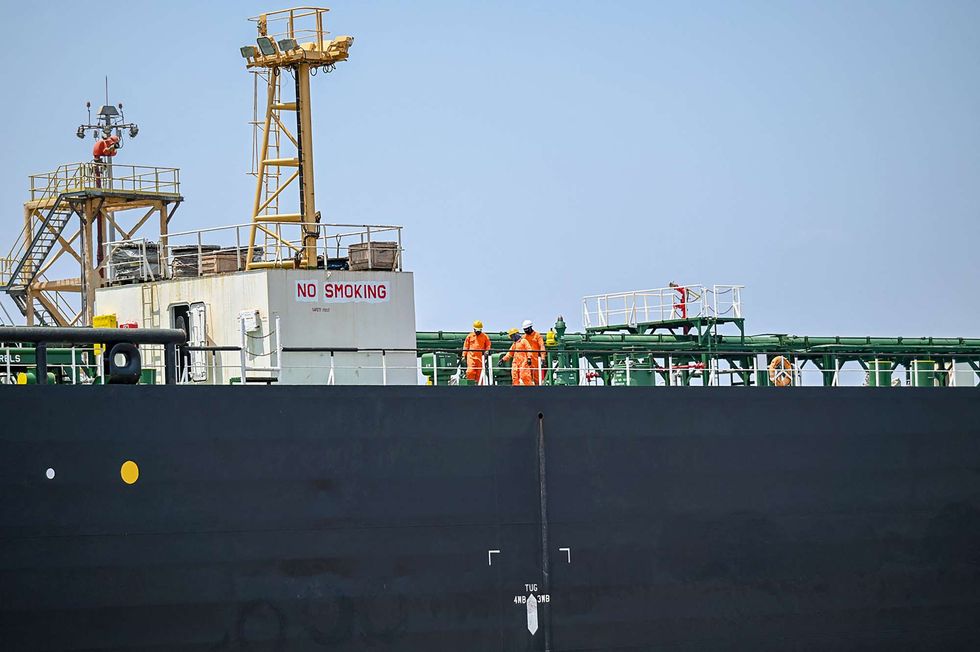 Crew aboard the Indian-flagged tanker Desh Garima after transiting the strait in April Punit Paranjpee/AFP via Getty Images
“You are aware that hundreds of thousands of Indian seafarers are working across the world, performing their duties along international maritime trade routes – including the Strait of Hormuz – and their safety is of utmost importance to us,” Modi told Trump. “You have made tremendous efforts to reach this understanding, and I am confident the issue of seafarers will receive the highest priority during the implementation of this agreement,” he said, referring to the US-Iran peace accord.
Asked about the deaths of Indian sailors in earlier strikes, Trump said, “It’s a rough profession, there’s no question about it, and we work together on it... We love all of those people, they’re great people.” He also said Washington would come to India’s defence, if needed.
Ben Bailey, programme director at the Mission to Seafarers, a maritime welfare charity, said the decentralised structure of global shipping leaves seafarers most exposed when crises occur. “Global shipping is almost set up to provide multiple, different channels for ownership and operation, where I can be a shipowner sitting in London and flag it to Liberia and register it in Greece and I sit back and earn revenue from the ship,” Bailey told Bloomberg. “It is the seafarers that risk falling through the gaps and not have their rights met.”
He added that repeated exposure to danger appeared to be breeding acceptance, rather than alarm.
The plight of seafarers trapped by the war has drawn wider attention to conditions across the shipping industry. IMO’s Dominguez said shipping “should not be used as collateral in any geopolitical conflict,” adding that seafarers “feel forgotten” by global media even as the conflict dominates headlines over its impact on fuel prices and the world economy.
Union figures revealed that Indian seafarers were the most abandoned nationality worldwide for a second consecutive year in 2025, with 1,125 cases logged by the London-based International Transport Workers’ Federation. ITF general secretary Stephen Cotton said abandoned seafarers were “far from home and often without any clear resolution in sight,” and called for the IMO to be given greater power to hold shipowners accountable .