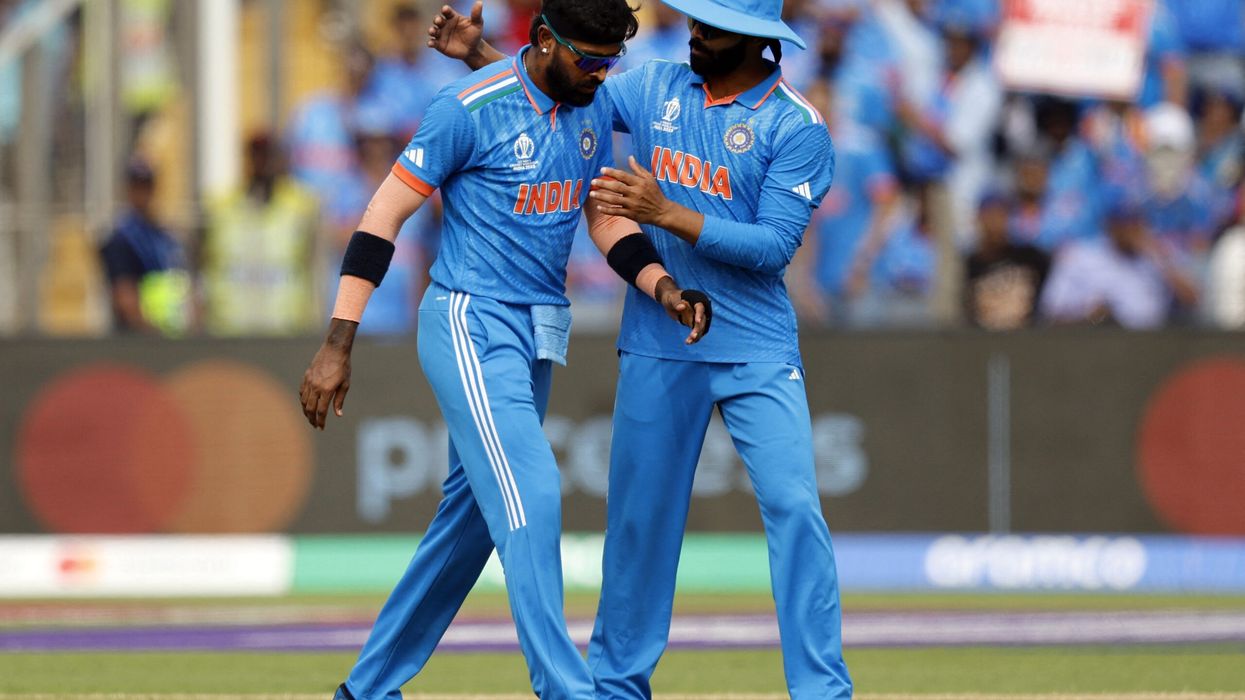
INDIA all-rounder Hardik Pandya will reportedly miss the World Cup match against England in Lucknow on Sunday (29) as he continues to recover from an ankle injury.
Pandya, 30, twisted his ankle last Thursday (19) during the game against Bangladesh in Pune and limped off the field in pain.
He missed the clash against New Zealand which India won by four wickets to maintain their 100 per cent record and move closer to the semi-finals.
"It looks like (Pandya) has suffered a minor ligament tear which usually takes at least two weeks to heal," the Times of India said Thursday (26), citing a source in the Board of Control for Cricket in India (BCCI).
A medical team at the National Cricket Academy (NCA) in Bengaluru is monitoring the player and "will not release him before his injury heals," it added.
The BCCI did not respond to a request to confirm the reports.
Hosts India top of the standings after winning all five matches so far. After England, they face Sri Lanka in Mumbai on November 2.
Pandya took five wickets in his four appearances in the tournament and scored 11 runs.
(AFP)
Hardik Pandya to miss England game: reports
The all-rounder twisted his ankle during the game against Bangladesh in Pune and limped off the field in pain