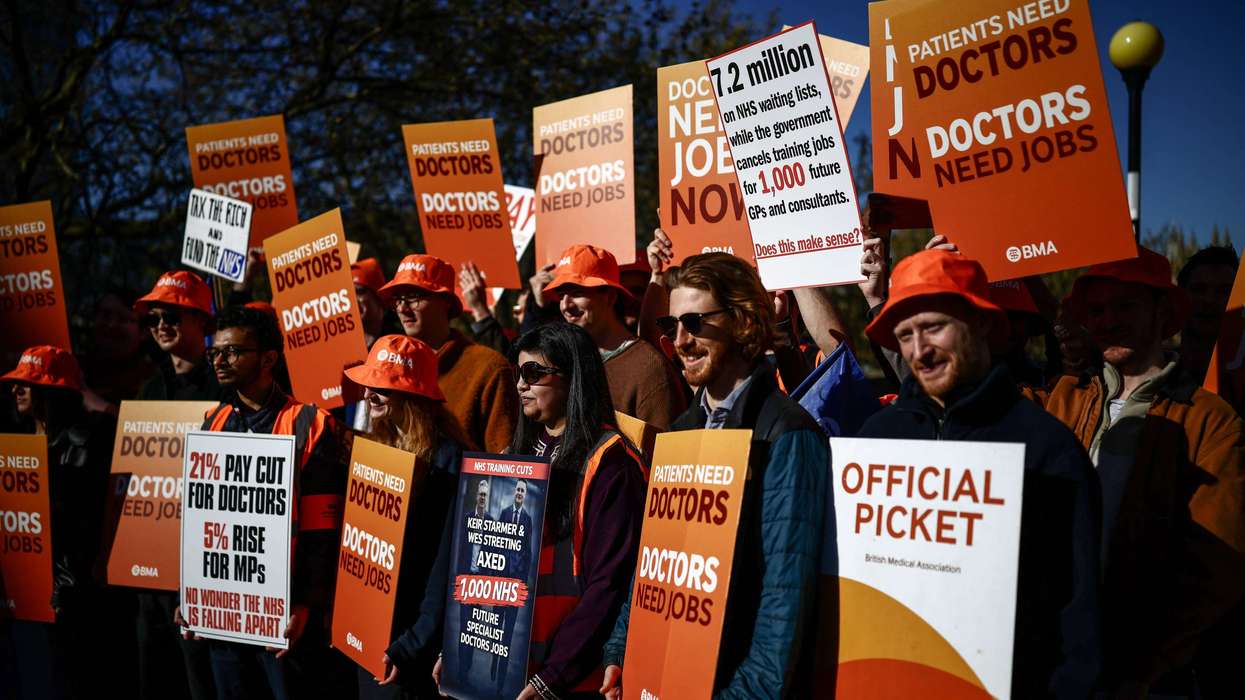

RESIDENT DOCTORS in England began a six-day strike on Tuesday after rejecting a government offer on pay and workforce. The British Medical Association (BMA) said the deal did not address years of pay erosion and staffing pressures.
The walkout, taking place during the Easter holiday period, will run until the morning of April 13. It follows the expiry of a 48-hour ultimatum set by prime minister Keir Starmer without any agreement.
The government has withdrawn a pledge to fund 1,000 additional speciality training posts, saying the funding had been tied to acceptance of the deal.
Health secretary Wes Streeting said the government would not allocate funds needed for patient services to a settlement it considers unaffordable. He estimated the strike would cost the health service about 50 million pounds a day, or 300 million pounds over six days.
Speaking on Times Radio on Tuesday, Streeting said resident doctors had received the largest pay uplift of any public sector group under the Labour government but had rejected the offer without putting forward a counter proposal.
Streeting had said last month that the offer "doesn't get better than this" while urging the union to reconsider.
The BMA represents about 55,000 resident doctors, formerly known as junior doctors, who make up nearly half of the medical workforce.
Since early 2023, the BMA has held more than a dozen rounds of industrial action over pay. Successive governments have said the strikes have affected efforts to reduce waiting lists in the state-run service.
The union said the government's offer on pay and workforce does not address long-standing concerns, including below-inflation pay increases in the past.
The offer includes a 3.5 per cent increase this year. The government said this would be above inflation and would take total pay increases over three years to around 35 per cent, along with reimbursements of mandatory exam fees that can cost doctors thousands of pounds.
Jack Fletcher, chair of the BMA's resident doctors' committee, said the union was concerned that the level of investment in the deal had been reduced, reforms were spread over several years, and there were uncertainties over the implementation of new training posts.
Fletcher said the government's threat to withdraw parts of the deal had also undermined confidence.
"No one wants to strike. But without a credible offer on the table, doctors are left with no alternative," the BMA said in a post on X on Tuesday.
(With inputs from agencies)