
Highlights
- Elon Musk has released the first seven-minute episode of an AI-generated adaptation of Homer’s The Odyssey, created using Grok.
- The Guardian’s Peter Bradshaw criticised its lifeless visuals, flat storytelling and robotic voices.
- The review questioned whether AI-generated filmmaking can offer genuine artistic value beyond its lower production costs.
Elon Musk’s attempt to bring Homer’s The Odyssey to the screen using artificial intelligence has received a scathing review, with a critic questioning the emotional depth and artistic value of the project.
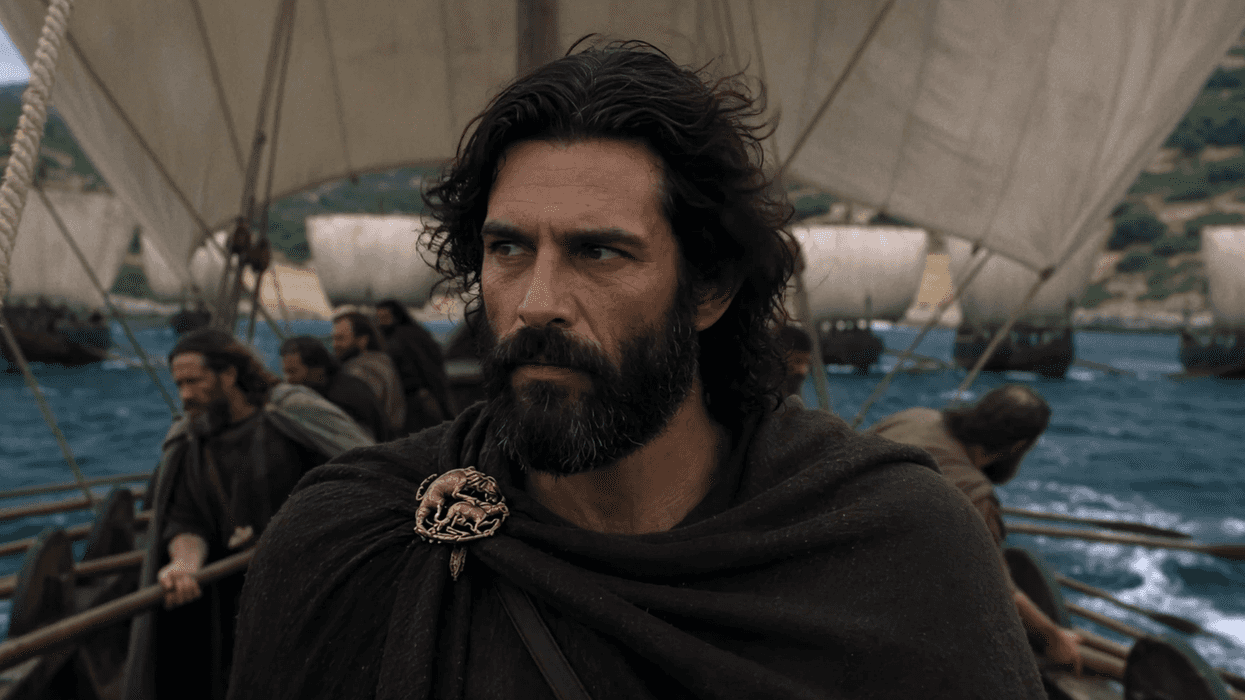
The first seven-minute episode of the AI-generated adaptation uses Grok to recreate the ancient Greek epic. However, The Guardian’s film critic Peter Bradshaw found the result lacking in dramatic impact, with stiff visuals and robotic voice performances undermining the story.
The review also revisited Musk’s earlier criticism of Christopher Nolan’s upcoming The Odyssey, raising questions about whether an AI-generated version can offer a more compelling interpretation of the classic tale.
Grok’s The Odyssey struggles to bring Homer’s epic to life
The first episode follows Odysseus as he pretends to be mad to avoid joining the Trojan War. When his infant son Telemachus is placed in danger, Odysseus rushes to save him, revealing that his madness is an act and leaving him with little choice but to join the war.
The story then moves to Troy, with an intertitle jumping forward ten years before the attack involving the famous Trojan Horse.
However, Bradshaw criticised the episode for its lack of energy and emotional weight. The visuals appeared lifeless, while the dialogue and voice performances felt robotic. The adaptation struggled to convey the drama of Odysseus leaving his family to fight in a distant war, or the tension surrounding the Trojan Horse.
Musk’s AI project follows his criticism of Christopher Nolan
Musk had previously criticised Nolan’s The Odyssey over its reported casting choices, including Elliot Page as Sinon and Lupita Nyong’o as Helen of Troy. According to Bradshaw’s account, Musk made his comments without having seen Nolan’s film and suggested he could create a more authentic version using Grok.
The AI-generated adaptation now faces criticism of its own, with the review questioning whether it offers a meaningful alternative to traditional filmmaking.
Bradshaw acknowledged that later episodes could improve, but suggested that better visuals alone would not resolve the project’s deeper storytelling problems.
Can AI filmmaking offer genuine artistic value?
One of the central questions raised by the review is whether AI-generated films can deliver more than a cheaper way to produce images and scenes.
Although using AI could reduce production costs, Bradshaw questioned the artistic value of an adaptation that appeared to lack passion and dramatic purpose. For a story built around war, loyalty, loss and a long journey home, the episode struggled to create an emotional connection.
The first instalment leaves open the possibility that future episodes may offer a different experience. For now, however, the review suggests that reproducing the events of a classic story is not enough to capture its human drama.