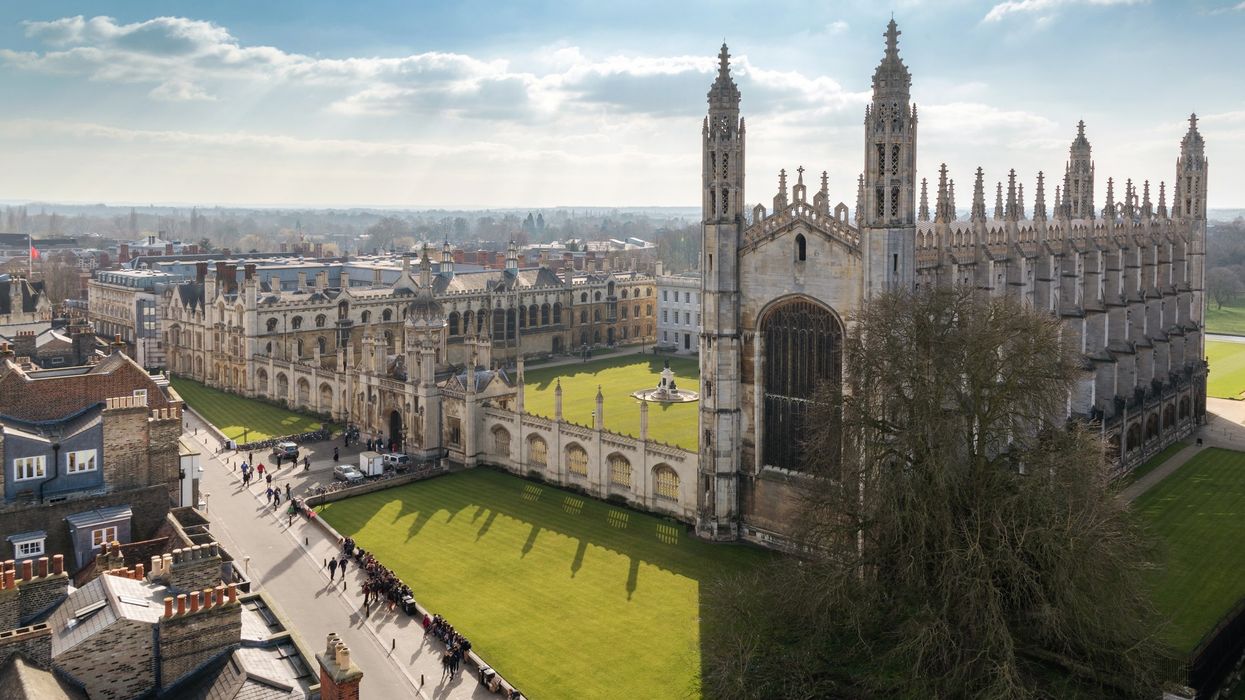

During World War II, a group of unsung heroes worked tirelessly in complete secrecy to crack Nazi codes, a story that is only now coming to light. At least 77 women from Newnham College, a women-only institution at Cambridge University, were drafted to Bletchley Park, the renowned code-breaking centre north of London.
While mathematician Alan Turing is widely known for his role in decoding messages encrypted by the Enigma machine, the contributions of these women have only recently been revealed thanks to research initiated by Sally Waugh.
Waugh, a former Newnham student and teacher, embarked on her research journey five years ago to shed light on the often overlooked role of women during this period. She stumbled upon the story when she came across an article mentioning an old friend, Jane Monroe, who had worked at Bletchley Park.
Despite Monroe's modest response that she "made tea" during the war, Waugh discovered that she was, in fact, a code breaker. Monroe, like many others, was bound by the Official Secrets Act and could not disclose her wartime activities.
Driven by curiosity, Waugh delved deeper into the university's archives and uncovered the names of around 80 women who had contributed to the code-breaking efforts at Bletchley Park.
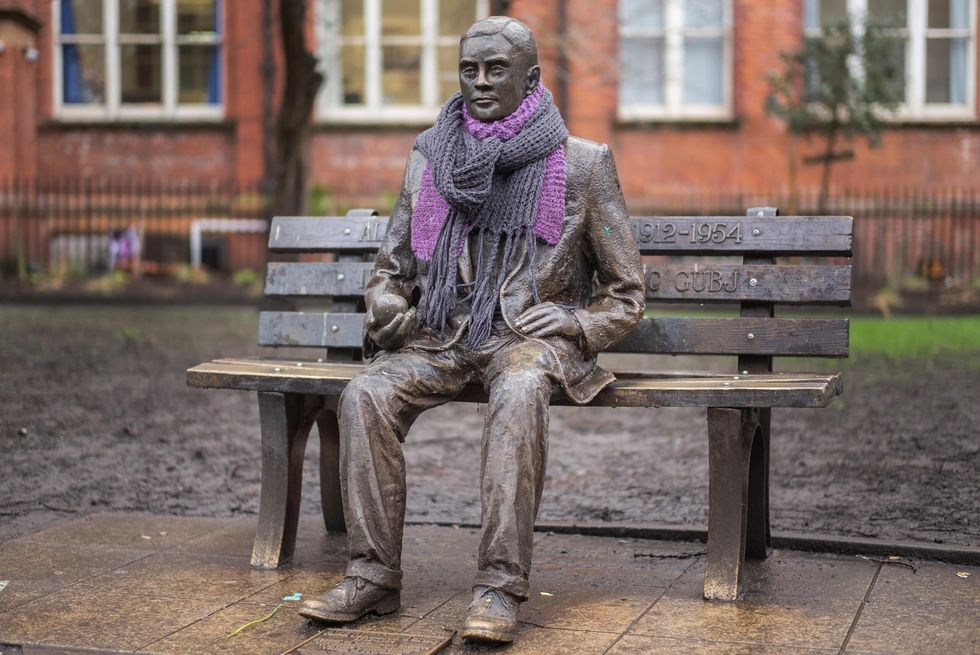 A statue of Alan Turing sits in Sackville Park in Manchester's Gay Village. (Photo credit: Getty Images)
Among them was mathematician Joan Clarke, who worked closely with Turing and played a significant role in the decryption process. Clarke's story gained wider recognition after being portrayed by Keira Knightley in the film The Imitation Game.
Other remarkable women included Violet Cane, known for her statistical prowess, and Elizabeth Langstaff, a German speaker tasked with reconstructing intercepted messages. Newnham College's involvement extended beyond mathematics, with linguists, historians, and archaeologists also joining the ranks at Bletchley Park.
The women's contributions were diverse, ranging from decrypting German signals to analysing diplomatic messages and studying aerial photographs. Their work was crucial to Allied planning, including preparations for the pivotal D-Day landings on June 6, 1944.
Although most were unaware of the exact timing of the invasion, the increased German signal traffic in response to the Allied advance made June 1944 a particularly busy time at Bletchley Park.
Today, the efforts of these remarkable women are being rightfully acknowledged, ensuring that their invaluable contributions to history are not forgotten.