
BANGLADESH, the world's second-biggest garment manufacturer, aims to strike a trade deal with the US before Donald Trump's punishing tariffs kick in next week, said the country's top commerce official.
Dhaka is proposing to buy Boeing planes and boost imports of US wheat, cotton and oil in a bid to reduce the trade deficit, which Trump used as the reason for imposing painful levies in his "Liberation Day" announcement.
"We have finalised a draft reciprocal trade agreement," Mahbubur Rahman said on Wednesday (3), adding the government was "hopeful of reaching a win-win agreement".
Rahman said a meeting between officials from both countries was slated for July 8, with the US representing 20 per cent of Bangladesh's ready-made garments exports.
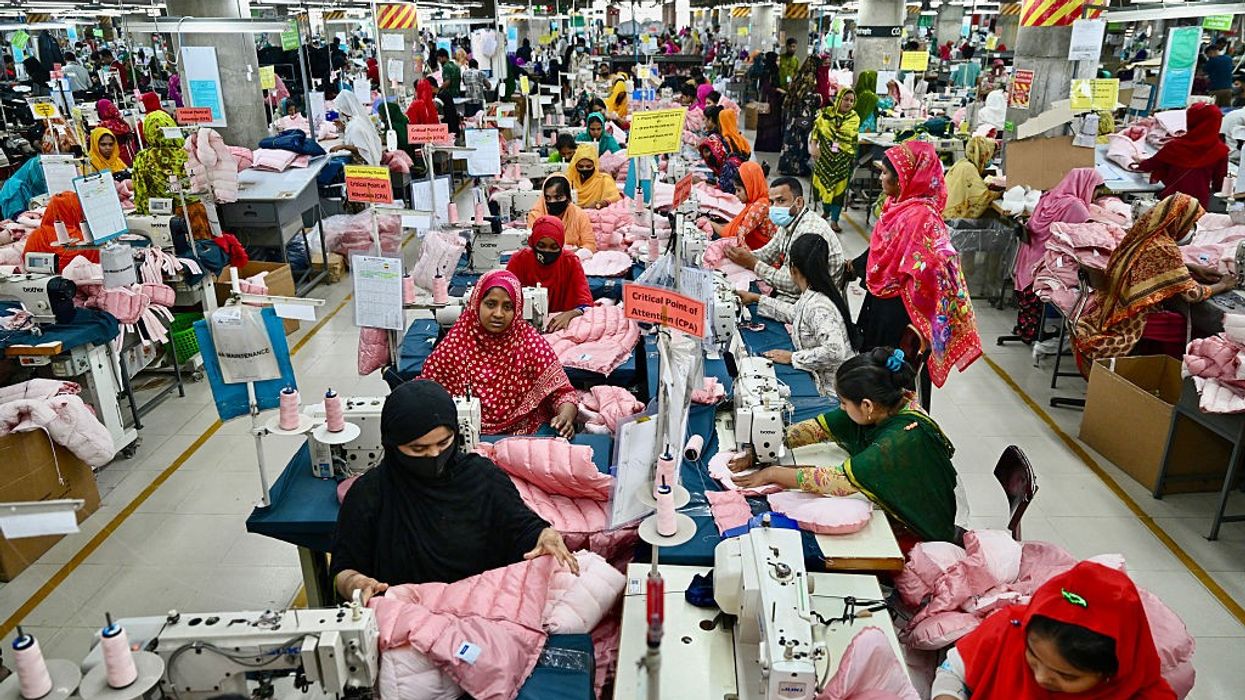
Textile and garment production accounts for about 80 per cent of exports in Bangladesh and the industry has been rebuilding after it was hit hard in a student-led revolution that toppled the government last year.
Trump hit Bangladesh with 37 per cent tariffs in his April 2 announcement, which is more than double the 16 per cent already placed on cotton products.
He suspended the tolls' introduction until July 9, as he did with other global trading partners, though a baseline 10 per cent levy was kept in place.
Bangladesh exported $8.36 billion worth of goods to the US in 2024, while imports from there amounted to $2.21bn, according to the Bangladesh Bank and the National Board of Revenue.
"As part of the initiative to reduce the trade gap, the government already decided to import a large volume of wheat, purchasing 14 aircraft from US manufacturer Boeing, buying cotton and more oil and gas from the US farms," Rahman said.
He did not give further details on the exact timing or extent of the proposed deals, but said the government had held around 28 meetings and document exchanges in a bid to reach an agreement.
Interim leader Muhammed Yunus spoke to US secretary of state Marco Rubio on Monday (30) and told him Dhaka was "working with your officials to finalise a package of measures to effectively respond to president Trump's trade agenda".
Mahmud Hasan Khan, president of the Bangladesh Garment Manufacturers and Exporters Association (BGMEA), the national platform of the garment makers, expressed concerns about any deal.
"The already enacted additional 10 per cent tariff is hitting our exporters, and if it goes further, we might lose US buyers," he warned.
But Mohammad Hatem, president of the Bangladesh Knitwear Manufacturers and Exporters Association (BKMEA), said he was optimistic.
"We are hopeful of a positive outcome on the US tariff before July 9," he said.
"There will be a temporary problem if the US administration does not revise the tariff. But it will largely and ultimately hit the US buyers, as they would have to buy goods at higher prices."
(AFP)