
Highlights
- Only four per cent knew net migration fell by two-thirds between June 2024 and June 2025.
- Britons estimated Muslims made up 20 per cent of the population, against the actual figure of 6.5 per cent.
- Indian residents were among the most highly qualified ethnic groups, but just 18 per cent recognised this.
- British Future's Sunder Katwala called for better public communication and a more structured immigration plan.
MOST Britons believe immigration is rising, despite a sharp fall in net migration, while significantly overestimating the size of the country's Asian and Muslim populations, a major new study revealed this week.
Only four per cent of people correctly knew that net migration to the UK fell by two-thirds between June 2024 and June 2025, from 649,000 to 219,000. Almost two-thirds (63 per cent) wrongly believed it had increased.
The findings come from a series of reports titled Mistaken Britain, published on Wednesday (25) by the Policy Institute at King's College London. The research examines the gap between public perceptions and official statistics on immigration, race and religion.
Sunder Katwala, director of British Future, said the findings highlighted the need for politicians and the media to provide a more accurate account of immigration and demographic change.
"This study shows the major gap between public perceptions and reality on falling immigration. People are unlikely to notice the drop in net migration numbers when the media and political debate itself lags these dramatic changes," Katwala told Eastern Eye.
"The report underlines why the broadcast media and politicians should give a much higher priority to reporting the context clearly if we are to have an informed debate about such a key issue."
People in England and Wales estimated that Muslims accounted for 20 per cent of the population, against the actual figure of 6.5 per cent recorded in the 2021 census.
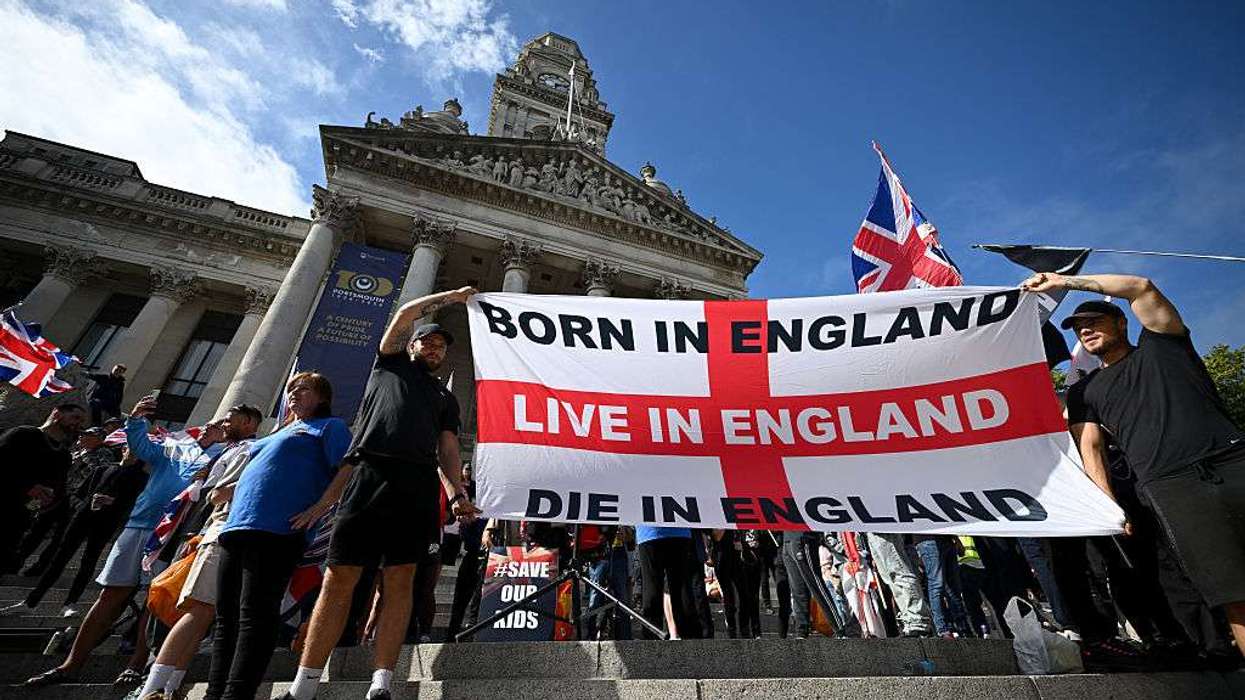
 The study found that nearly two-thirds Of Britons wrongly believed net migration had risen, despite a sharp fall in arrivalsGetty Images
Respondents also overestimated the proportion of Asian people in the UK, guessing that they accounted for 14.8 per cent of the population, compared with the actual census figure of 8.6 per cent.
Katwala said Andy Burnham, who replaced Sir Keir Starmer as prime minister in July, should go beyond communicating the fall in migration figures and change how immigration policy is made.
"The new net migration figures will show that Keir Starmer's government cut numbers significantly before leaving office, yet this research shows how little that shifted public opinion," he said.
"Andy Burnham needs to do more than just communicate this better. He should change how government makes immigration policy, with a proper immigration plan and an annual immigration budget set before parliament."
Such a plan, according to Katwala, would help inform the debate about immigration control and contribution, giving the public a clearer picture of the trends and the choices governments face in balancing the pressures and benefits of migration.
The findings are based on a survey of more than 1,800 UK adults conducted by YouGov between March 23 and 27. Researchers said misconceptions were not simply a matter of getting statistics wrong, as they were also closely linked to people's political identities and attitudes towards immigration, ethnic minorities and religious communities.
One of the reports found that many Britons wrongly believe white British people are the most likely ethnic group to hold a university degree or equivalent higher qualification.
 Professor Bobby DuffyLinkedin
In fact, Indian residents in England have one of the highest rates of higher education qualifications, with 52 per cent holding a degree or similar qualification, according to the 2021 census. Only Chinese residents, at 56 per cent, had a higher rate among the seven ethnic groups examined.
However, when respondents were asked to rank the groups by educational achievement, just 18 per cent placed Indian residents first.
White British people were the most common answer, with 39 per cent selecting them. Their actual qualification rate was 31 per cent, placing them sixth among the seven groups.
Pakistani residents also performed slightly better than white Britons, with 32 per cent holding a degree or equivalent qualification. Yet only three per cent of respondents ranked them first.
Bangladeshi residents had a qualification rate of 29 per cent, but just one per cent of the public selected them as the most highly qualified group.
Black African residents, at 49 per cent, and black Caribbean residents, at 34 per cent, also had higher rates than white British people. Their achievements were similarly overlooked in the public rankings.
More than four in 10 supporters of Labour, the Liberal Democrats, the Greens and Reform UK placed white British people first. Tory supporters were less likely to do so, at 33 per cent, and were the most likely to identify Indian residents as the group with the highest educational attainment, at 22 per cent.
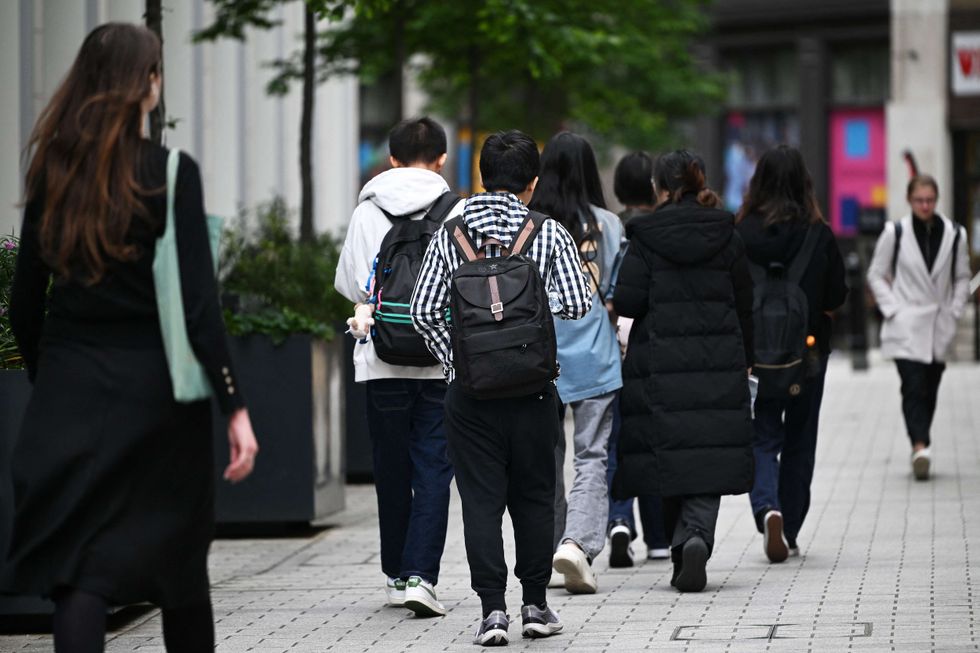 International students and their dependants accounted for 43 per cent Of arrivals in the year to June 2025x
Misconceptions about the Muslim population were widespread across the political spectrum.
The typical estimate was that one in five people in England and Wales were Muslim. The actual proportion was 6.5 per cent, according to the 2021 census.
Tory supporters gave the highest estimate, at 30 per cent, more than four times the actual figure. Labour and Green supporters estimated 15 per cent, while Reform UK and Liberal Democrat supporters put the figure at 20 per cent.
The gap was even wider when respondents were asked to predict the Muslim population in 2050.
The typical estimate was 30 per cent. Tory supporters put it at 40 per cent, while Reform UK supporters believed Muslims could account for half the population.
According to the study, around one in three respondents (32 per cent) said they felt negative towards Muslims. This was about three times the proportion expressing negative views towards Jewish people (12 per cent) or black people (11 per cent).
Thirteen per cent said they felt negative towards Asian people, while 42 per cent expressed positive views.
Attitudes varied considerably according to political allegiance. Two-thirds (66 per cent) of Reform UK supporters said they felt negative towards Muslims, compared with 43 per cent of Tory supporters.
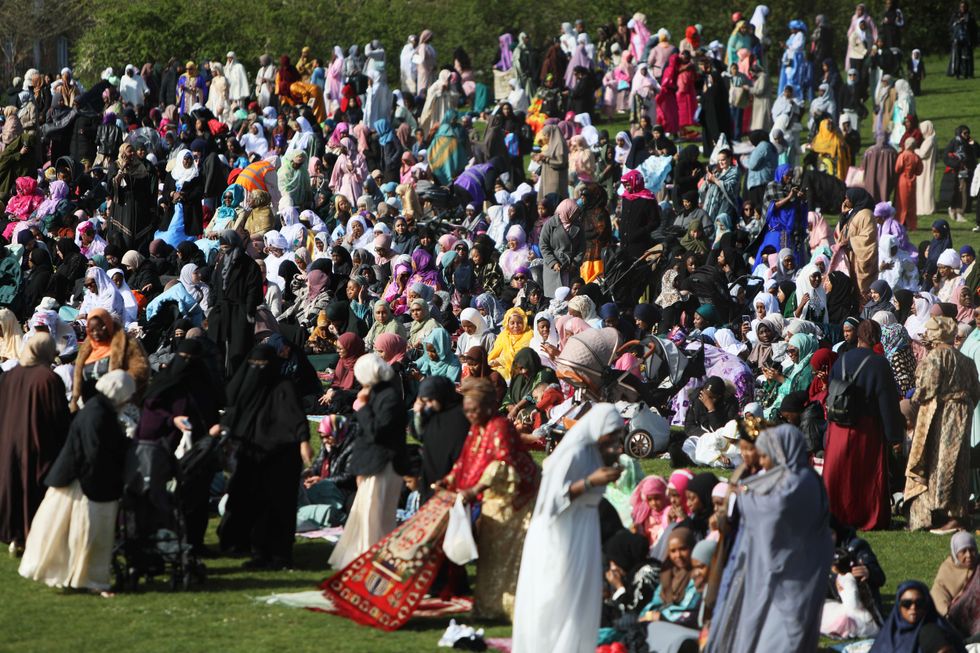 The public estimated that Muslims made up 20 per cent Of the population Of England and Wales.Getty Images
Reform UK supporters were also the least positive towards Asian people, with 28 per cent expressing negative views. The study also found considerable differences in how people viewed the compatibility of Islam with British values.
More than half (51 per cent) of respondents said Islam was not compatible with British values, while 26 per cent believed it was.
Almost four in 10 people (39 per cent) believed that efforts to protect Muslims from discrimination had gone too far. The proportion rose to 86 per cent among Reform UK supporters and 55 per cent among Tory voters.
The public also overestimated the increase in small boat crossings across the English Channel. Almost half (46 per cent) believed the number of people detected making the journey rose by around 30 per cent or more between 2024 and 2025. The actual increase was 13 per cent.
Misunderstandings extended to the number of refugees Britain takes in compared with other European countries.
When asked to compare the UK with Turkey, Germany, Poland and France, 44 per cent identified Britain as having the highest or second-highest refugee population. The UK had the fewest refugees among the five countries.
Respondents were more accurate when asked what proportion of the UK population was born abroad. Their typical estimate was 18 per cent, close to the official figure of 18.9 per cent.
Professor Bobby Duffy, director of the Policy Institute at King's College London, said immigration remained a major national concern and a central issue in political debate, but the public's understanding of what was happening was often far removed from reality.
"Only around one in five realise net migration fell in the year to June 2025, and just four per cent know it fell significantly, while nearly two-thirds think it went up," he said.
Duffy said people's understanding was shaped by what they heard from politicians, traditional media and social media, which often focused on negative aspects and divisive debates.
He added that misconceptions were closely connected to political identity, with supporters of different parties interpreting the same facts in very different ways.
Around half (48 per cent) also thought Britain had the highest or second-highest proportion of people born abroad among seven countries examined. In fact, the UK ranked joint fifth with Germany in 2023, behind Australia, Switzerland, Austria and Belgium but ahead of France.
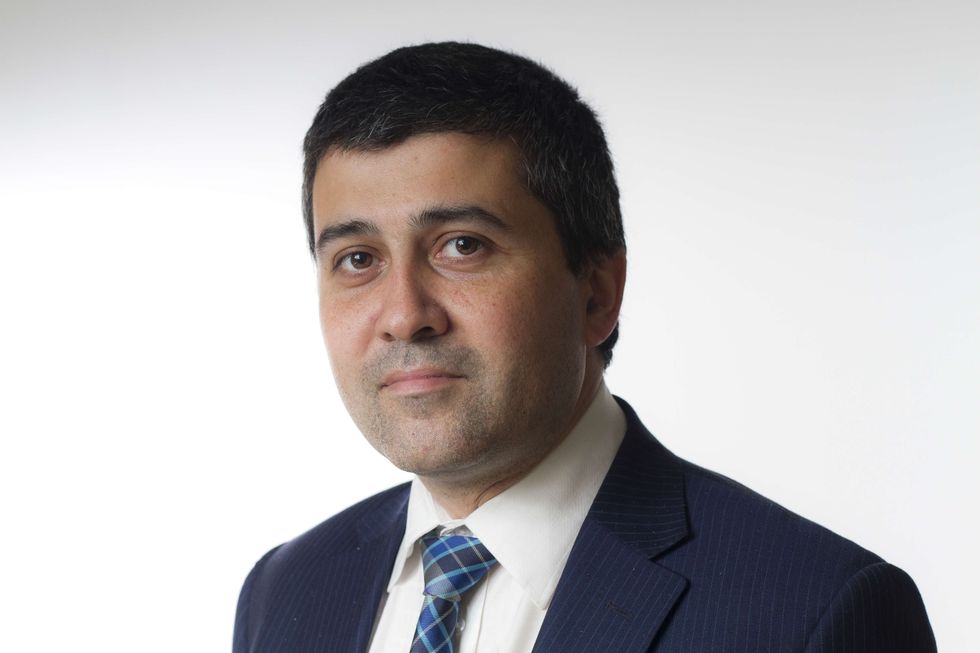 Sunder KatwalaEastern Eye
The research further found that 60 per cent of respondents believed racism in Britain had increased over the previous three years. Some 43 per cent thought it had risen compared with 20 years ago.
White respondents were more likely than people from ethnic minority backgrounds to believe racism had increased over the previous three years, at 62 per cent against 50 per cent.
Views were more similar when comparing the present with 20 years ago, with 42 per cent of white respondents and 45 per cent of those from ethnic minority backgrounds believing racism had increased.
Duffy cautioned against assuming that correcting inaccurate information would automatically change people's attitudes towards immigration or minority communities. He said differences in values and identity also played a significant role, but he stressed that this was not a reason to abandon efforts to provide accurate information.
"We're all entitled to our own opinions on immigration, but not our own facts," he said.
The research also revealed that people had a distorted picture of who was coming to Britain. When asked which type of migrant they mostly associated with immigration, 55 per cent identified asylum seekers. Just two per cent thought primarily of international students.
However, students and their dependants accounted for 43 per cent of everyone who moved to the UK in the year to June 2025. Respondents estimated the figure at just 21 per cent.
They also overestimated the proportion of people arriving to claim asylum, putting it at 31 per cent against the actual figure of 20 per cent. The share coming to join family members was estimated at 21 per cent, although the real figure was nine per cent.




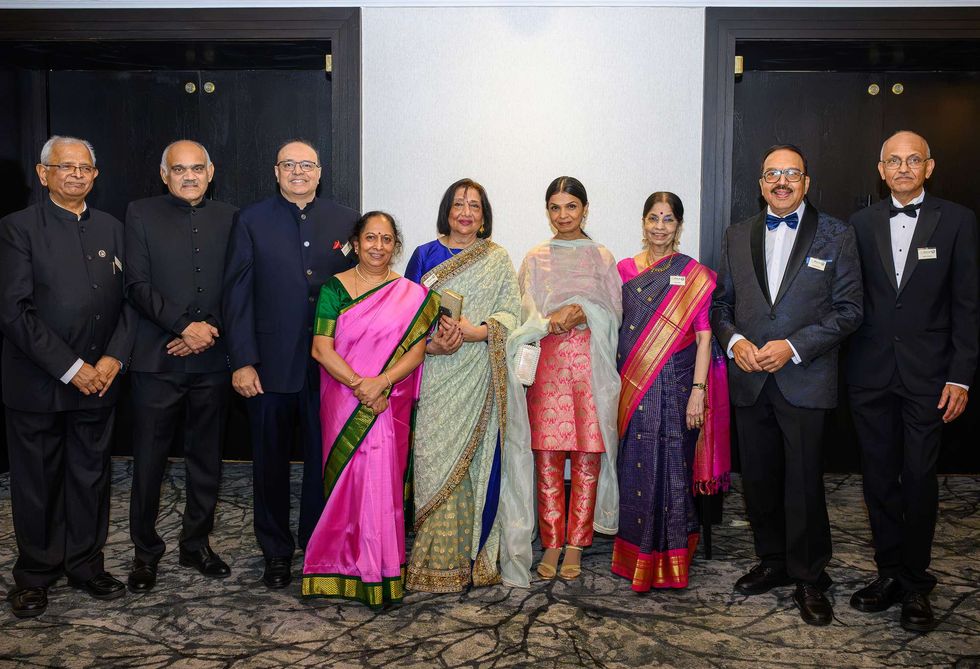 Guests at the Bharatiya Vidya Bhavan's annual Diwali gala in London last Saturday (21)The Bhavan
 Indian high commissioner to the UK P Kumaran speaks during the eventThe Bhavan


