
Highlights
- AI minister Kanishka Narayan says concerns over jobs and AI are justified.
- He calls for greater investment in British AI, data centres and technology firms.
- Narayan says Britain missed much of the last technology revolution.
- Minister says AI can also improve recruitment and create new career opportunities.
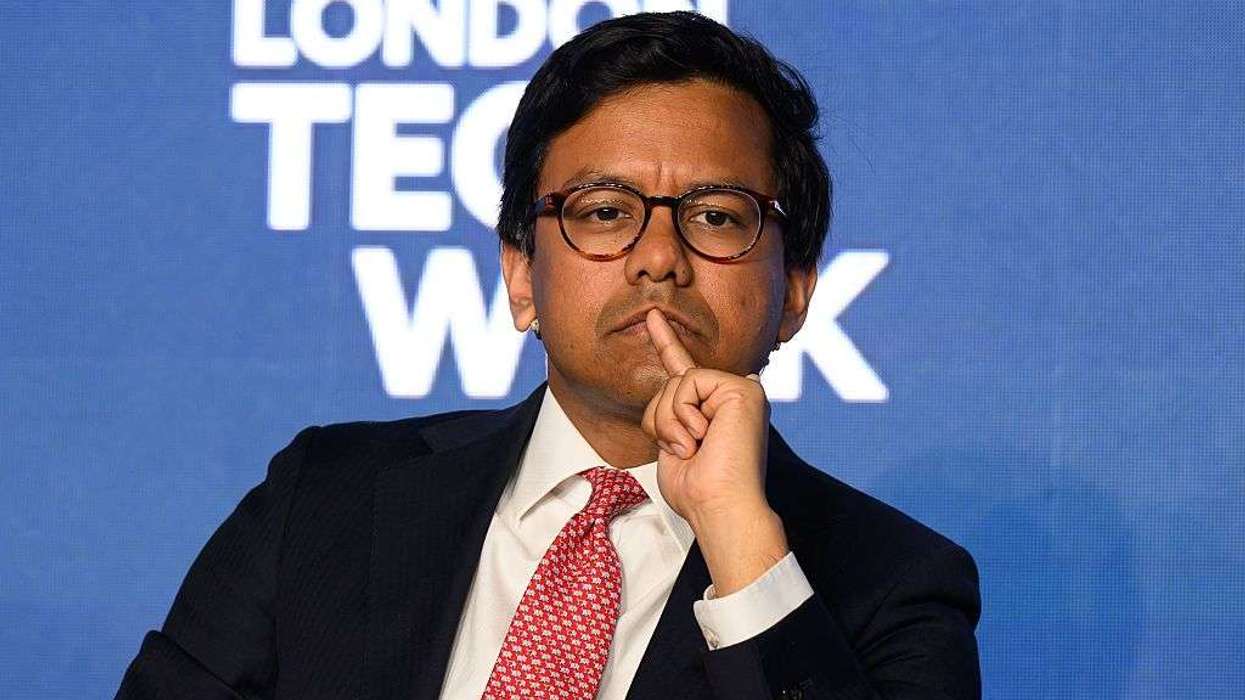
ARTIFICIAL INTELLIGENCE (AI) minister Kanishka Narayan has acknowledged that people have genuine concerns about the rapid rise of AI but argued that the country must invest in its own technology if it wants to remain competitive.
Speaking to The Sunday Times, the 36-year-old minister said AI would reshape jobs and industries, but Britain should focus on developing its own capabilities rather than depending heavily on overseas technology.
"People are right to be worried," Narayan said, describing AI as an issue that could affect today's workforce as well as future generations. He added that he could not promise the transition would be easy because the pace of technological change was unprecedented.
Narayan, who entered Parliament in 2024 as Labour MP for Vale of Glamorgan and now oversees the government's AI policy, said Britain had failed to keep pace during the previous technology boom.
"Over the last 15 years, we basically sat out the tech revolution," he said. According to Narayan, lower investment in technology has left Britain less productive and more dependent on the United States.
He argued that the country now has an opportunity to build stronger domestic AI capabilities through investment in infrastructure, research and British technology companies.
AI computing chips and data centres
Among the areas he highlighted were AI computing chips and data centres, which provide the processing power needed for artificial intelligence. Britain aims to triple its data centre capacity by 2030, although such projects have faced criticism because of their energy and water use.
Narayan said stronger domestic infrastructure was linked to national security and economic resilience.
"When it comes to something like data centres, the British public is very clear that it wants strong defence," he said. He added that if Britain wanted to retain control over critical technology, it needed "a sovereign level of data centre capacity" rather than relying entirely on foreign-owned facilities.
The minister also oversees a £500 million sovereign AI fund designed to support British start-ups. He said the objective was not complete technological independence but ensuring Britain could use global technology "on your terms".
Narayan rejected suggestions that he was overly optimistic about AI. Instead, he said the government had to manage the risks while making sure workers benefited from technological progress.
Drawing comparisons with the industrial revolution, he said institutions and regulation could help reduce disruption, while new opportunities would emerge alongside the challenges.
As an example, he described meeting a young hairdresser in Newcastle whose customer service skills were identified by AI software developed by Sage. She later became an AI procurement apprentice on a higher salary.
"If we get the job-matching and recruitment process right, we'll cut through not just the slop of AI, but frankly, the slop of recruitment," Narayan said. While he stopped short of guaranteeing success, he pledged to work "every hour, every day" to help ensure the technology benefits people.
Reflecting on his own journey, Narayan recalled moving from Bihar in India to Cardiff with his family at the age of eight. His parents, who had worked as lawyers in India, took lower-paid jobs in Wales before rebuilding their careers.
After attending Cathays High School, Narayan won a full bursary to attend Eton College before studying at Oxford and Stanford and later working in banking and the civil service.
He said Britain had given him opportunities that shaped his life and remained confident the country could benefit from the AI revolution if it chose to invest in its own future.