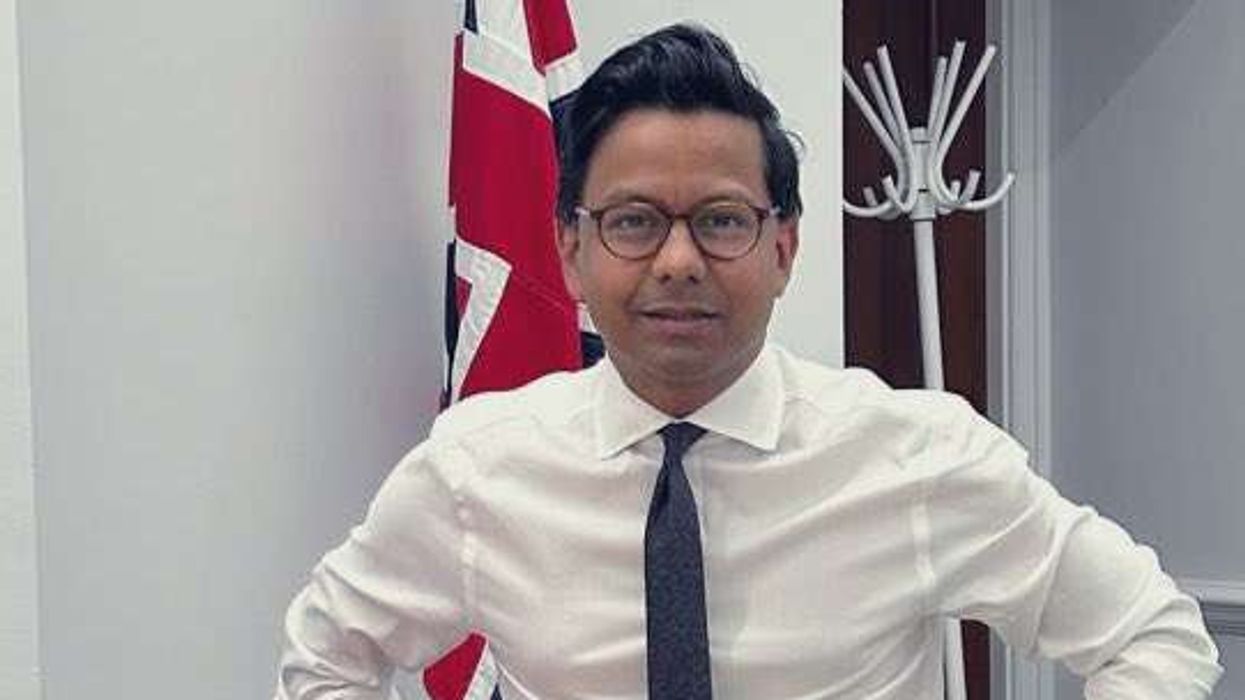

PRIME MINISTER Keir Starmer’s visit to India will strengthen cooperation between the two countries in artificial intelligence (AI) and emerging technologies, Minister for Artificial Intelligence and Online Safety Kanishka Narayan said on Tuesday.
Speaking to PTI , Narayan said a strong base had already been created for collaboration between India and the UK in technology and other sectors.
“The prime minister’s visit to India will make significant advances across our shared interests in connectivity, AI and emerging technologies,” said Narayan, who was recently appointed to the Department for Science, Innovation and Technology (DSIT).
He said India and the UK had a common focus on research and on democratic adoption of new technologies. “This visit is about deepening that shared focus with practical collaboration,” he said.
The Bihar-born Labour MP, who became the first Indian-origin member of Parliament from Wales in last year’s general election, said technology would be a key part of the bilateral partnership and offered major opportunities for cooperation.
“We have, in our two countries, an exceptional foundation for collaboration: research partnerships, deep and personal histories, and a relentless pursuit of the future. We can channel these into specific opportunities for applied AI and online safety research, for adoption of AI products in our firms and public services, and for ensuring AI and online experiences serve democratic values that India and the UK hold dear,” he said.
Starmer is scheduled to leave for India later on Tuesday with a delegation of more than 100 CEOs, university vice-chancellors and cultural leaders to promote trade, technology and investment ties.
Talks between Starmer and Prime Minister Narendra Modi will focus on the India-UK Comprehensive Economic and Trade Agreement (CETA), signed during Modi’s UK visit in July, and the Technology Security Initiative (TSI) concluded last year.
UK government officials said both leaders would meet Indian and British business figures to “turbocharge” trade and investment between the two countries and highlight cooperation across sectors.
Data from the UK Department for Business and Trade (DBT) last month showed total trade in goods and services between India and the UK at 44.1 billion pounds in the four quarters to March 2025, an increase of 10.1 per cent over the previous year.
The Free Trade Agreement, officially known as CETA, is expected to raise these figures by removing tariffs on more than 90 per cent of UK goods. The goal is to double bilateral trade by 2030 after UK parliamentary ratification of the deal next year.
(With inputs from agencies)
Keir Starmer India visit, UK India trade, artificial intelligence cooperation, Kanishka Narayan, UK India technology ties