
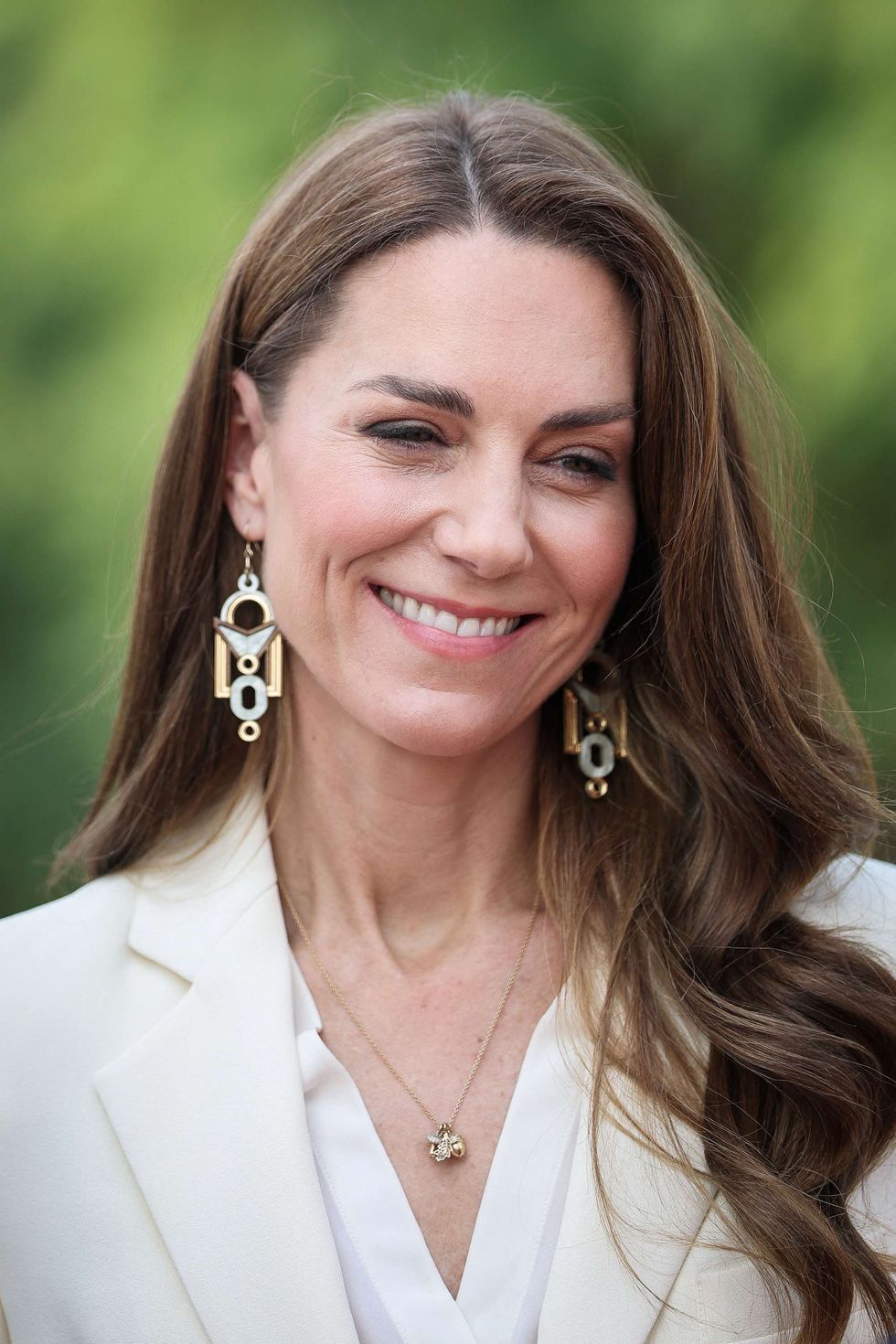
THE Princess Of Wales, who is 44, has spoken about her cancer treatment in a BBC documentary, Heal, which is due to be shown this Sunday (29).
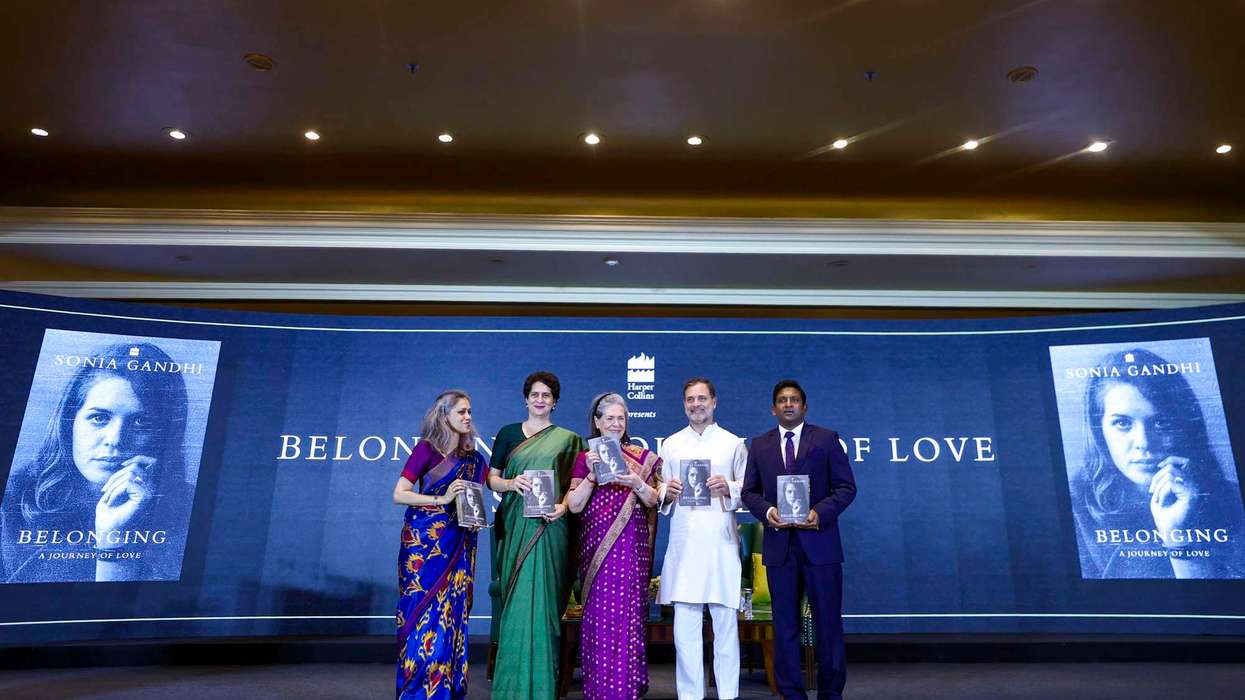
Sonia Gandhi, who is nearly 80, has also talked about her cancer in her memoir, Belonging: A Journey of Love.
Cancer is no longer the automatic death sentence it once was because of advances in medicine. Still, the word strikes fear in most people. They will either have lost a much-loved member of the family to cancer or know someone who has died from the disease.
Catherine, who has just returned with the Prince of Wales from a trip to Mumbai and Delhi, has learnt at too young an age that "cancer does change you".
"It changes your body," she added. "Healing is a journey. How to reconnect with the things you once knew, and how to find a sense of hope and joy alongside uncertainty... It changes you physically. But there's a much, much deeper part to what a cancer diagnosis shifts in you."
 The Princess of WalesGetty Images
She emphasised: "It's clear we're not meant to carry life's challenges alone... Things can renew and grow. Often, it is through pain that we realise there's a greater beauty that lies beyond that... The journey through and beyond treatment requires more than medicine alone. Healing... is not just about fixing what is wrong. It is about finding balance in how we live. Between effort and acceptance, between control and trust, between thinking and simply being."
Catherine has completed the Three Peaks Challenge, climbing the highest peaks in Scotland, England and Wales Ben Nevis, Scafell Pike and Yr Wyddfa within 24 hours. She has met cancer patients in hospital.
Doctors are always telling us that the chances of a positive outcome after treatment are vastly improved if cancer is detected early. A few extracts from what Catherine told the BBC documentary have been released ahead of transmission.
 King CharlesGetty Images
Catherine and her family must have been shocked when she was diagnosed with cancer in March 2024, although its exact nature was not revealed. She is now in remission after being treated at the Royal Marsden Hospital in London. Proceeds from overseas sales of the documentary will go to the Royal Marsden Cancer Charity.
According to Kensington Palace, the aim of the documentary is to "help others navigate diagnosis, recovery and life beyond cancer, while improving access to holistic cancer care that supports patients' physical and emotional wellbeing".
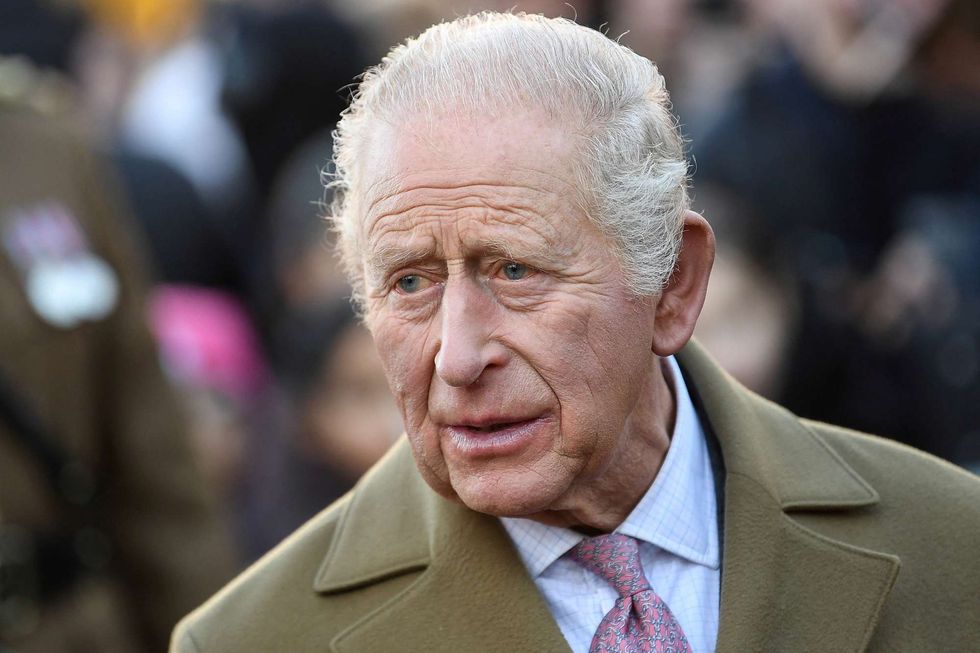
King Charles, who is 78, is also a cancer patient. He was diagnosed in February 2024. In December 2025, he announced that his treatment schedule would be reduced in 2026, moving into a "precautionary phase", rather than being declared in remission. He has undertaken stressful trips to the US and, most recently, the Caribbean.
The trials and tribulations of being a cancer patient are captured in Aleksandr Solzhenitsyn's 1966 novel, Cancer Ward, which is set in a Soviet hospital in Tashkent in 1955. The story follows patients as they confront illness and the oppressive Soviet political system. The central character is Oleg Kostoglotov, a former labour camp prisoner now permanently exiled, who is admitted with stomach cancer. In the end, Kostoglotov's cancer goes into remission and he is discharged. As he boards a train back to his exile, he is haunted by the sense that Russia itself will never heal - just as cancer can return. The novel closes with a note of fragile hope: rumours of a political amnesty for exiles are circulating.
With the use of AI, early detection of cancer is becoming easier. And it can be done remotely. A friend of mine, Prof Sir Shankar Balasubramanian, is doing work in Cambridge to understand how drugs affect DNA, with a view to developing safer, targeted treatments for cancer. What I have been told is that there are many types of cancer.
These days, people who are prominent in public life in Britain are commendably open about using their own predicament to urge others to go for early and regular check-ups. One can only wish Catherine and Charles well and thank them for being so open.
For Sonia to talk about her cancer is remarkable because this is still not the done thing in India. First, she has written about her father, Stefano Maino, who died of lung cancer in 1986. His diagnosis came after he was checked for a persistent cough.
"Father had been a cigarette smoker since his youth," said Sonia, who attended her father's funeral in Orbassano, Italy. "The growth was too close to the heart to attempt surgery. He would probably have another six months to live... A few days later, on April 30, I was returning from an outing when I saw Rajiv standing in the porch waiting for me. He broke the painful news. My father had suffered a fatal heart attack. I dissolved into sobs."
Sonia has gone into some detail about her own cancer. She said that apart from occasional bouts of asthma and allergies, "I'd had no serious health troubles... Then in 2010 a more serious problem arose: I was advised an operation for suspected breast cancer... I felt shaken and worried; there was no time to lose, my children and I were told, and my mind began to race to a possible scary outcome."
She had confidence in her doctors at Sir Ganga Ram Hospital in Delhi, but to avoid the inevitable "media frenzy" in India, "we decided to go for the surgery to Dr Veronesei, a celebrated breast cancer surgeon, who was founder and head of the European Institute of Oncology. The IFO was situated outside Milan."
Her sisters, Anouschka and Nadia, and her children, Rahul and Priyanka, would be nearby. She was relieved when she heard the doctor announce: "No need to worry, everything has gone well and there are no residues."
The surgeon "had removed two tumours, including a non-suspicious one to be on the safe side, and conducted an intra-operative radiation to spare me five weeks of radiotherapy. A year later, routine follow-up tests detected a growth in my pancreas. This came as a shock to me and the children...
"That would mean a long operation and a prolonged hospital stay. This time I was sent to the Erasmus teaching hospital in Rotterdam, where I was to be treated by a well-known pancreatic surgeon, Dr Casper van Eijck. My mind began to dwell on a worst-case scenario. What if it turned out to be a metastatic growth?"
She woke up in the recovery theatre to be informed by the surgeon that "I had been fortunate the tumour was found to be in a preliminary precancerous stage, having been detected early... once again, I'd escaped the chemotherapy I dreaded."
She has had annual check-ups in Rotterdam. In August 2022, she attended the funeral in Orbassano of her mother, Paola, who had died aged 97.
"I happened to be in London on my way back from my mother's funeral when Queen Elizabeth's took place barely 10 days later... two women: one of royal descent, the other a homemaker of common background; both witness to so much history... both meeting the same end; ashes to ashes; dust to dust."
One assumes that, like Catherine, Sonia, though fragile, is in remission.
Now that she has revealed so much medical detail about her cancer in a way that is unheard of in India, one hopes it will raise awareness about the disease and discourage other women from suffering in silence. Her book has sold 200,000 copies since its publication on November 10.