
Although Sonia Gandhi’s Belonging: A Journey of Love is a personal memoir, it does offer insights into how American presidents have sometimes found themselves on the wrong side of history – as happened with Richard Nixon over the Bangladesh war in 1971 and appears to be happening now with Donald Trump over Ukraine.
Nixon backed the military regime of General Yahya Khan in Pakistan even though the Punjabi-dominated Pakistani army had carried out a genocide of Bengali Muslims, especially intellectuals, in what was then East Pakistan. The American president even sent the US Seventh Fleet into the Bay of Bengal in a threatening attempt to intimidate the Indian prime minister, Indira Gandhi.
Sonia’s account explains why Bangladesh probably would not have been born had it not been for Mrs Gandhi’s courage and resolve.
The book also sets out how Russia has been India’s trusted friend while the US has proved to an unreliable ally.
As Mrs Gandhi’s daughter-in-law, Sonia had a ringside seat in the cataclysmic events that shaped modern India.
Readers may well conclude that had it not been for the brutality of the Pakistani military, East Pakistan might not have broken away from West Pakistan to form Bangladesh in 1971.
Setting out the origins of the Bangladesh crisis, Sonia said: “In December 1970, President of Pakistan General Yahya Khan, confident that he had the support of the Pakistani people, had declared a general election – the first time after partition that such an election was going to be held. Following the partition of 1947, the state of Pakistan had been created: West Pakistan, carved out of the Indian provinces of Punjab and Sind, and East Pakistan, carved out of Bengal, both wings separated by the mass of northern India. Differences of language and culture between the two, and the economic, political, and cultural domination of West Pakistan, had created a rift between the two wings. Against this background the Awami League of East Pakistan, led by its charismatic leader, Sheikh Mujibur Rahman, swept the election, not only winning the State Assembly but also gaining a majority in the Pakistan National Assembly. That meant Mujib had rightful claim to the prime ministership of the country.”
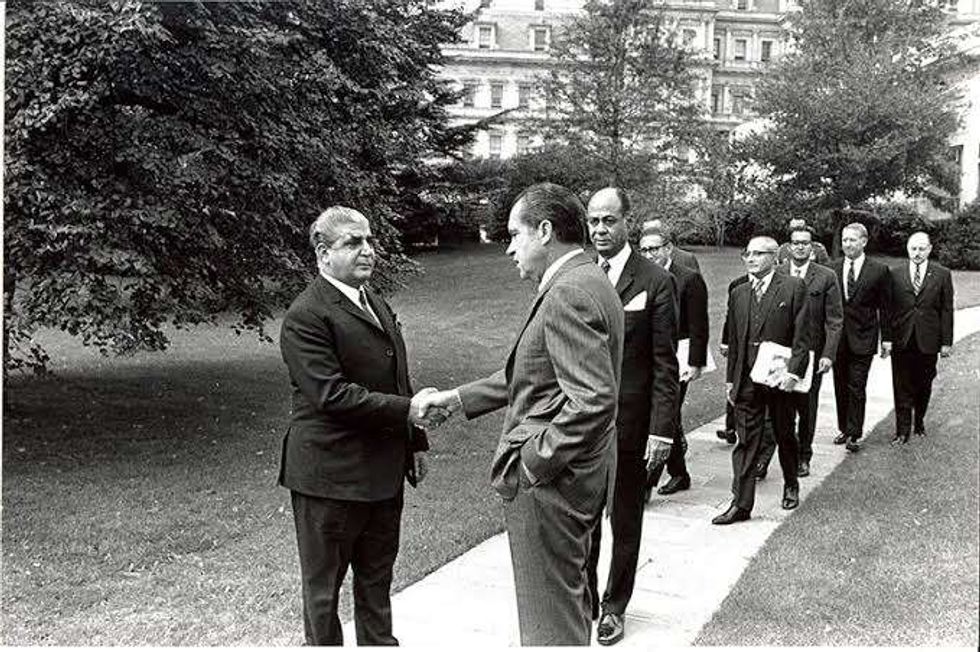 Yahya Khan of Pakistan with President Richard Nixon in Washington in 1970Eastern Eye
She went on: “The West Pakistani authorities, who held sway in the unequal union of the two wings of the country, resisted any move of the Awami League to take office. Wounded and insulted, East Pakistan put forward a demand for independence that had long been simmering out of its people’s feeling of being neglected, demeaned, and exploited by West Pakistan.
“While the negotiations were underway between the leaders of the two wings, forty thousand West Pakistani soldiers were airlifted, without any warning, into East Pakistan. Mujibur Rahman was flown from Dhaka to imprisonment in West Pakistan. A genocide of the Bengali wing followed: Arson, rape, and torture were unleashed upon the people. Homes and fields were reduced to ashes, including the jute fields that were then the economic lifeline of the country.”
Sonia added: “For months, as the massacre continued, men, women, and children were hunted down. Hordes of people, an unending stream of entire families attempting to escape the horror, fled to India for refuge. In no time, around ten million had poured into West Bengal and adjoining states. Reports of monstrous events were reaching Delhi every day, of students and intellectuals being targeted and cruelly tortured in Dhaka.”
Sonia remembered that her husband, Mrs Gandhi’s son, Rajiv Gandhi, “would be careful to not describe the gory details in my presence”.
She described the Indian prime minister’s reaction: “My mother-in-law felt as if the barbarities were being inflicted on her own people; she suffered for them. On her return from the refugee camps in West Bengal, accompanied by her col- leagues, she looked distraught and couldn’t hold back her tears while describing their plight: crammed in large numbers into makeshift tents under heavy monsoon rains, with the bare minimum of sustenance or medication. It placed an enormous burden on the country and a responsibility on her. She had to help them; she had to act. India had a tradition of providing shelter to refugees, those in trouble or fleeing persecution, like the Parsis, the Jews, and the Tibetans. She had been touched by the visit to the camps in August 1971 of Edward Kennedy, then a US senator. He was one of the few foreign dignitaries
from the Western world to call on her with offers of support and, on his return to the US, to express his outrage at what he’d personally witnessed.”
Sonia continued: “In August news had reached her that President Yahya Khan had decided on a secret trial of Mujibur Rahman for waging war against Pakistan, a trial that would surely end in a death sentence. She decided, after contacting some of the world leaders directly and writing to them about the situation, to travel abroad, to place before the world the magnitude of the problem India was facing, and the millions caught up in the conflict.”
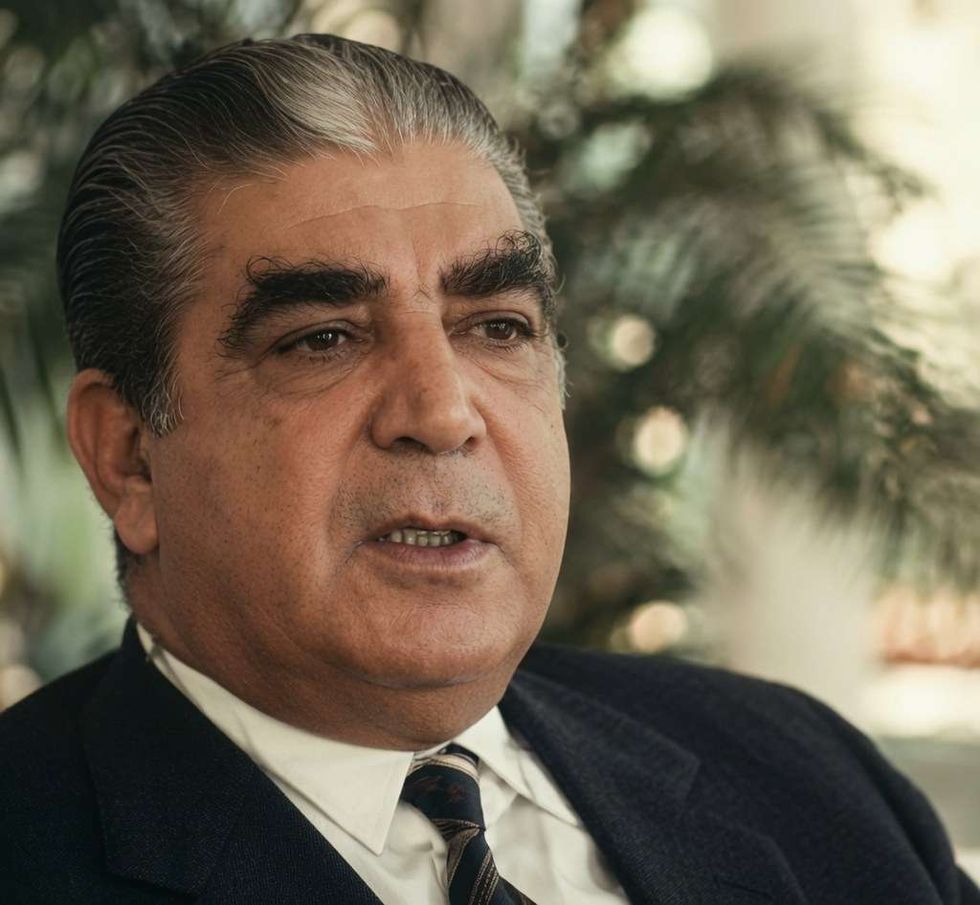 Yahya Khan of PakistanEastern Eye
She said: “We kept a close eye on her travels and followed reports in the newspapers of every meeting she attended.”
Nixon was not especially bothered about the genocide that had taken place when the Pakistani military had gone into East Pakistan. Sonia does not recount Nixon privately called Mrs Gandhi a “bitch”.
“On her return she told us how President Richard Nixon and Secretary of State Henry Kissinger had openly displayed their contempt for India and for her, how with evident bias they had brushed aside her account of a grave situation that she believed required immediate humanitarian action,” recalled Sonia. “While she was doing everything possible to inform the world of the dangerous path Pakistan was following, the armed forces were told to be fully prepared in case Pakistan compelled India into war. Time was needed to prepare both forces and supplies.”
Sonia has provided a factual account of how India was drawn into war with Pakistan: “On December 3, Pakistani planes struck at several of our air-bases. My mother-in-law was in Calcutta (now Kolkata). On her return to Delhi, she called a meeting of the opposition parties to brief them on the attack and to inform them that India was now at war with Pakistan. She addressed the nation on radio that same evening: The airstrikes were a declaration of war against India, and she had ordered the Indian Army to enter East Pakistan. The timing was crucial. Indian forces stationed along the eastern border advanced swiftly through the countryside, circumventing the cities where the Pakistan Army was entrenched, and encircled the Pakistani forces.”
Nixon at this stage decided to back Pakistan but the US president had underestimated Mrs Gandhi: “As Indian forces closed in on Dhaka, news came that America’s Seventh Fleet was thirty-six sailing hours away from the Bay of Bengal. It was obviously meant to put psychological pressure on India and
compel us to the negotiation table. But if President Nixon thought Indira Gandhi would be unnerved, he was mistaken. At a meeting in the Ram Leela ground in Delhi, she declared to a tumultuous crowd, ‘We will not retreat, not by a single step will we move back!’ Now the goal was for our forces to ensure a Pakistani surrender before the Seventh Fleet reached the Bay of Bengal.
“On December 16, 1971, the Pakistani commanding officer General Niazi surrendered in Dhaka, and by the time the Seventh Fleet closed in, the war was over and won. Mrs Gandhi withdrew India’s troops as soon as the representative government took charge. India was the first to recognise Bangladesh as a new country.
“Relief and jubilation swept over the whole country when a few days later my mother-in-law announced that Sheikh Mujibur Rahman had been released and flown out to London. Even more exciting, he would fly back to his new country via Delhi on January 10, stopping over for a few hours.
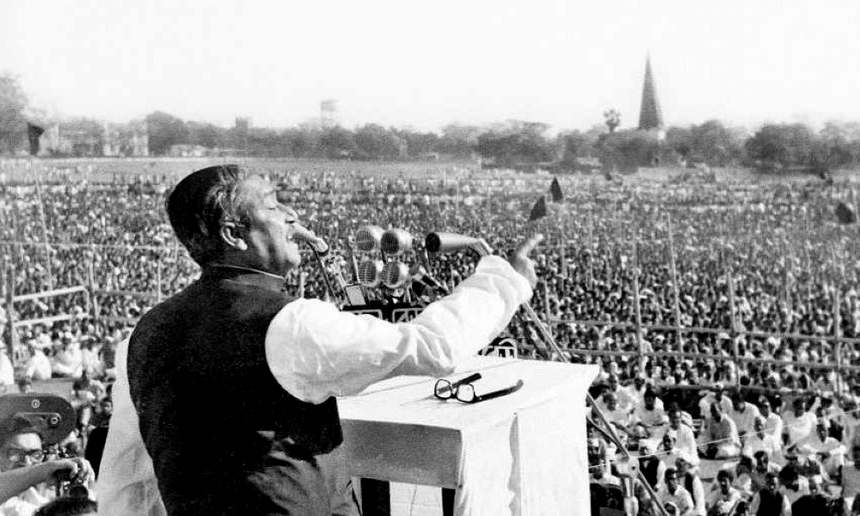 Sheikh Mujibur Rahman addressing a rallyEastern Eye
“We had lived through the crisis of the Bengali people as if it had been our own, every minute of it. The brutal attack on them by West Pakistan, the cold shoulder of the Western powers to Indira’s pleas, the tension of the Pakistani attack, the Soviet Union’s support of India with their Friendship Treaty, the Seventh Fleet in the Bay of Bengal: It had been a period full of drama, tension, and suspense.”
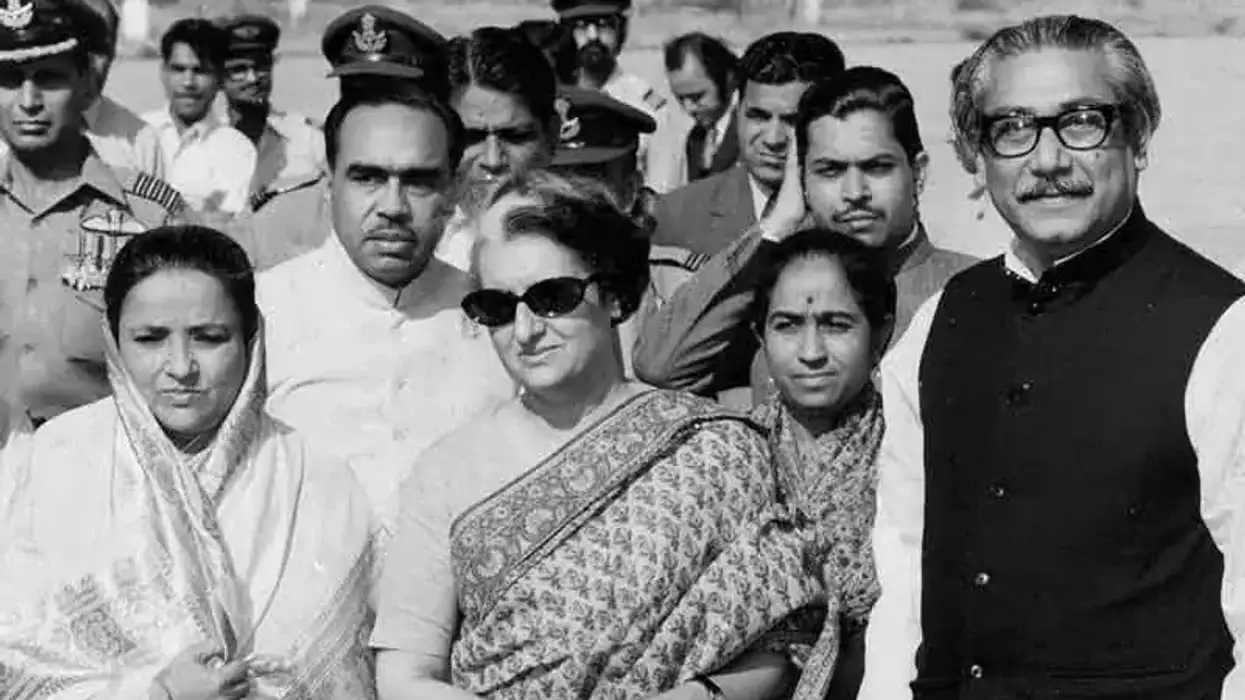
Mujib was released but an RAF VC10 took him first to London, and then to Dhaka. On the way, he made a brief stop in Delhi so that he could personally thank Mrs Gandhi. Although Sonia was pregnant at the time with her daughter Priyanki, she insisted on going to the airport.
She said: “It was now two days to my due date, and I had become shy of being seen by outsiders – but no way was I going to miss the opportunity of meeting the hero, Mujibur Rahman! Rajiv didn’t object: He must have known that this time I wasn’t going to yield. My mother-in-law took out of her almirah an oversized blue raincoat, and off I went to the airport with her, Rajiv, and Padmaja Naidu (a family friend) on that historic day. There was such excitement, the air crackled with it. Mujib impressed me with his dignity and warmth, thanking Mrs Gandhi and her government for their support. He couldn’t wait to be with his people, to share their jubilation at the birth of their own country.”
Alas, there is a tragic postscript to the story. Bangladesh was born soaked in blood. And more blood would be shed.
Sonia said that on August 15, 1975, India’s Independence Day, Mrs Gandhi addressed a large crowd from the Red Fort in Delhi: “That very morning, she had received terrible news: Mujibur Rahman and his whole family, including a small boy of nine, had been brutally killed in his own home. A group within the Bangladesh armed forces had hatched the plot.”
There is matter of intelligence that had not been previously in the public domain: “Reports had been reaching her about a plan to assassinate him, and she had sent R N Kao, her security chief, to warn Sheikh Mujib—but he hadn’t taken it seriously; he hadn’t believed it. Only Mujib’s two daughters, Hasina and Rehana, who were in West Germany, escaped the massacre. Hasina was then given refuge by the Indian government and lived in India till 1981. She has many times since spoken of the warmth and motherly care she received from Mrs Gandhi. In 2011, when Sheikh Hasina was prime minister of Bangladesh, the country’s highest award, Swadhinata Samman (Freedom Honour), was given posthumously to Indira Gandhi to pay tribute to her role in the country’s liberation. When I went to Dhaka to receive it, the entire opposition was present, a mark of their respect for her. Even though she had been warned of a potential attack on Mujib, the murder was still a shock for my mother-in-law. The choice of the date for the massacre was also curious—our Independence Day.”
 Rehana sister of Sheikh Hasina Eastern Eye
Sonia has included a footnote: “I first met Bangladesh’s Sheikh Hasina when she arrived in India as a young woman with two toddlers, granted political asylum by Mrs Gandhi after her father, Mujibur Rahman, and his family had been massacred in a military coup. She remained in exile in Delhi for six years, determined to restore her country to democracy one day; she returned in 1981 and through many ups and downs served as prime minister for four terms.
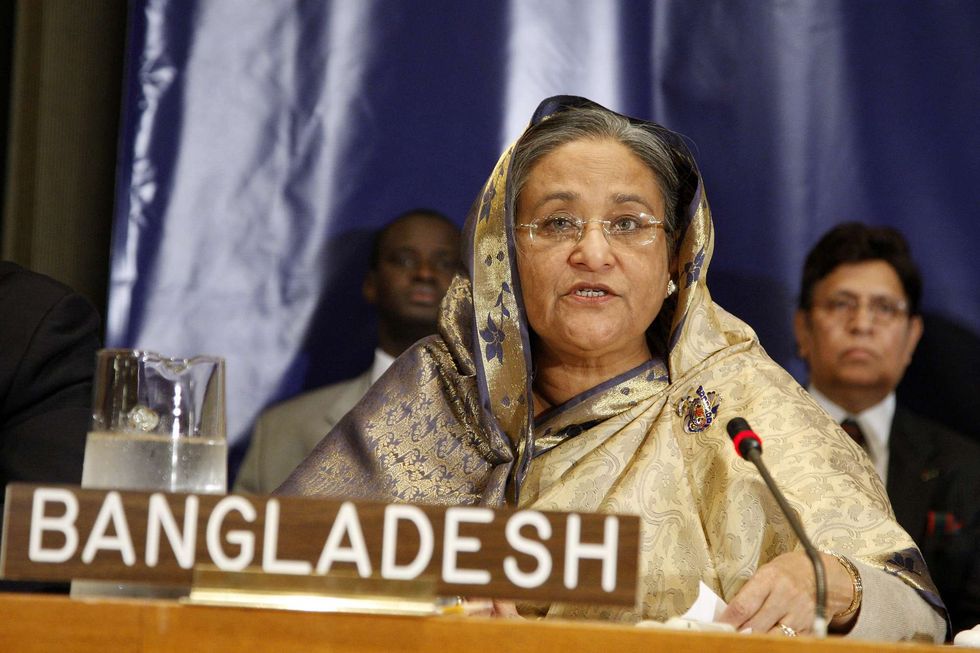 Sheikh Hasina credit Eastern Eye
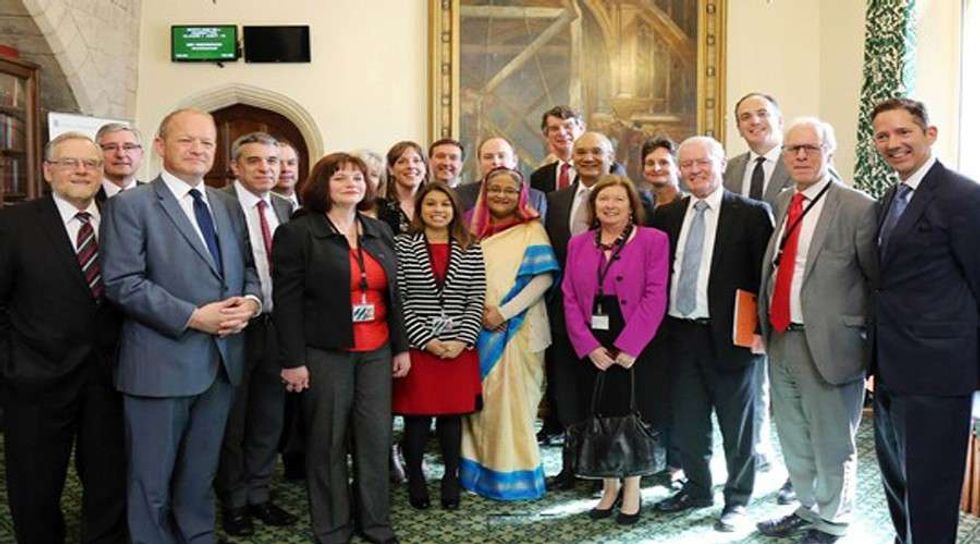 Sheikh Hasina and her niece MP Tulip Siddiq in the Commons in 2015 when she was prime ministerEastern Eye
“She proved herself a formidable politician. I remember feeling goosebumps listening to her deliver an oration in Bengali, even though I couldn’t understand most of the words so passionately spoken. Bangladesh had been one of the world's poorest countries, but under her leadership, its development indices rose to be amongst the highest in the region. Hasina was warm and informal with us – she never failed to call on us when she was in India; as it turns out, our last meeting was just a few days before she was removed and her government overthrown. She is in exile once again, threatened with imprisonment in her country if she returns – but who can tell when, or if, the wheel will turn again?”
Looking back, if the emergency Mrs Gandhi imposed from 1975-77 marked the darkest blot in her career, the Bangladesh war of 1971 proved to be her finest hour.
Belonging: A Journey of Love. By Sonia Gandhi. Published by William Collins in the UK. £25



 FILE PHOTO: Aung San Suu Kyi (Photo by NYEIN CHAN NAING/POOL/AFP via Getty Images)



