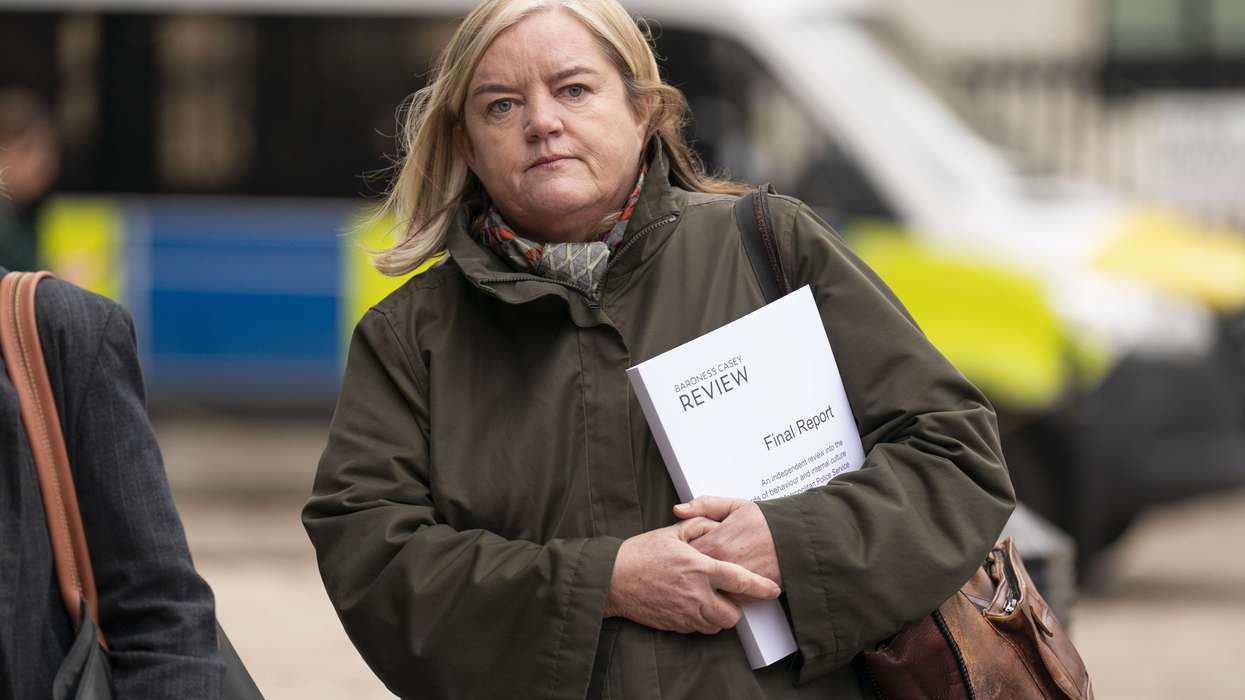
- Baroness Casey said she feels victims of grooming gangs were “let down” over the past decade.
- A new national inquiry into grooming gangs has secured £65 million in government funding.
- The inquiry will begin with local investigations in Oldham and could expand to other UK cities.
Baroness Louise Casey has said she feels personally responsible for failing victims of grooming gangs, admitting she was deeply frustrated that “not enough had changed” in the decade after the Rotherham child sexual exploitation scandal first shocked Britain.
Speaking at the Hay Festival on May 25, the crossbench peer reflected on her earlier investigations into failures by police and local authorities to protect vulnerable girls from organised abuse gangs.
Baroness Casey reportedly said she felt “really upset” when grooming gangs returned to national headlines in 2025 because many of the same problems appeared to remain unresolved. She reportedly pointed to continuing failures to believe victims, gather evidence properly and openly address questions around the ethnicity and background of offenders.
The comments come as the UK prepares for a new national inquiry into grooming gangs, with ministers under increasing pressure to examine how police forces, councils and social services responded to years of abuse allegations across several English towns.
‘A sense of denial’ inside public institutions
Baroness Casey first became closely associated with the issue after investigating the handling of child sexual exploitation in Rotherham following the landmark 2014 report led by Alexis Jay.
That inquiry found at least 1,400 children had been abused, trafficked and exploited in Rotherham between 1997 and 2013, mainly by men of Pakistani heritage, while police and local authorities repeatedly failed to intervene effectively.
Baroness Casey reportedly said she encountered a “sense of denial” while carrying out her investigation. Recalling conversations with council leaders at the time, she suggested some officials appeared more concerned about protecting the town’s reputation than confronting the scale of the abuse scandal.
Her 2015 review concluded there had been serious institutional failures within the council. Central government later intervened and commissioners were brought in to oversee the authority after democratic control was effectively suspended.
Baroness Casey also suggested frustration remained over the limited scrutiny placed on policing failures during the period, reportedly saying nobody had allowed her to properly investigate South Yorkshire Police at the time.
Ethnicity data debate returns to the spotlight
One of the more politically sensitive issues raised by Casey involved the collection of ethnicity data linked to grooming gang offenders.
She reportedly said the failure to gather and publish accurate information over many years had created further mistrust and fuelled racial tensions. While noting that child abuse offences overall are statistically more likely to involve white offenders, Baroness Casey said investigations into organised child sexual exploitation in certain areas showed an over-representation of men of Pakistani heritage.
According to Baroness Casey, avoiding the issue entirely had ultimately strengthened extremist narratives rather than weakening them.
The Government has since commissioned Baroness Casey to carry out a national audit into grooming gang failures. Her review delivered 12 recommendations, including the creation of a statutory national inquiry, which has now been formally established.
The inquiry, chaired by Anne Longfield, has been given £65 million in government funding and is expected to run until no later than March 2029.
It will investigate whether public authorities failed to pursue grooming gang cases because of fears around causing tensions within ethnic communities.
Local investigations are set to begin in Oldham, with the inquiry holding powers to compel councils, police forces and public officials to provide evidence.
Jess Phillips has also reportedly called for the inquiry’s scope to expand further to include areas such as Bradford and Birmingham.