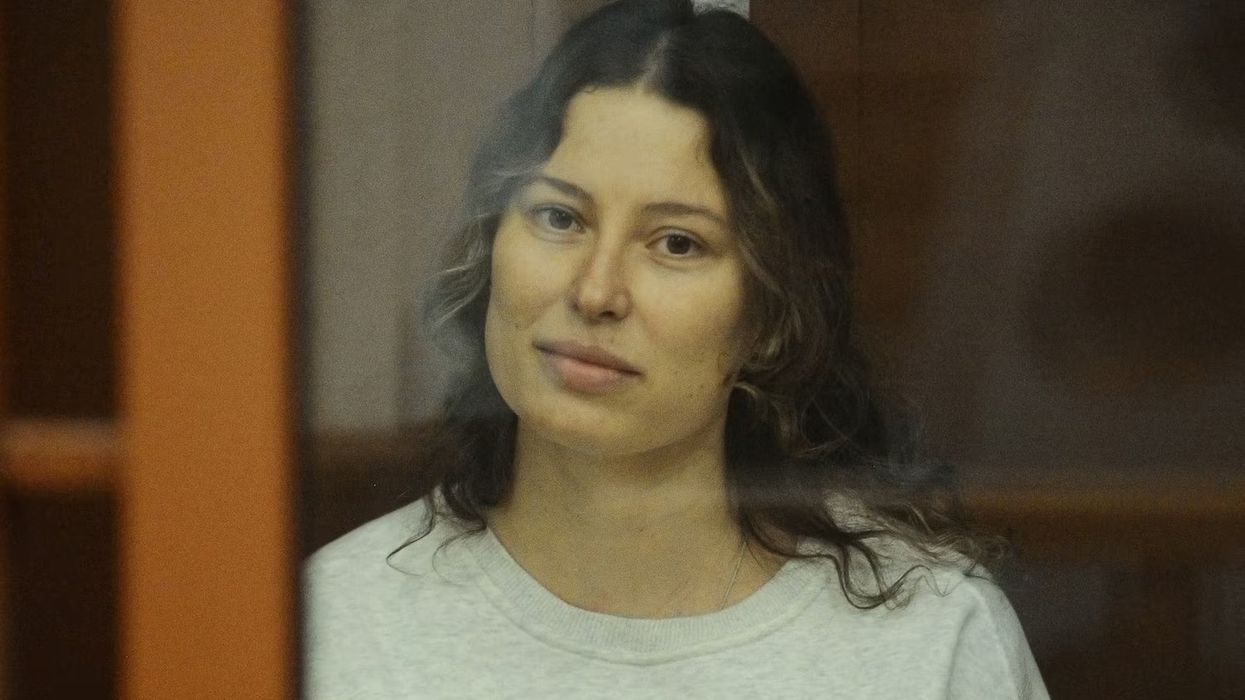

Ksenia Karelina, a US-Russian citizen and amateur ballerina, has been released from a Russian prison as part of a prisoner swap between the United States and Russia. Karelina was jailed last year after making a donation to a charity supporting Ukraine.
The 34-year-old had been sentenced to 12 years in prison on charges of treason after Russian authorities discovered she had donated $51.80 (£40) to Razom, a US-based charity providing humanitarian aid to Ukraine. The donation was made on the first day of Russia’s invasion of Ukraine in 2022.
Karelina, who moved to the United States in 2012 and became a citizen in 2021, was arrested during a family visit to her hometown of Yekaterinburg earlier this year. After a closed trial in August, she was convicted of treason, a charge heavily criticised by international observers and human rights groups.
Her lawyer, Mikhail Mushailov, confirmed via Instagram that Karelina was flown from Abu Dhabi in the United Arab Emirates to the United States on Thursday following the prisoner exchange.
US Secretary of State Marco Rubio welcomed her return, stating that Karelina had been "wrongfully detained by Russia for over a year" and credited President Donald Trump with securing her release. Rubio also reaffirmed the administration’s commitment to bringing home all Americans detained abroad.
According to Russia’s Federal Security Service (FSB), Karelina’s donation was allegedly used to fund the Ukrainian military through the purchase of tactical supplies, equipment, weapons, and ammunition. However, Razom has consistently denied providing any military support, insisting its work focuses solely on humanitarian aid.
Rights group The First Department, which had been monitoring Karelina’s case, condemned the charges, calling them "absurd" and arguing that they reflected the increasing crackdown on dissent and support for Ukraine within Russia.
In exchange for Karelina’s release, the US agreed to release Arthur Petrov, a dual German-Russian citizen. Petrov had been detained in Cyprus last year at the request of the United States and later extradited. He was accused of participating in an illicit network to procure American-made microelectronics, allegedly destined for Russian military manufacturers.
The US Justice Department alleged that Petrov’s actions contributed to strengthening Russia’s military capabilities amid ongoing Western sanctions following the Ukraine invasion.
The Karelina-Petrov swap marks yet another complex exchange between Washington and Moscow during a time of strained relations, with several high-profile prisoner swaps taking place over the past two years.
Despite the successful negotiation, many Americans remain detained in Russia, including Wall Street Journal reporter Evan Gershkovich and former US Marine Paul Whelan, both accused of espionage, charges they and the US government have rejected.
Karelina’s arrest had drawn international outrage, with many pointing to the case as an example of Russia’s increasingly harsh measures against any perceived support for Ukraine, even small, individual acts from foreign nationals.
Following her return to the US, Karelina has yet to make a public statement, but her lawyer said she is relieved to be home and is currently spending time with her family as she recovers from her ordeal.
The State Department said it remains "deeply concerned" about Americans detained abroad and vowed to continue working towards their release through "every available diplomatic channel".
The prisoner exchange comes amid heightened diplomatic tensions between Russia and the West, with sanctions, espionage accusations, and ongoing support for Ukraine continuing to dominate relations.
Meanwhile, human rights groups have called for more transparency in how cases like Karelina’s are handled in Russia, warning that ordinary citizens with dual nationality could be increasingly at risk.