
Highlights
- Sowcar Janaki built a career spanning more than seven decades and 400 films.
- She successfully moved from leading roles to character-driven performances.
- Her work across cinema, theater, and television kept her connected with audiences across generations.
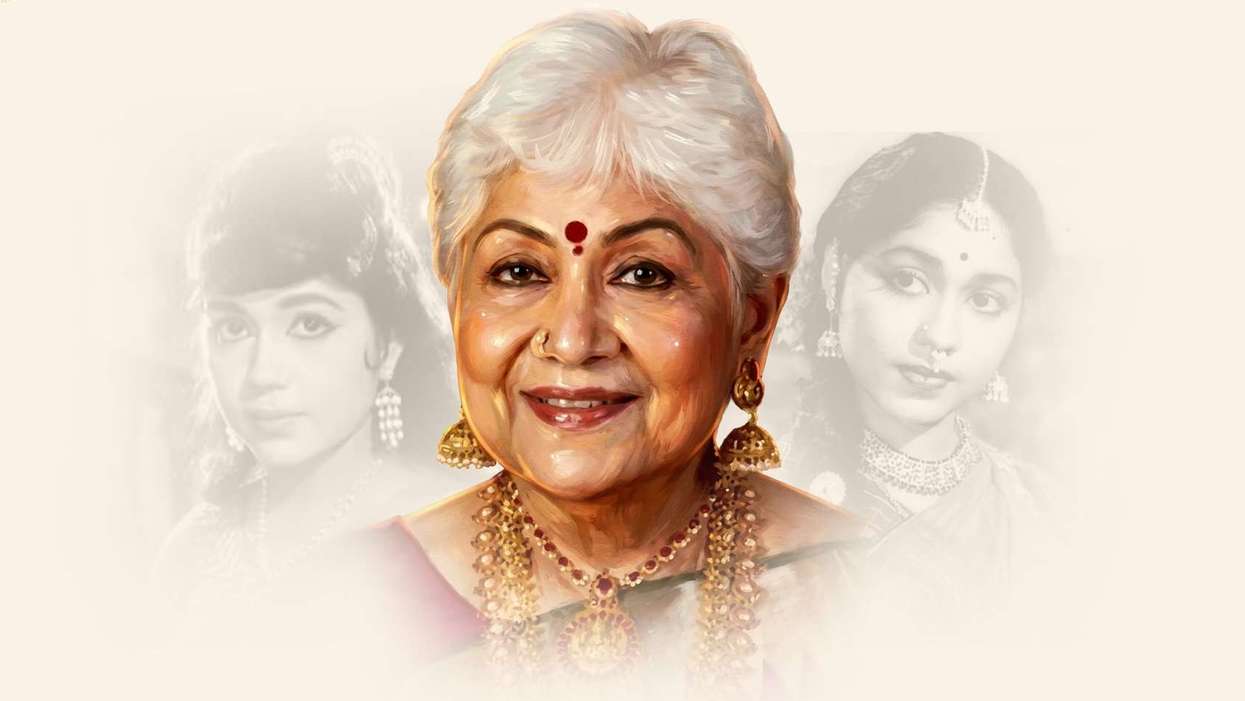
Sowcar Janaki's career was extraordinary not simply because of its length, but because of how often she reinvented herself. After making her debut in the early 1950s, she remained part of Indian cinema through several generations of actors, filmmakers, and audiences.
Here are five ways the legendary actor built a career that refused to be confined to a single era or role.
1. She turned a debut role into an enduring identity
Janaki entered the film industry with the Telugu movie Shavukaru, directed by L. V. Prasad. The film earned her the name Sowcar Janaki, which would eventually become synonymous with her career.
Rather than being remembered only for her debut, she used the opportunity to establish herself as a leading performer and soon expanded her work across south Indian cinema.
2. She built a leading-lady career across multiple languages
After making her Tamil debut with Valayapathi in 1952, Janaki became one of the prominent female actors of her generation. She worked with many of the leading heroes of the era and appeared in Tamil, Telugu, Kannada, and Malayalam films.
Her career eventually crossed more than 400 films, giving her a rare reach across the south Indian film industry.
3. She reinvented herself when the leading roles changed
One of the biggest reasons Janaki remained relevant was her transition from leading lady to character actor. Instead of stepping away when the industry moved on to a younger generation of female stars, she embraced roles that allowed her to bring a different kind of depth to the screen.
That transition gave her career a second life and allowed her to remain part of films across different eras.
4. She never limited herself to movies
Janaki's artistic career extended well beyond cinema. She appeared in more than 300 stage productions and also worked in television.
Theater gave her another platform to develop her craft, while television helped her remain visible as Indian audiences moved into new forms of entertainment.
5. She kept working across generations
Janaki's career lasted more than seven decades, with her final film appearance coming in the 2023 Telugu movie Anni Manchi Sakunamule. Few actors have managed to remain part of the industry for such a long period while continuing to evolve with it.
Her contribution was recognized through several honors, including the Kalaimamani and the Padma Shri, which she received from the Government of India in 2022.
Sowcar Janaki died at 94 in a Chennai hospital on August 21 after being hospitalized with age-related health complications. Her legacy goes beyond the number of films she made. It lies in the rare ability to move from one generation of cinema to the next without being defined by the role that made her famous.