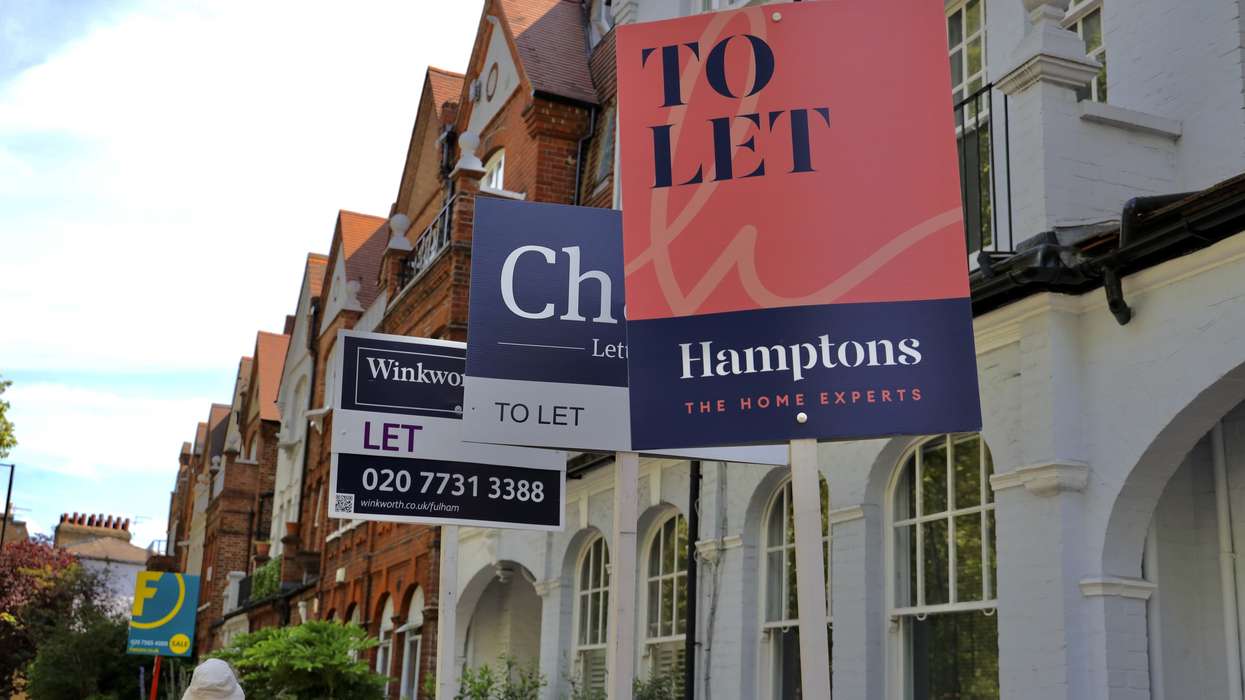

- Private tenants in England now spend around 36 per cent of household income on rent.
- In Kensington and Chelsea, renters effectively work until September 26 each year just to cover rent costs.
- Rising rents are increasingly affecting full-time workers, young professionals and middle-income households.
Britain’s rental crisis is no longer only about expensive cities or struggling low-income households. Across England, rents are swallowing larger portions of income, forcing lifestyle changes for millions of tenants and raising fresh questions about how sustainable the private rental market has become.
New analysis by Generation Rent and the Renters’ Reform Coalition found private tenants in England now spend around 36 per cent of household income on rent, based on Office for National Statistics data.
That is significantly above the 30 per cent affordability threshold traditionally used in housing policy.
Campaign groups say the average renter now effectively works until around mid-May every year purely to pay annual rent costs — a point they have labelled “cost of rent day”.
And while London remains the epicentre of the pressure, the warning signs are increasingly spreading across the rest of the country too.
1. Rent is consuming bigger chunks of people’s income
The clearest sign of strain is simply how much income now disappears into rent before households even begin paying for food, transport or energy bills.
According to the analysis, renters across England spend roughly 36 per cent of household income on housing costs. In London, that figure rises even further, with tenants on average effectively working until June 2 each year to cover rent alone.
In Kensington and Chelsea, one of Britain’s most expensive boroughs, renters do not reach their equivalent “cost of rent day” until September 26.
Housing analysts say such figures highlight how rents have increasingly detached from wage growth in several parts of the country.
Office for National Statistics data has repeatedly shown private rents reaching record highs during the past year, even as broader inflation pressures have started easing elsewhere in the economy.
Ben Twomey, chief executive of Generation Rent, reportedly said it was “not right that over four months of our income every year is being swallowed up by landlords”.
2. Young workers are struggling to save, move out or buy homes
The affordability pressure is increasingly reshaping life decisions for younger workers.
With rents taking larger shares of monthly income, many young professionals are finding it harder to save for deposits, build emergency savings or move into independent housing.
Home ownership rates among younger adults have declined steadily over the past decade, while the average age of first-time buyers has continued rising.
Housing groups say many renters are now delaying milestones such as marriage, starting families or moving out of shared accommodation because housing costs consume so much of their earnings.
The issue is no longer limited to London alone. Cities once viewed as more affordable alternatives are becoming increasingly difficult for renters as demand spreads beyond the capital.
3. Renters are increasingly leaving expensive cities
Rising rents are also beginning to reshape migration patterns inside Britain.
Some renters are moving away from major cities altogether in search of lower housing costs, while others are relocating further from employment centres and commuting longer distances.
Bristol, often seen in previous years as a cheaper alternative to London, now reaches its own “cost of rent day” on June 13.
Meanwhile, renters in areas including Bournemouth, Christchurch and Poole, and Stratford-on-Avon are also seeing affordability pressures intensify.
Even smaller cities are no longer immune. York and Exeter reached their equivalent milestone on May 4, showing how rental pressure is spreading beyond traditional high-cost areas.
Property analysts say rising rents in regional cities are increasingly narrowing the affordability gap that once existed between London and the rest of England.
4. Flatsharing is no longer just for people in their 20s
Another sign of pressure is the growing number of renters continuing to share homes much later in life.
Flatsharing, once largely associated with students and younger workers, is increasingly becoming a long-term financial necessity for people in their 30s and 40s.
Industry data has shown growing demand for HMOs — houses in multiple occupation — particularly in cities where renting alone has become financially unrealistic for many middle-income earners.
Single renters are often facing the sharpest affordability pressures because they cannot split housing costs across multiple incomes.
Analysts say the trend reflects a broader shift in Britain’s housing market, where independent renting is becoming harder to sustain without higher salaries or dual incomes.
5. Even full-time workers are facing housing stress
Perhaps the biggest warning sign is that housing pressure is increasingly affecting employed households rather than only lower-income renters.
Many full-time workers are now balancing rising rents alongside higher food prices, transport costs, council tax and energy bills.
The findings arrive as England’s Renters’ Rights Act introduces new protections limiting rent increases to once annually and giving tenants stronger powers to challenge rises considered unfair.
But housing campaigners warn affordability itself remains the deeper problem.
Clara Collingwood, director at the Renters’ Reform Coalition, reportedly said unaffordable rent increases could still push tenants out of their homes despite the reforms.
At the same time, landlords continue facing their own pressures from higher mortgage rates, taxation changes and tighter regulations, contributing to supply shortages in parts of the rental market.
The result is a housing system where rents continue rising faster than many incomes, leaving increasing numbers of tenants financially stretched despite being in stable employment.
For many renters across Britain, the question is no longer whether housing is expensive. It is whether the current rental market is becoming unsustainable for ordinary working households altogether.