
- Zhang Yiming is now worth about $105.5bn, according to the Bloomberg Billionaires Index.
- His fortune has grown more than eightfold from the $13bn Bloomberg recorded in March 2019.
- ByteDance’s AI expansion and updated private valuations have helped push Zhang ahead of Gautam Adani.
For years, Gautam Adani and other industrial billionaires dominated Asia’s wealth rankings. Now a technology founder whose best-known creation is a short-video app has moved to the top.
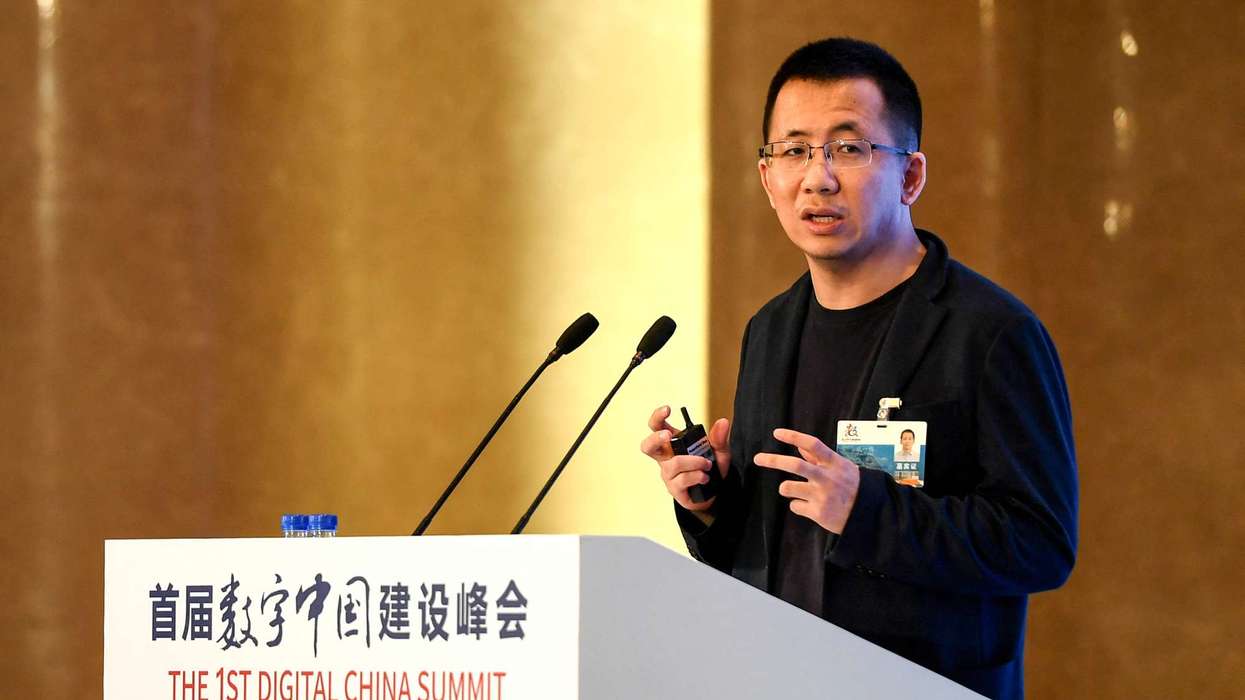
Zhang Yiming, the 43-year-old founder of ByteDance, has become Asia’s richest person for the first time, with his fortune reaching about $105.5bn as of September 15, according to the Bloomberg Billionaires Index. That puts him ahead of Indian billionaire Gautam Adani, whose fortune stood at about $104.8bn.
The more striking number, however, is where Zhang started.
When Bloomberg began tracking his wealth in March 2019, his fortune was estimated at around $13bn. It has since grown more than eightfold, underlining how quickly wealth tied to technology and AI has expanded in Asia.
From a short-video app to an AI empire
Much of Zhang’s wealth is tied to his stake in ByteDance, the Chinese technology company behind TikTok and its Chinese counterpart Douyin.
TikTok turned ByteDance into one of the world's most valuable consumer technology companies, giving Zhang a global business built around short-form video, advertising and e-commerce.
But ByteDance has increasingly moved beyond social media.
Its AI push includes Doubao, a chatbot, and Seedance, a video-generation tool. The company’s expansion into AI has given investors another reason to reassess its value at a time when demand for generative AI products and infrastructure is reshaping the technology sector.
Zhang’s fortune gained more than $12bn this month after Bloomberg incorporated updated valuations reported by investment firms including BlackRock, Fidelity Investments and T Rowe Price.
That means the latest jump is not simply about Zhang receiving more cash. His estimated wealth rises and falls largely with the value attributed to his stake in ByteDance.
The TikTok problem did not stop the wealth climb
The journey has not been without major risks.
TikTok spent years under intense scrutiny in the US, with the app facing the possibility of being banned or forced into a change of ownership.
In January, ByteDance finalised a deal to create a majority American-owned joint venture for TikTok's US operations. Oracle, Silver Lake and MGX were among the investors involved, with ByteDance retaining a 19.9 per cent stake. The new venture took responsibility for US user data, the app and recommendation operations, while ByteDance retained important commercial interests including advertising and e-commerce.
The resolution removed one of the biggest uncertainties hanging over TikTok’s US business.
Zhang had also continued investing in AI despite the regulatory pressure surrounding his most famous product.
That decision now looks particularly significant in the context of his fortune. ByteDance is no longer being valued solely as the company behind one of the world's biggest social media platforms; its AI ambitions have become an increasingly important part of the story.
A different kind of Asian billionaire
Zhang’s rise also changes the picture at the top of Asia’s wealth rankings.
Adani built his fortune through ports, energy, infrastructure and other traditional industries. Zhang’s wealth is rooted in software, digital advertising, consumer technology and increasingly AI.
The latest ranking does not mean traditional industries have suddenly disappeared from Asia’s billionaire economy. Adani remains one of the region’s richest people, while Mukesh Ambani, Tadashi Yanai and Zhong Shanshan also remain among Asia’s wealthiest.
But the change at the top illustrates how quickly technology valuations can reshape billionaire rankings.
For Zhang, the journey from $13bn in 2019 to more than $105bn today is ultimately a story about one company becoming several businesses at once — a global short-video platform, a major advertising operation and an increasingly ambitious AI player.
And that may be the more interesting number behind Asia’s changing rich list: not just how much Zhang is worth today, but how much ByteDance's next chapter could change that figure.