
- Michael O’Leary has rejected calls to apologise for describing rival airlines as “high-fare rapists”.
- Dublin Rape Crisis Centre said survivors had been upset and distressed by the comments.
- The Ryanair chief has defended his language while continuing his attacks on competitors and the UK air traffic control system.
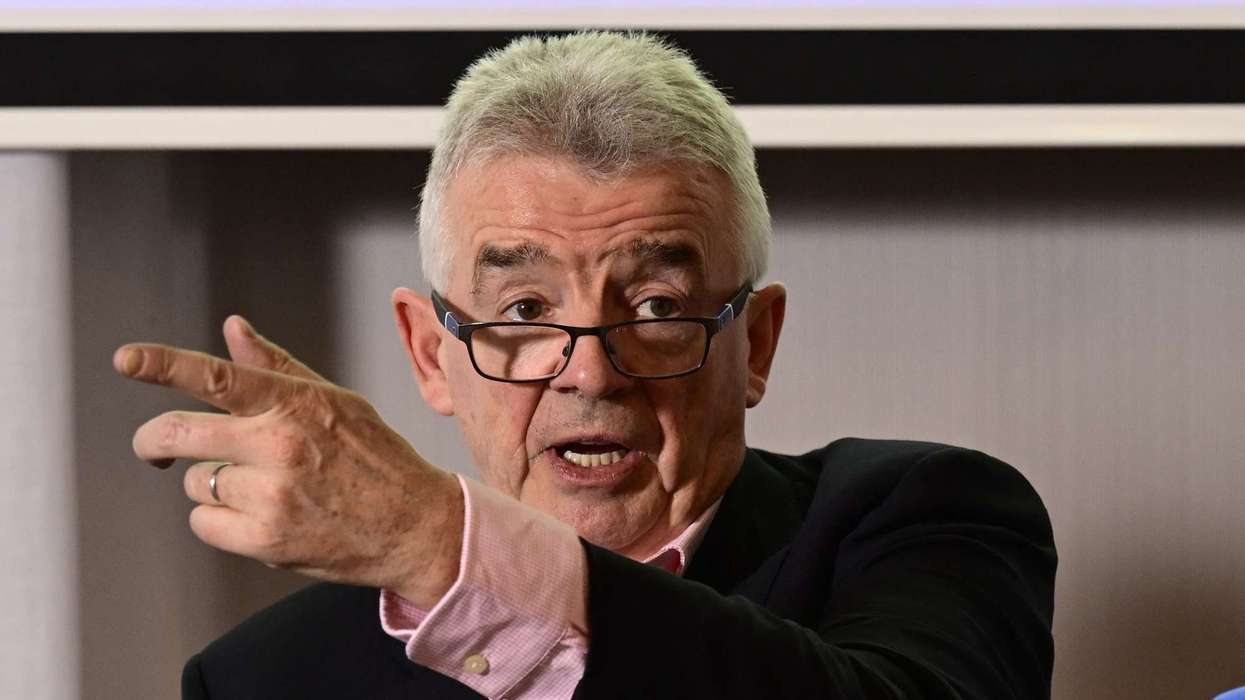
Michael O’Leary has refused to apologise after using the word “rapists” to describe rival airlines, despite criticism from rape crisis organisations and politicians in both Ireland and the UK.
The Ryanair chief made the comments ahead of the airline’s annual general meeting in Dublin, arguing that passengers facing higher fares at airlines including Aer Lingus, Lufthansa and British Airways would turn to Ryanair instead.
“You might find some people will choose not to fly with Ryanair – but you know they’ll be overrun with the people abandoning Aer Lingus, Lufthansa, BA, and others desperate to get to Ryanair’s low fares because they can’t afford to fly with the high-fare rapists around Europe,” he told reporters.
Asked whether the language was appropriate, O’Leary replied: “Absolutely.”
He later described rape as a “terrible crime” but rejected the suggestion that his comparison trivialised sexual violence.
That defence did not stop the backlash.
Rachel Morrogh, chief executive of the Dublin Rape Crisis Centre, called for a “swift apology to survivors of rape and sexual violence” and offered O’Leary free training on sexual violence and its impact on survivors.
She said the centre’s National Rape Crisis Helpline had received calls from rape victims who were “upset and distressed” by his comments.
“We have enough work to be doing and survivors have enough trauma to face without lazy comments adding to it,” Morrogh said.
She also questioned whether O’Leary understood the impact of using rape as a comparison for a commercial dispute.
“I can’t imagine that you would ever use the term so flippantly again if you truly understood what it was like to survive rape,” she said.
Why O’Leary says there will be no apology
Rather than retracting the comments, O’Leary doubled down in his response to Morrogh.
He said he had described rape as a “heinous crime” and argued that this showed he had not trivialised it.
“I was asked what I thought of rape, and answered that it was a heinous crime,” he said. “I was also asked if describing high fare competitor airlines as high fare rapists somehow trivialised the crime of rape, and I was clear in my view that it did not.”
He added: “You are entirely free to hold a different opinion. But since I clearly did not trivialise the heinous crime of rape, I will certainly not be issuing any apology.”
O’Leary also rejected the rape crisis centre’s characterisation of his attitude towards survivors, describing it as “both false and defamatory”. He said he would not accept its offer of training.
Morrogh had argued that the language was not simply provocative but risked reinforcing dismissive attitudes towards people who had experienced sexual violence.
The controversy has now moved beyond Ireland. UK Transport Secretary Heidi Alexander said O’Leary’s comments could affect the airline’s relationship with female passengers who had experienced sexual assault.
“I would say that women who have been raped and who have been subjected to such appalling violence, I’m not sure they’re going to be rushing to book tickets with him, let’s be honest,” Alexander told LBC.
Ireland’s deputy premier Simon Harris also criticised the comments as “clearly an inappropriate use of language” and said O’Leary should have acted to rectify the situation.
Asked whether he should apologise, Harris said O’Leary should “listen to the experts”.
The row is particularly notable because provocation has long been part of O’Leary’s public persona. The Ryanair chief frequently uses blunt language when attacking competitors, regulators and the wider aviation industry, turning disputes into publicity for the airline.
The same approach was on display at the AGM, where O’Leary also called for Martin Rolfe, chief executive of Britain’s air traffic control service, to be sacked following a computer failure that caused more than 2,000 flight cancellations. He described Rolfe as “incompetent” and an “overpaid failure”.
O’Leary also said Ryanair would dispute claims surrounding an incident in July in which a window on one of its aircraft broke while flying from Greece to Germany, including reports that part of a passenger’s body had been sucked outside the aircraft.
But the rape comparison has created a different kind of problem for the airline.
A provocative description of an expensive competitor can be dismissed as another example of O’Leary’s combative business style. Using rape as the comparison has instead brought a response from organisations representing survivors, as well as politicians questioning whether the language crossed a line.
O’Leary has made clear that he believes it did not.
For now, there is no apology, no acceptance of the training offered by the Dublin Rape Crisis Centre and no indication that he intends to withdraw the comparison. The question for Ryanair is whether the publicity generated by its chief’s provocative language is worth the reputational cost when the subject is something as serious as sexual violence.