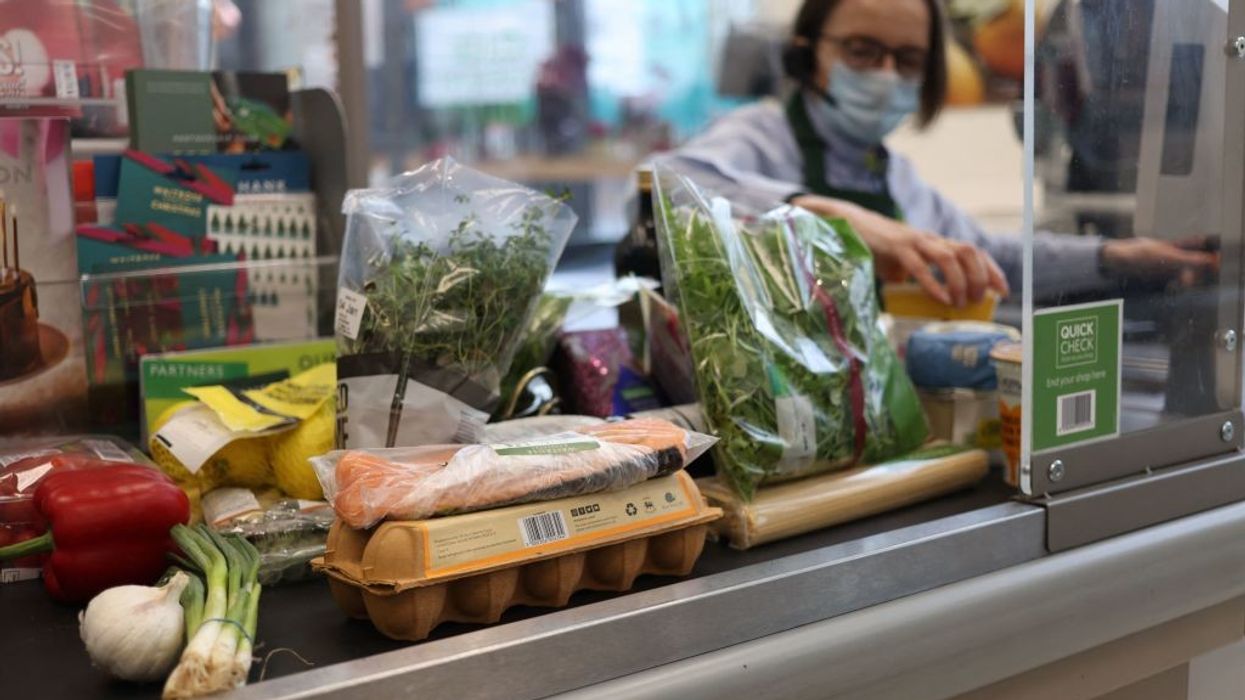

British retailer Waitrose said on Monday it was removing "best before" dates from almost 500 fresh products in its supermarkets, in a bit to curb food waste.
"Best before" dates tell customers food is at its optimal before this date but is still fine to eat for a time afterwards.
From September the upmarket chain will remove the label from a range of packaged fresh fruit, herbs and vegetables.
"UK households throw away 4.5 million tonnes of edible food every year, meaning that all the energy and resources used in food production is wasted," said Marija Rompani, director of sustainability and ethics at the John Lewis Partnership, which owns Waitrose.
"Wasting food feeds climate change and it costs people money," added Catherine David, from NGO WRAP, which promotes sustainable living.
"'Best before' dates on fruit and veg are unnecessary and create food waste because they get in the way of people using their judgement when food is still good to eat."
Waitrose, which has 332 outlets in the UK, said "use by" dates would remain in place on products for safety reasons.
"Eating food after its 'use by' date -- unless it has been frozen on or before its use by date -- could result in food poisoning," it warned.
The decision by Waitrose follows a similar move by other retailers, including top-end UK group Marks and Spencer and Tesco, the world's third-biggest supermarket group.
Tesco rival Morrisons said in January it was scrapping the "use by" date on 90 per cent of its own brand milk in a bid to prevent 490 million pints from being wasted in the UK every year.
It encouraged customers to use a sniff test to decide if the milk was still OK to use.
"Unlike some other fresh products, drinking milk after a 'best before' date is not a food safety issue," it said.
(AFP)