
Highlights
- Temperatures could reach 31°C in parts of southern and eastern England on Tuesday 5 August
- High pressure expected to build across the south, bringing dry, settled conditions
- Met Office forecasts warmer spells and drier weather from late July to mid-August
- 2025 has already seen three heatwaves, including a July peak of 35.8°C in Kent
- Recent storms and rain expected to ease as summer conditions return
Weather models indicate that the UK could see another burst of summer heat as August begins, with some regions forecast to experience highs of 31°C.
According to data from WX Charts, temperatures on Tuesday 5 August could peak at 31°C in parts of London, the South East and the East of England, including Essex, Suffolk, Cambridgeshire and Hertfordshire. Areas such as Hampshire, Dorset, Bedfordshire and Buckinghamshire may also see highs of 30°C. Warm air is expected to extend westwards into Somerset.
This latest warm spell follows a period of unsettled weather that included heavy rain, flash floods and even a brief tornado in County Durham.
Forecast points to sunnier, drier conditions in the south
The Met Office long-range forecast, covering 29 July to 7 August, suggests an increased chance of dry and sunny weather in the southern and eastern parts of the country.
"A weather regime dominated by westerly winds is likely at first," the Met Office noted. "This will likely bring rain and showers at times, interspersed with periods of more settled weather."
While the north and west may continue to see wetter conditions, forecasters say high pressure is likely to build across the UK, especially towards the southeast, leading to more prolonged spells of dry and warm weather.
Temperatures are expected to be around average overall, but with some warmer periods likely, particularly in the south.
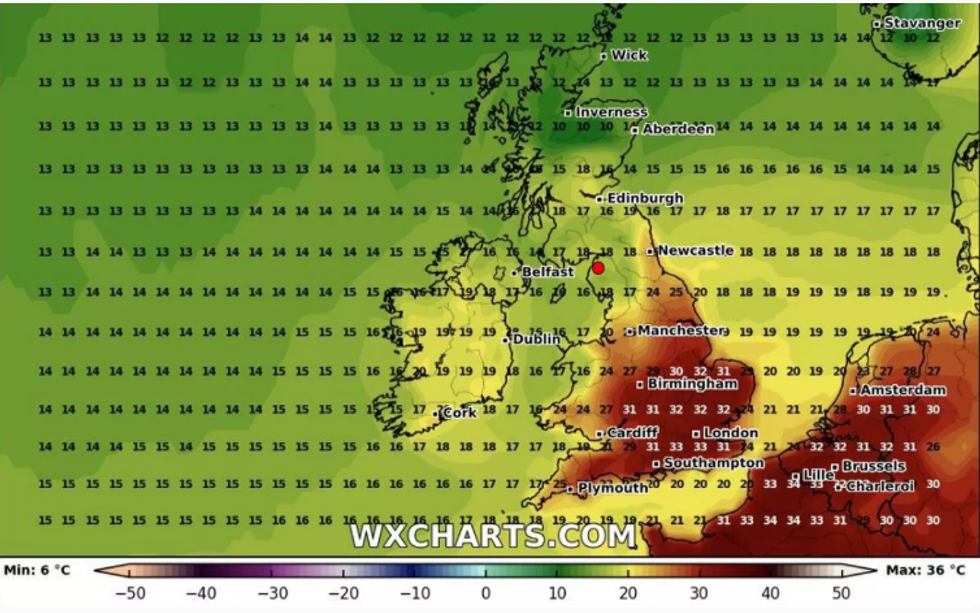 The summer so far has already seen multiple heatwavesMet Desk
Extended outlook hints at further heat in mid-August
The forecast from 8 to 22 August also points towards an increasing influence of high pressure, with greater chances of settled conditions and rising temperatures.
Southern and eastern areas are expected to benefit most from these spells of fine weather, with a possibility of very warm or even hot conditions during this time.
The summer so far has already seen multiple heatwaves, with a peak of 35.8°C recorded in Faversham, Kent, on 1 July.
Though recent weeks have brought a dramatic shift – with storms, rain and cooler air dominating – meteorologists now suggest that a return to summer warmth is on the horizon.