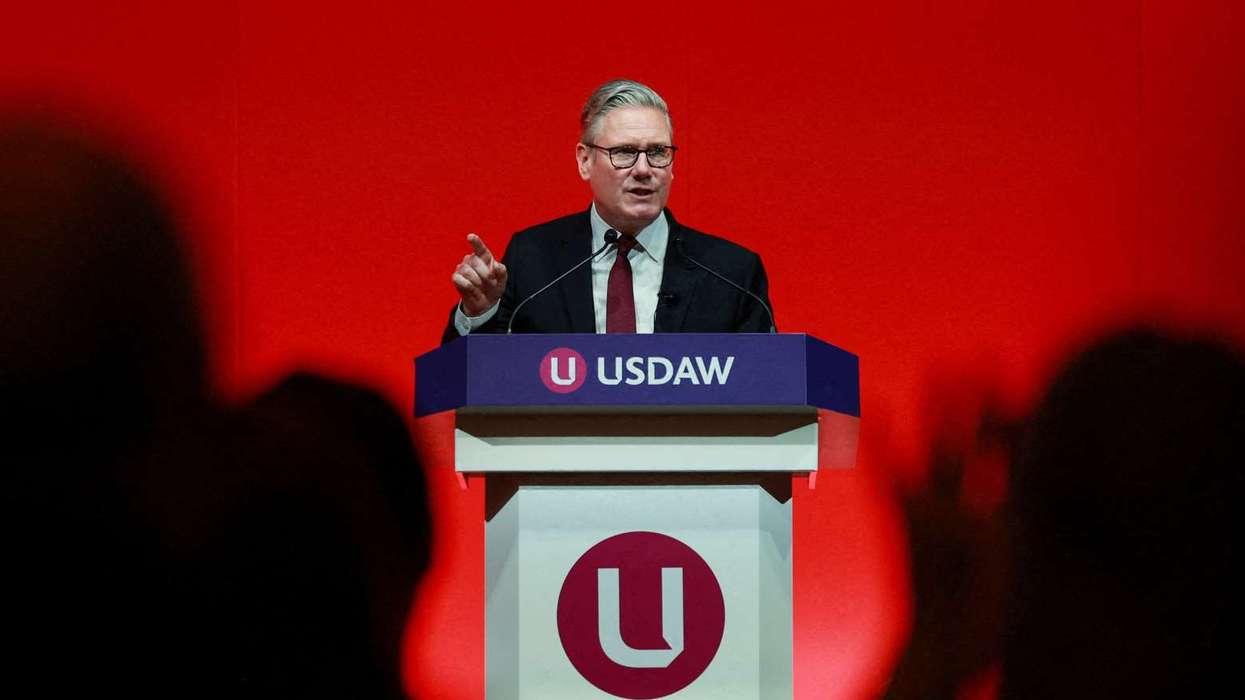

How much longer does Sir Keir Starmer have in Downing Street? The prime minister insists that he intends to carry on and fight the next general election, and to win it, too. Many others in Westminster see his premiership as more likely to last three weeks or three months than three years. The bookmakers’ odds suggest the prospects of Starmer leading Labour’s 2029 re-election bid have fallen to a one-in-ten chance.
There are many competing theories about whose actions could bring down the prime minister. Yet nobody can be certain they have the answers to Westminster’s Cluedo-style conundrum about what happens next.
Could it be Emily Thornberry with a microphone in the Commons committee corridor? She will lead the public select committee hearings into the secret vetting process for Peter Mandelson’s ill-fated appointment as ambassador in Washington DC.
Might it be former deputy prime minister Angela Rayner at the party HQ, wielding as a dagger the list of the 80 MPs needed to trigger a formal party leadership contest? If there was such a contest, she would be the favourite to win it.
Could it be Greater Manchester mayor Andy Burnham, heading south to Westminster to heed the call of rebel MPs? With Burnham outside parliament, and only MPs eligible to run in a leadership context, his route is not so much a northern express as a complex timetable of changes and connections, such as a by-election stopover somewhere in the north-west. That would make it subject to significant delays.
Or might it be the prime minister himself? Either with a whisky and a revolver in his study after a cabinet delegation persuades him to name a departure date, or at a Downing Street podium after the May election results.
There are effectively four forces with the power to bring down a prime minister: the voters in a general election, as with Rishi Sunak’s landslide defeat two years ago; the prime minister themself, with a voluntary decision to resign; government ministers in a Cabinet coup; or Members of Parliament, either in a Commons vote of no confidence or by triggering a change to the party leadership position on which modern prime ministers depend.
Those seeking clues from how previous premierships ended have a rapidly expanding sample of case studies. By this June’s tenth anniversary of the EU referendum, Starmer may have become the sixth prime minister to announce his departure since then. That seismic political event has shortened the life expectancy of our political leaders. The half dozen prime ministers before 2016 served for a cumulative four decades from 1976.
In Britain’s parliamentary system, general elections are far from the only way that prime ministers come and go. Indeed, the last prime minister to both start and end his premiership at a general election was Ted Heath, who won an underdog victory in 1970, before suffering an unexpected defeat in 1974, shortly before I was born. Surprisingly, it is only Heath and Clement Attlee, of the 58 prime ministers over three centuries, whose time in Downing Street both started and finished with general elections. So there won’t be a general election if Starmer falls – unless a hundred or more Labour MPs decided that they wanted one – though the prime minister’s allies can point to the triple premiership of the last parliament with Boris Johnson, Liz Truss and Sunak as showing that parties do not always benefit from change.
The formal party mechanisms for triggering a leadership contest have never yet brought down a prime minister: Theresa May and Johnson both survived a no-confidence vote of their Conservative party MPs. Yet both found themselves forced to resign soon after, within a month in Johnson’s case.
But nor do prime ministers tend to go by choice, either. Harold Wilson’s departure half a century ago in 1976 is the last truly voluntary resignation, where a prime minister controlled the timing, and surprised his party and the public. Most voluntary resignations are involuntary, though they can have shorter or longer timelines.
Tony Blair, planning to go after his tenth anniversary, was forced by colleagues to make a televised statement the previous autumn that he was now in his final year in office. There was much talk then of a ‘stable and orderly’ transition, but 2007 saw an uncontested leadership contest for Gordon Brown. A contested party leadership election to choose the next prime minister seems almost certain if and when Starmer were to fall, and could take place amidst considerable economic and diplomatic turmoil this summer.
There may be the sense of an ending at Westminster – but the mystery remains about what happens next.