Skip to content
Search

Latest Stories

NCA warns of spike in online child abuse, with 300,000 predators on the prowl

British police specialists say there are at least 300,000 people in the country who pose a sex threat to children, warning that there could be a spike in online offences during the lockdown.

With schools across the country almost entirely closed and children increasingly using web-based educational resources, the National Crime Agency (NCA) said on Friday (3) it knew from online chat that offenders were discussing opportunities to abuse children.


"It is sickening to think that some criminals are looking to exploit the coronavirus crisis to cause harm online," said Chief Constable Simon Bailey, the lead officer for child protection.

"Despite the issues that the pandemic will cause for law enforcement, child protection is still a priority and we remain totally committed to keeping our young people safe."

The police said their assessment of the risk was based on intelligence which predates the outbreak of the virus, and that the 300,000 individuals posed a threat either directly or online.

Officers said they were urging parents and carers to ensure children were aware of online risks and were launching a campaign to reinforce safety messages, saying child sex abuse content could be found on the open web in "just three clicks".

Rob Jones, the NCA's director of threat leadership, said: "Child sexual abuse remains a priority threat for the agency at this difficult time."

He noted that easy access to internet had "enabled a section of society to commit increasingly horrific crimes against children through grooming, live-streaming and distribution of indecent images".

“Though we are working around the virus like everyone else, we are continuing to pursue high-risk online offenders to ensure they are arrested and children are safeguarded," he added.

"Preventing offences occurring is always crucial and now more so than ever when there is masses of online traffic and a possible elevated threat to children."

Susie Hargreaves, chief executive of the Internet Watch Foundation (IWF), told ITV there was a “terrifying escalation of the threat to our children”, noting that “these numbers are unlike anything before”.

She added: “It is horrifying to think sexual predators are viewing the coronavirus crisis as an opportunity to exploit a captive audience of children, who are spending more time at home on their devices.”


More For You

Paris Modest Fashion Week turns the hijab from political debate into luxury fashion statement

It comes amid France’s long-running restrictions on religious clothing in public institutions

Instagram/ mashallenoor

Paris Modest Fashion Week turns the hijab from political debate into luxury fashion statement

Highlights

  • Paris hosted its first-ever Modest Fashion Week featuring nearly 30 global designers
  • The event spotlighted hijabs, burkinis, floral gowns and streetwear-inspired modest fashion
  • It comes amid France’s long-running restrictions on religious clothing in public institutions
  • The global modest fashion market is expected to exceed £320 billion next year

Paris has long positioned itself as the heart of global luxury fashion. It has also spent years at the centre of heated debates over religious clothing, with policies restricting visible religious symbols in schools and some public-sector roles.

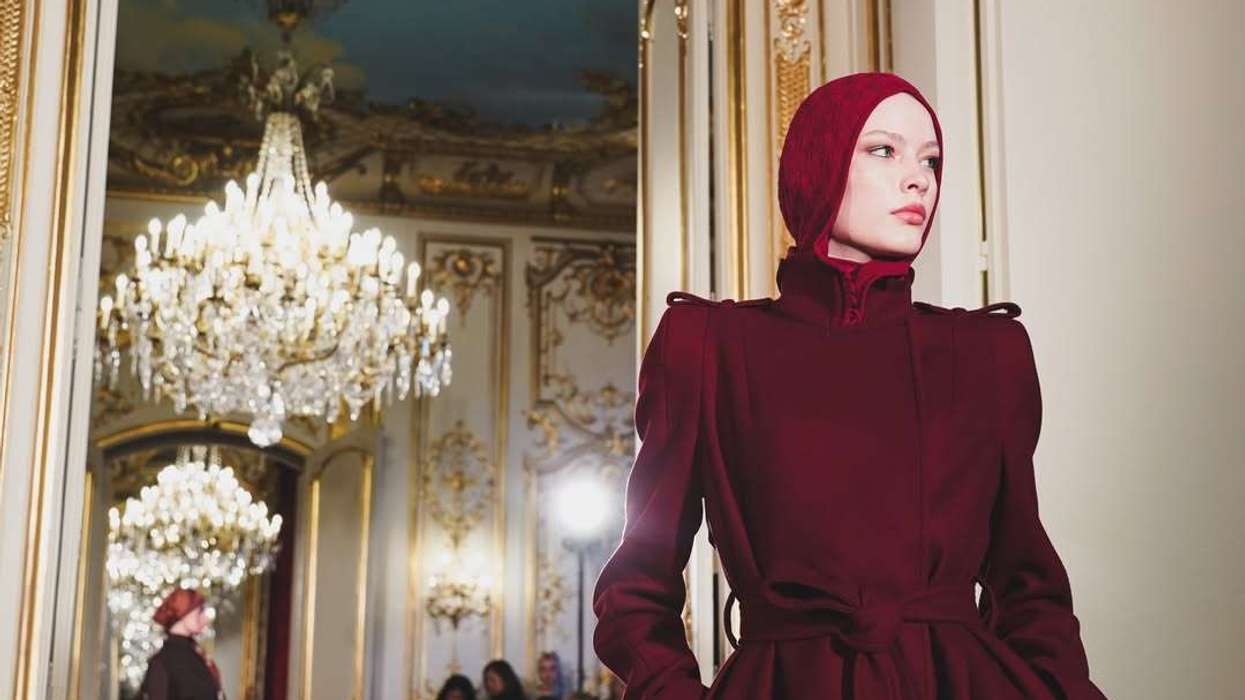
That contradiction was hard to ignore this week as the French capital hosted its first-ever Modest Fashion Week, a runway event celebrating clothing often associated with Muslim women.

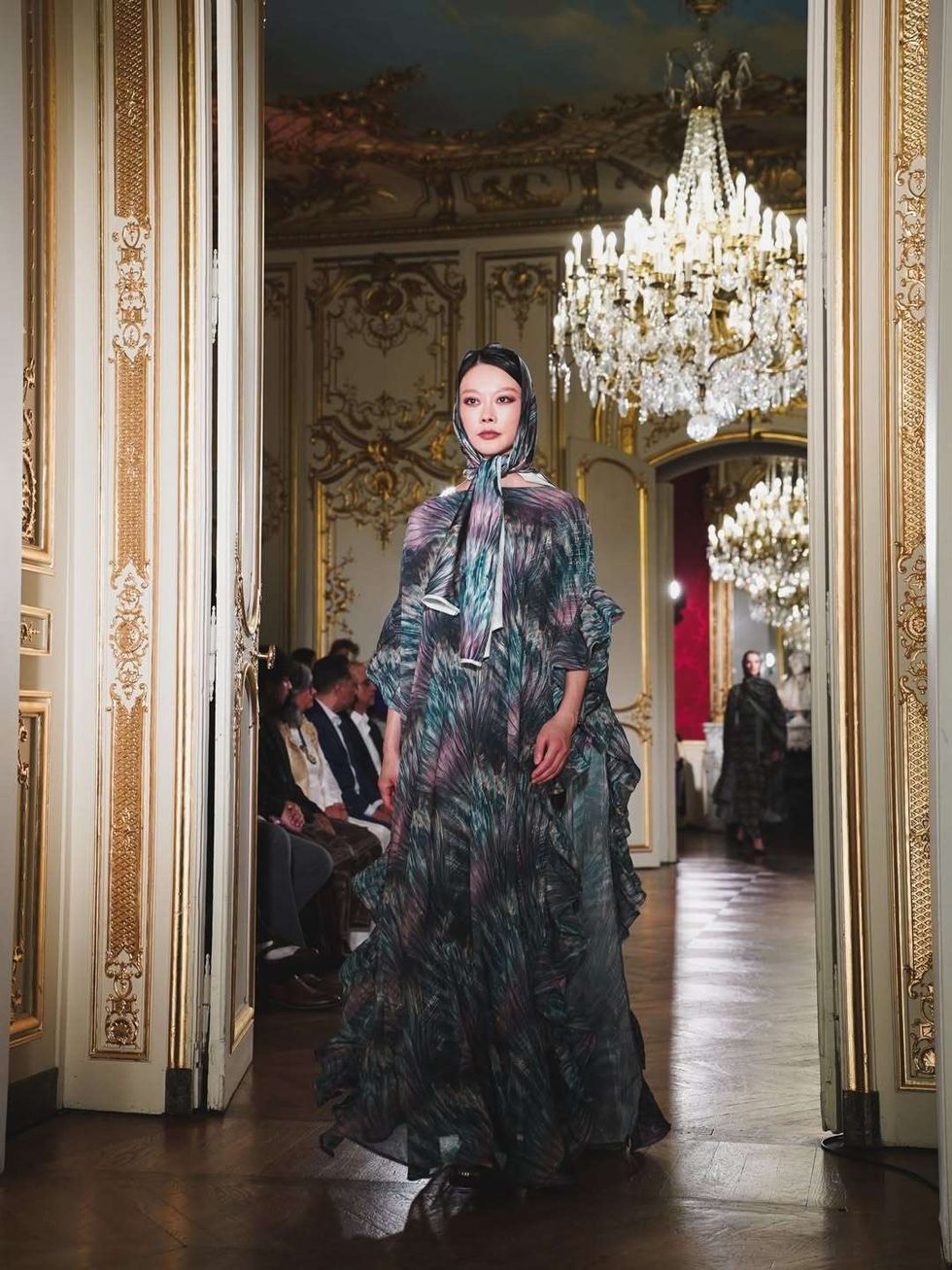
Held at Hôtel Le Marois near the Champs-Élysées, the showcase brought together nearly 30 designers from across the world, presenting collections built around loose silhouettes, headscarves and contemporary modest wear.

France banned conspicuous religious symbols, including headscarves, in state schools more than two decades ago. More recently, abayas were also prohibited in schools. Burkinis remain banned in most public swimming pools, though they are still permitted on beaches.

For designers, hosting the event in France carried symbolic weightInstagram/ mashallenoor

From florals to streetwear

The runway reflected how broad modest fashion has become.

Hicran Önal of Turkish label Miha showcased flowing floral dresses in shades of teal, blue and pink, describing romance as a major influence behind the collection. Aisa Hassan, founder of Australian brand Asiyam, opted for warmer greens and reds, while incorporating a bucket hat as a nod to her heritage.

French labels Soutoura and Nour Turbans leaned into oversized silhouettes and Gen Z-inspired streetwear, including one standout look that paired a beret with a headscarf.

Why Paris matters

For designers, hosting the event in France carried symbolic weight.

Fatou Doucouré, founder of Soutoura, said she had previously struggled with wearing a hijab in France and described showcasing her work in Paris as a proud moment. She said it reinforced the idea that women who wear headscarves can succeed in any field. Young attendees also described the event as a sign of a changing France, saying they felt less defined by their hijabs and more accepted in public spaces.


The event also reflected the growing commercial power of modest fashionInstagram/ mashallenoor


A growing global market

The event also reflected the growing commercial power of modest fashion. According to DinarStandard, global consumer spending in the sector is expected to surpass $400 billion (£320 billion) next year.

Paris may still be wrestling with debates around religious dress, but on this runway, modest fashion was framed less as controversy and more as creativity, commerce and visibility.

Keep ReadingShow less