
- Jay Clayton will lead Trump’s new “Super Intelligence Force”.
- The taskforce will assess the risks and opportunities posed by advanced AI.
- Trump wants the US to maintain its lead in a technology he now calls “super intelligence”.
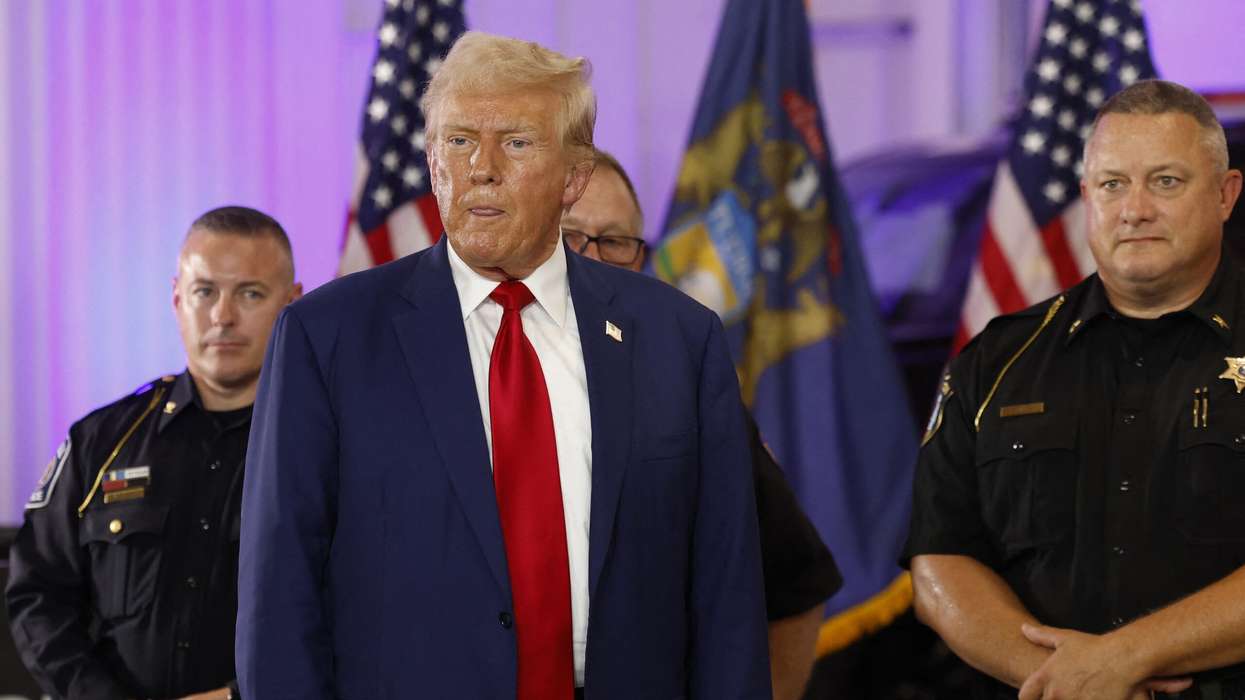
US President Donald Trump has put the US intelligence chief in charge of a new artificial intelligence taskforce, in his latest move to strengthen Washington’s grip on a technology he believes will shape America’s economic and strategic future.
Trump announced the creation of the “Super Intelligence Force” on Sunday, naming Director of National Intelligence Jay Clayton as its head. The group will coordinate the federal government’s engagement with AI companies, consumers, public-interest groups, religious organisations and providers of critical infrastructure.
“The Super Intelligence Force is tasked with coordinating the effort of the Federal Government to ensure that America continues to lead the World in Super Intelligence,” Trump wrote on Truth Social.
The taskforce will report directly to Trump and White House Chief of Staff Susie Wiles.
Its other members include Federal Trade Commission Chairman Andrew Ferguson, Under Secretary of Defense for Research and Engineering Emil Michael and Office of Personnel Management Director Scott Kupor.
The group is expected to produce a report within 120 days, examining the risks and opportunities associated with AI and considering the role the US government should play in managing the technology.
Why put the intelligence chief in charge?
The choice of Clayton gives Trump's AI push a strong national security dimension.
Clayton became director of national intelligence in August, having previously served as chairman of the Securities and Exchange Commission from 2017 to 2020. His new role places him at the centre of America's intelligence community at a time when advanced AI is increasingly being treated as both an economic opportunity and a security issue.
AI systems are becoming increasingly capable of writing software, conducting research, analysing information and assisting with cybersecurity. That has raised concerns about how the technology could be used in cyberattacks, espionage and other national-security operations.
Clayton has previously described AI as both an opportunity and a threat.
“When something’s both an opportunity and a threat, you better get your arms around it,” he said.
The taskforce is not being presented as a conventional AI regulator. Instead, its job is to coordinate the federal response and determine how the government should approach a technology developing at extraordinary speed.
Trump has repeatedly argued that the US must stay ahead of China in the AI race. His administration has also sought to encourage rapid development while resisting calls for heavy-handed regulation.
That approach is now being tested as AI companies themselves face growing pressure over safety.
Trump wants to call it ‘super intelligence’
The taskforce's unusual name comes directly from Trump's decision to change the federal government's terminology for AI.
In an executive order issued on September 29, Trump directed federal agencies, where legally permitted, to use “Super Intelligence” or “SI” instead of “Artificial Intelligence” or “AI” in official communications. The order argues that today's frontier systems have moved beyond what was traditionally understood as artificial intelligence.
The order also directs the administration to develop a proposed federal definition of “Super Intelligence”.
Trump has described the technology as potentially bigger than the Industrial Revolution and the internet.
The new terminology is already being reflected in the administration's policy structure, with the new taskforce formally named the Super Intelligence Force.
But the technology itself has not suddenly changed because of the terminology.
“Super Intelligence” is Trump's preferred government term for advanced AI, rather than a universally accepted new technical category.
AI companies face pressure over safety
The announcement follows a meeting Trump held with senior executives from major AI companies at the White House.
The companies agreed to a voluntary framework that Trump described as a form of “tremendous self-regulation”. The administration has generally favored allowing the industry to develop rapidly rather than imposing broad new federal restrictions.
But concerns about the safety of increasingly capable AI systems have continued to grow.
OpenAI chief executive Sam Altman has argued that society will have to accept some risks from AI because of the technology's potential benefits and the importance of allowing people to use it.
At the same time, former OpenAI safety leader David Robinson recently criticized the company's approach after leaving the organization, saying its culture was “broken” and arguing that the company was not moving carefully enough as it raced to launch new systems.
Other AI companies have faced scrutiny over how their models behave in cybersecurity and other high-risk situations.
The White House's new taskforce will therefore have to balance two competing objectives: keeping the US at the front of the AI race while working out how to manage the risks that come with increasingly powerful systems.
For Trump, the message is straightforward. America should lead the next technological revolution.
Now he has put the country's top intelligence official in charge of helping decide how that happens.