
THE UNITED KINGDOM's Supreme Court ruled on Wednesday that the term "woman" in equality legislation refers to biological sex. However, the court said the ruling would not disadvantage transgender people.
The case centred on whether a transgender woman with a gender recognition certificate is considered a woman under the Equality Act and protected from discrimination on that basis.
Campaign group For Women Scotland brought the case, arguing that rights under the Equality Act should be based on biological sex.
The group had challenged guidance issued by the Scottish government related to a 2018 law aimed at increasing the number of women on public sector boards.
The guidance stated that a transgender woman with a gender recognition certificate is legally a woman.
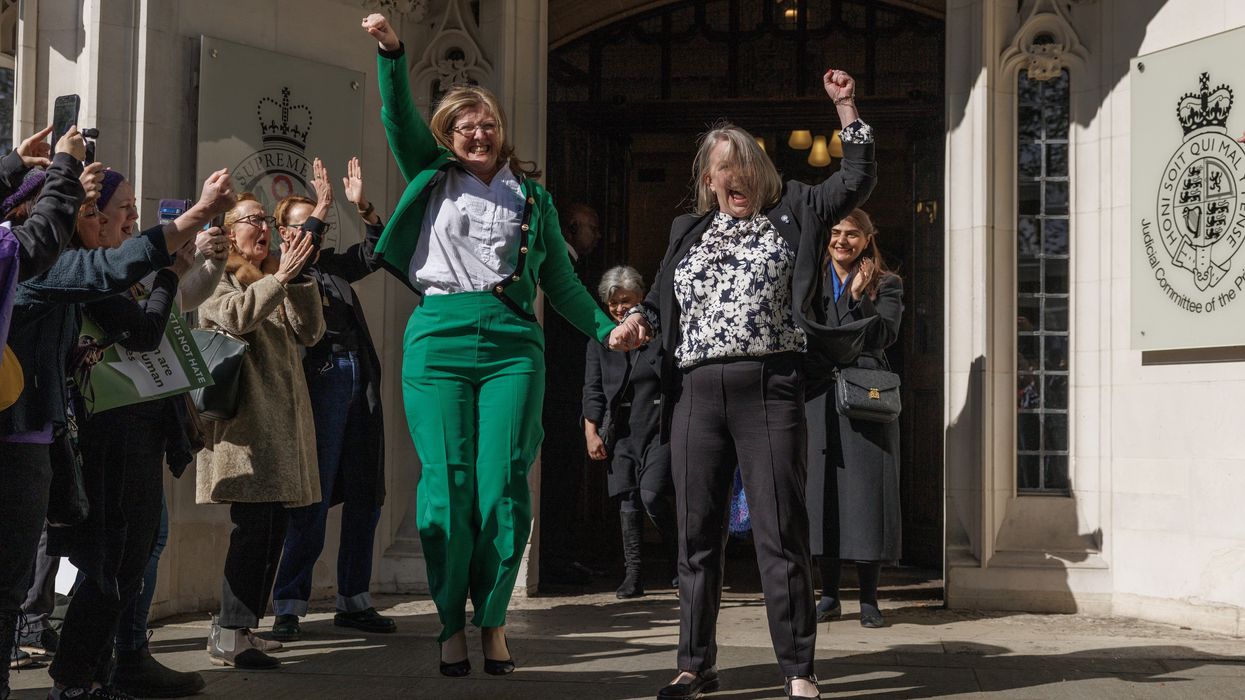
For Women Scotland initially lost in the Scottish courts. However, the Supreme Court ruled in the group's favour following an appeal last November. Supporters were seen cheering outside the court after the judgment.
"The unanimous decision of this court is that the terms 'women' and 'sex' in the Equality Act 2010 refer to a biological woman and biological sex," said deputy president of the Supreme Court Patrick Hodge.
"But we counsel against reading this judgment as a triumph for one or more groups in our society at the expense of another – it is not," he said.
Critics of the Scottish guidance argued that its definition could affect single-sex services for women, including refuges, hospital wards, and sports.
Transgender campaigners warned that a ruling in favour of For Women Scotland could lead to discrimination against those with gender recognition certificates, especially in employment.
"The correct interpretation of the EA (Equality Act) as referring to biological sex does not cause disadvantage to trans people, whether or not they possess a gender recognition certificate," Hodge said.
"Trans people have the rights which attach to the protected characteristic of gender reassignment."
In the United States, legal challenges are underway after president Donald Trump issued executive orders that include a ban on transgender people serving in the military.
(With inputs from Reuters)