
Highlights
- Strait of Hormuz remains shut as Iran says talks with US are far from final agreement
- Iran links reopening to lifting of US naval blockade
- Shipping activity drops amid warnings from Iran’s Revolutionary Guards
- Fighting continues in Lebanon despite truce, with casualties reported
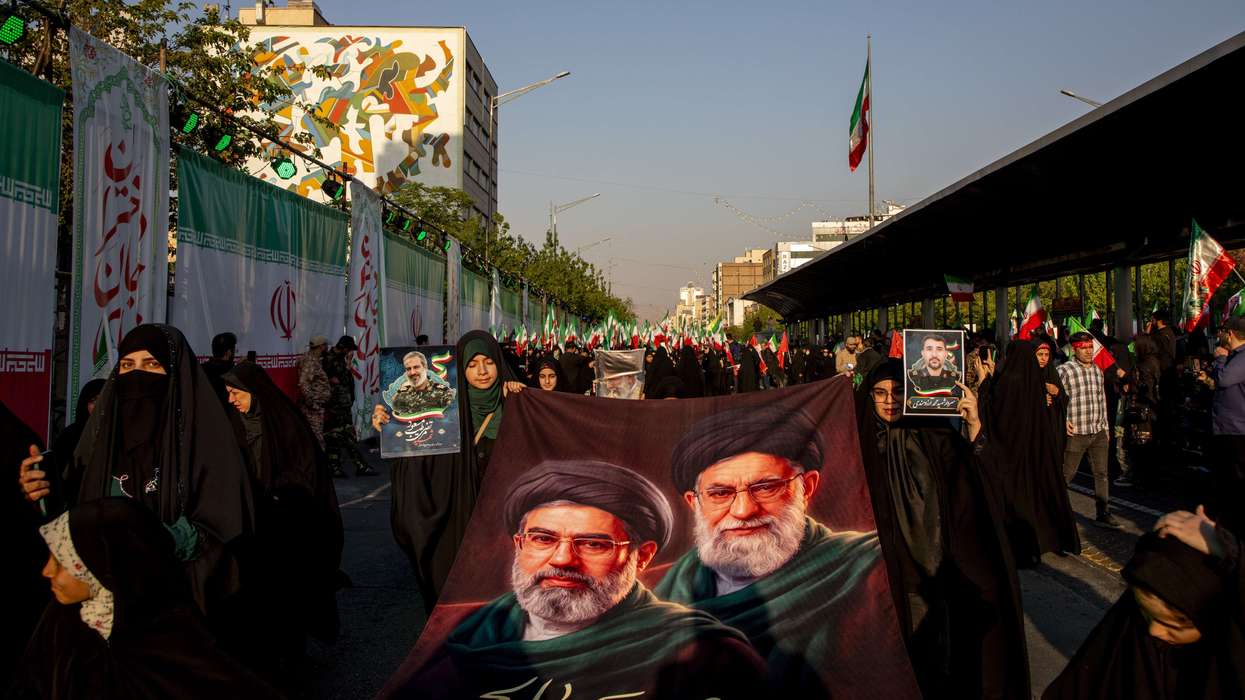
THE STRAIT of Hormuz remained closed on Sunday as tensions between Iran and the United States continued, with Iran saying a final agreement to end the war is still not close despite some progress in talks.
Iran said it would not allow the key shipping route to reopen until the United States lifts its blockade of Iranian ports. The closure came after a brief reopening on Friday following a ceasefire linked to fighting between Israel and Hezbollah.
Mohammad Bagher Ghalibaf, speaker of the Iranian parliament and a negotiator in the talks, said there had been progress but key differences remain. “We made progress in the negotiations, but there are many gaps and some fundamental points remain,” he said in a televised address. “We are still far from the final discussion.”
ALSO READ: Iran shuts Strait of Hormuz again, citing US naval blockade
US president Donald Trump said “very good conversations” were taking place but warned Iran not to “blackmail” the United States. He said Washington was “taking a tough stand” and criticised Tehran’s moves on the strait.
Iran’s central military command announced the renewed closure in response to the US naval blockade. Ghalibaf said, “If America does not lift the blockade, traffic in the Strait of Hormuz will definitely be limited.”
Iran’s Revolutionary Guards warned that any vessel attempting to pass without permission would be targeted. “Any attempt to approach the Strait of Hormuz will be considered cooperation with the enemy, and the offending vessel will be targeted,” the Guards said.
Shipping activity dropped after the renewed closure. A small number of tankers crossed during the brief reopening, but traffic reduced sharply later. A UK maritime agency reported that the Guards fired at one tanker and said another vessel was hit by an unknown projectile, causing damage but no fire. A security firm said an empty cruise ship was threatened. India said it had summoned the Iranian ambassador over a “shooting incident” involving two Indian-flagged ships.
Iran’s supreme leader Mojtaba Khamenei said in a written message that the navy “stands ready” to defeat the United States.
The war began on February 28 with US and Israeli strikes on Iran, while the two sides were in negotiations. The conflict spread across West Asia, with Iran targeting Gulf countries hosting US bases and Hezbollah launching attacks on Israel from Lebanon.
A two-week ceasefire is set to end on Wednesday unless extended. Separately, a 10-day truce between Israel and Lebanon began on Friday, but fighting has continued.
Israel said a soldier was killed in combat in southern Lebanon, the second such death since the truce began. The total Israeli military death toll in the six-week conflict with Hezbollah has reached 15.
In Lebanon, a French soldier serving with UN peacekeepers was killed and three others were wounded in an ambush. France blamed Hezbollah, while the group denied involvement. UN secretary-general Antonio Guterres condemned the attack, with an initial UN assessment indicating it was carried out by the Iran-backed group.
Israel said it had carried out air strikes on what it described as a “terrorist cell” in southern Lebanon and conducted demolitions in border towns including Bint Jbeil.
Hezbollah leader Naim Qassem said the truce cannot be one-sided. “Because we do not trust this enemy, the resistance fighters will remain in the field with their hands on the trigger, and they will respond to violations accordingly,” he said. “There is no ceasefire from the side of the resistance only, it must be from both sides.”
On the diplomatic front, Egypt and Pakistan said they hoped to secure an agreement “in the coming days.” One of the main issues remains Iran’s stockpile of near-weapons-grade enriched uranium.
Trump said Iran had agreed to hand over about 440 kilograms of enriched uranium. “We’re going to get it by going in with Iran, with lots of excavators,” he said. Iran’s foreign ministry said the stockpile “was not going to be transferred anywhere” and that surrendering it “to the US has never been raised in negotiations.”
Iran’s state-run Foundation of Martyrs and Veterans Affairs said the war with the United States and Israel has left 3,468 people dead in the country.
(With inputs from agencies)





 The September 11 Memorial and Museum stands on the site of the former World Trade Centre in New York, where the twin towers were destroyed in the 2001 attacks Spencer Platt/Getty Images