
Skip to content
Search

Latest Stories

Starmer, Modi strengthen defence ties with new weapons agreement

According to the British government, the contract covers Lightweight Multirole Missiles produced by Thales in Northern Ireland.

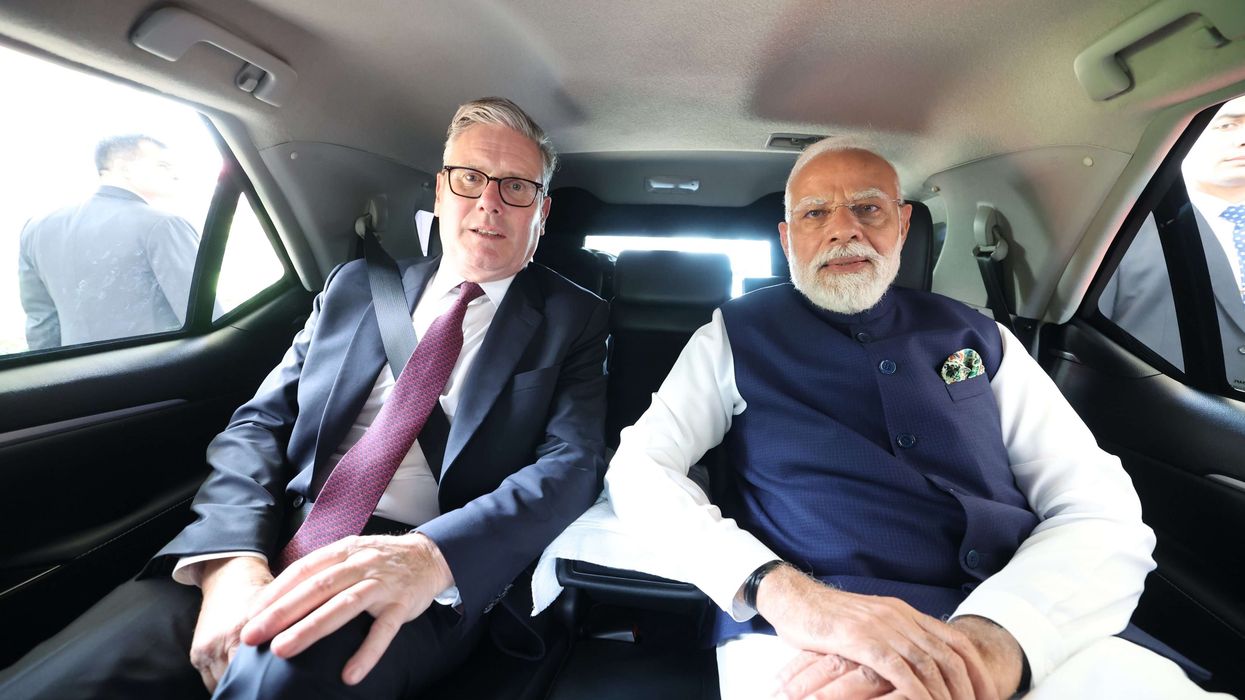
Starmer Modi

The deal was announced during Starmer’s visit to Mumbai, where he met Indian prime minister Narendra Modi.

Getty Images

THE UK on Thursday signed a £350 million contract to supply the Indian Army with UK-made lightweight missiles, expanding defence cooperation between the two countries.

The deal was announced during prime minister Keir Starmer’s visit to Mumbai, where he met Indian prime minister Narendra Modi.


Both leaders highlighted the potential of commercial cooperation following their recent trade agreement.

According to the British government, the contract covers Lightweight Multirole Missiles produced by Thales in Northern Ireland.

The agreement is expected to secure 700 jobs at the factory, which currently manufactures the same weapons for Ukraine.

“The deal paves the way for a broader complex weapons partnership between the UK and India, currently under negotiation between the two governments,” the statement said.

Starmer has backed Britain’s defence sector as a driver of economic growth, pledging to increase defence spending in line with NATO targets and to focus on export opportunities, including a recent $13.5 billion frigate contract with Norway.

Britain also announced a new milestone in its defence partnership with India through an agreement on electric-powered engines for naval ships. Both countries signed the next phase of this deal, valued at an initial £250 million.

More For You

homelessness

2.7 per cent of private rented properties in England are affordable for people receiving housing benefit.

Getty Images

Nearly 300,000 families face worst forms of homelessness in England, research shows

Highlights

  • 299,100 households experienced acute homelessness in 2024, up 21 per cent since 2022.
  • Rough sleeping and unsuitable temporary accommodation cases increased by 150 per cent since 2020.
  • Councils spent £732 m on unsuitable emergency accommodation in 2023/24.


Almost 300,000 families and individuals across England are now experiencing the worst forms of homelessness, including rough sleeping, unsuitable temporary accommodation and living in tents, according to new research from Crisis.

The landmark study, led by Heriot-Watt University, shows that 299,100 households in England experienced acute homelessness in 2024. This represents a 21 per cent increase since 2022, when there were 246,900 households, and a 45 per cent increase since 2012.

More than 15,000 people slept rough last year, while the number of households in unsuitable temporary accommodation rose from 19,200 in 2020 to 46,700 in 2024. An additional 18,600 households are living in unconventional accommodation such as cars, sheds and tents.

A national survey found 70 per cent of councils have seen increased numbers approaching them for homelessness assistance in the last year. Local authorities in London and Northern England reported the biggest increase.

Keep ReadingShow less