
Highlights:
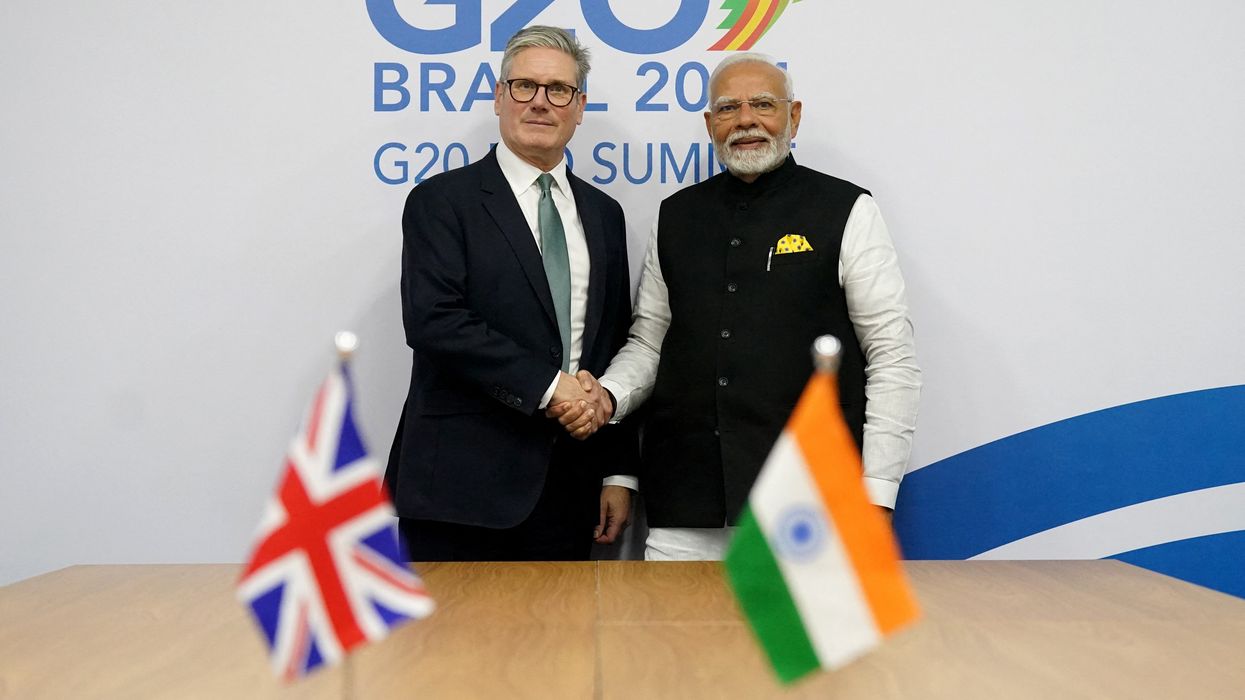
- Keir Starmer to visit India on October 8-9 for first official trip as prime minister.
- Starmer and Modi to review India-UK Comprehensive Strategic Partnership and roadmap ‘Vision 2035’.
- Leaders to discuss trade, technology, defence, climate, and economic cooperation under CETA.
- Visit follows Modi’s July 2025 UK trip where India and UK signed free trade agreement.
PRIME MINISTER Keir Starmer will make his first official visit to India on October 8-9 at the invitation of prime minister Narendra Modi, the Ministry of External Affairs (MEA) announced on Saturday.
The MEA said that on October 9 in Mumbai, the two prime ministers will review progress in various areas of the India-UK Comprehensive Strategic Partnership in line with ‘Vision 2035’.
The 10-year roadmap focuses on key areas including trade and investment, technology and innovation, defence and security, climate and energy, health, education, and people-to-people relations.
Both leaders will also meet business and industry representatives to discuss opportunities under the India-UK Comprehensive Economic and Trade Agreement (CETA), described by MEA as a central pillar of the future India-UK economic partnership. The ministry said Starmer and Modi “will also exchange views on issues of regional and global importance.”
The two prime ministers will attend the sixth edition of the Global Fintech Fest in Mumbai and deliver keynote addresses. They will also engage with industry experts, policymakers, and innovators.
The visit will build on the momentum generated by Prime Minister Modi’s visit to the UK on July 23-24, 2025, and will provide an opportunity to reaffirm the shared vision of India and the United Kingdom to build a forward-looking partnership, according to MEA.
Britain and India signed a free trade agreement in July during Modi’s visit to the UK.
The deal, signed in the presence of Modi and Starmer, aims to reduce tariffs on goods such as textiles, whisky, and cars, and expand market access for businesses.
The agreement was officially signed by India’s minister of commerce and industry, Piyush Goyal, and the UK secretary of state for business and trade, Jonathan Reynolds, India's Ministry of Fisheries, Animal Husbandry & Dairying said in a release.
CETA provides zero-duty access on 99 per cent of tariff lines and opens up several key service sectors.
For the marine sector, the agreement removes import tariffs on a range of seafood products, enhancing the competitiveness of Indian exporters in the UK market.
The agreement is expected to benefit exports of shrimp, frozen fish, and value-added marine products, along with labour-intensive sectors such as textiles, leather, and gems and jewellery.
India’s main seafood exports to the UK include Vannamei shrimp (Litopenaeus vannamei), frozen squid, lobsters, frozen pomfret, and black tiger shrimp. These products are expected to gain further market share under CETA’s duty-free access.
Under the agreement, all fish and fisheries commodities listed under the UK tariff schedule categories marked ‘A’ now enjoy 100 per cent duty-free access from the date the agreement comes into force.
(With inputs from agencies)