
Highlights
- Funds will help support Sri Lanka's foreign exchange reserves
- Sri Lanka imports all its fuel; it has increased prices by 40 per cent since Iran war started
- A further 18 per cent to 20 per cent rise in power prices expected this week
- Government talking to China and Russia about fuel imports
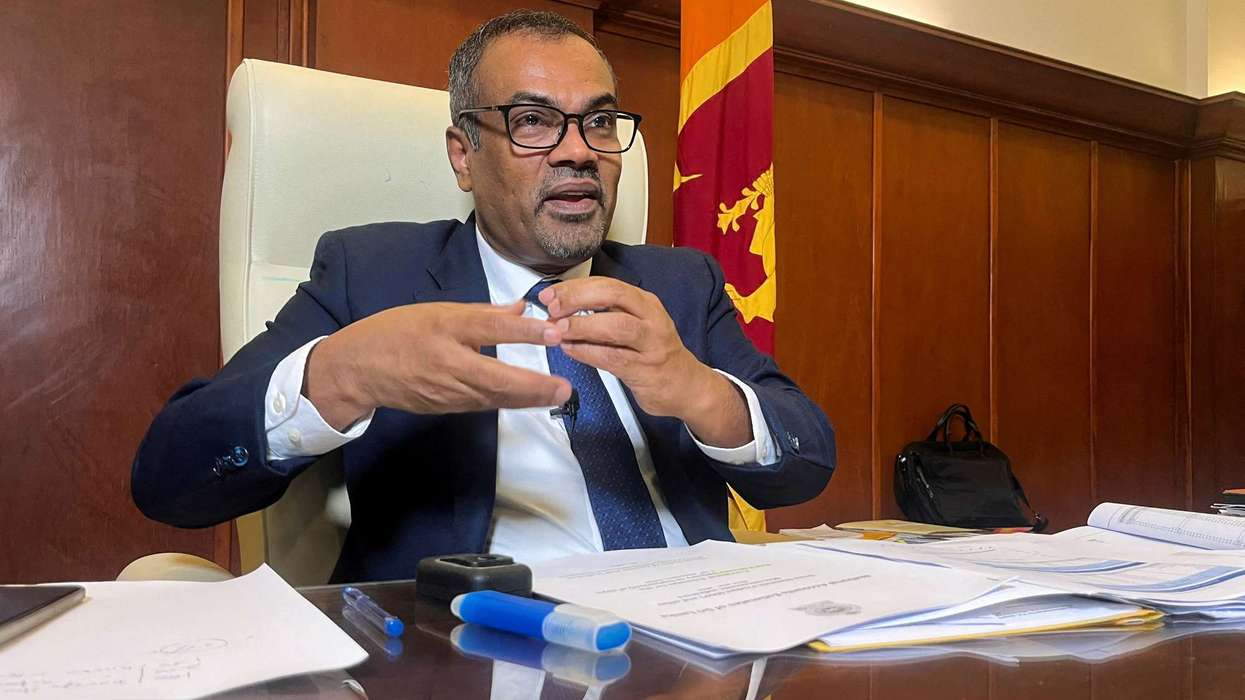
SRI LANKA is relying on $1.73 billion (£1.28bn) in funding from international agencies and India to help it manage the financial impact of the soaring price of energy imports due to the Middle East crisis, a senior minister said in an interview.
About $700 million (£517m) is expected at the end of May from a $2.9bn (£2.14bn) International Monetary Fund (IMF) programme that aided Sri Lanka as it recovered from a severe financial crisis triggered by a shortfall in foreign reserves in 2022.
Additional funds of about $480 million from the Asian Development Bank (ADB) and $100m (£74m) from the World Bank, as well as $450m (£355m) from India are expected to support the country's reserves, said Anil Jayantha Fernando, the country's deputy minister of finance and planning.
"As of now, due to the reserve building mechanism, it is unlikely that it would lead to a balance of payments crisis. And of course, we admit the fact that the reserve building would be affected. There would be a drop. But we can manage it," he said late on Tuesday from his office in Colombo.
Sri Lanka will also look to utilise its existing trade deals with Thailand, India and others to diversify and increase exports to bolster reserves, Jayantha added.
Sri Lanka, which imports all its fuel, has hiked fuel prices by about 40 per cent, introduced fuel rationing and declared Wednesdays a public holiday to contain the impact from the Iran war.
Soaring energy costs have also pushed the island nation to raise power prices. It is expected to announce a further 18 per cent to 20 per cent increase later this week, which is a pre-condition for IMF funding, following a 7.2 per cent electricity hike in March.
The island nation, off India's southern coast, was also hit by a cyclone last November that killed about 645 people and caused damage estimated at £2.95bn, according to World Bank estimates.
The bulk of India's £332m funding will be in credit lines to support cyclone rebuilding.
Sri Lanka is in talks with China and Russia for fuel imports but has to set up payment mechanisms, especially for the latter, Jayantha said.
A decision to make payments in yuan has not been made, he added, despite Sri Lanka having a £1.11bn Chinese currency swap as part of its £5.17bn reserves.
"As of now, our effort is to make sure that we would get fuel, I mean, the continuous supply. So, how are we going to make the payment? That really depends on the given scenarios. But other than that, we do not have any other plan, because we do not want to be part of the strategic plans of others; because being a small country, we are not going to take part in the geopolitics," he said.
(Reuters)