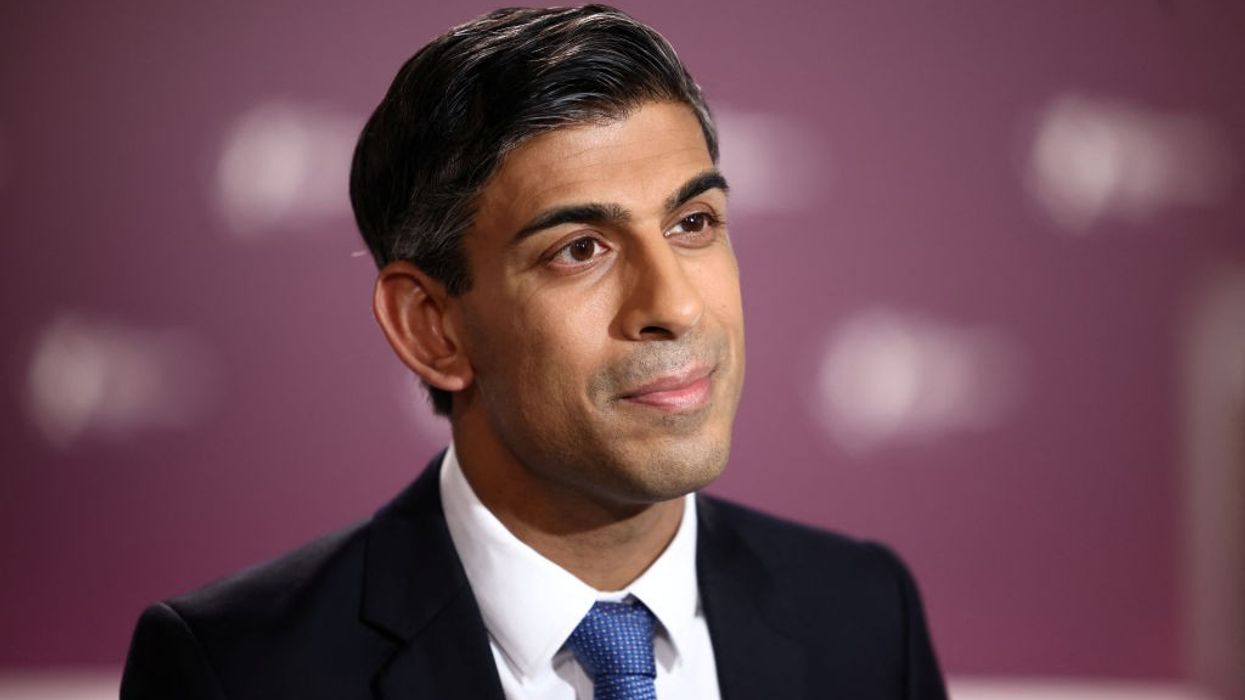

British prime minister Rishi Sunak has said that he is 'very concerned' after reports revealed that MPs and peers engage in 'sex and heavy drinking' on foreign trips arranged by all-party parliamentary groups (APPGs).
In the wake of the report, Sunak urged lawmakers to focus on working for the public good.
“We’ve seen some of the reports over the Christmas period and just before, and some of the behavior reported is clearly very concerning,” A Downing Street spokesman is reported to have said.
“The prime minister believes MPs should be working hard for the public, and the broad majority have focused on trying to solve our shared challenges, whether that be supporting the most vulnerable or working to make our schools better and our streets safer."
However, the prime minister declined to back reform of the little-known parliamentary groups organizing such trips, saying that the House of Commons authorities should take up this matter not the government.
There are more than 700 APPGs which campaign on specific topics, and about 130 of these are country-specific and often organise all- expenses-paid group trips.
Members frequently travel to their target countries for private fact-finding missions that are supported by foreign governments or private businesses and frequently take place during British parliamentary time. Officials in attendance claim that while some MPs in these groups take their work seriously, others only see the excursions as a fun activity.
A recent investigation by Politico has revealed accusations of drunken and sexual misbehavior by British MPs on overseas trips.
According to the report, one former Conservative MP asked where the nearest brothel was when he visited a southeast Asian country. Besides, a former minister stayed on after official trips to pursue his 'interest in women'.
The Politico alleged that some MPs and peers exploit APPGs as an opportunity for the covert use of sex workers and for excessive drinking.
According to a foreign diplomat, a senior Labour MP showed a preference for "Russian girls" while travelling abroad. The diplomat claimed that local officials felt powerless to act because they were afraid about maintaining their influence in Westminster.
Meanwhile, a Times report on Wednesday (28) claimed that many sex workers greeted British MPs at their hotel when they travelled to a dictatorship country. The report, however, said that there was no indication the MPs used the services of sex workers or knew in advance that they would be present.
In a separate incident, one MP had to be censured for frequently making advances to young female interns who were assisting with the tour's planning during a visit to a close ally of the UK.
The Commons standards committee this year recommended that the regulation around APPGs be tightened as many may use the access and influence 'improperly'.
Chris Bryant, chairman of the committee, said: “We have too many APPGs, there are more APPGs than there are MPs,” he said. “But there’s no monitoring of them really. It would be awfully easy if somebody wants to get up to no good through an APPG.”
A senior government source has pointed out that the behaviour of MPs undertaking APPG trips abroad 'is quite astonishing'
“If a hostile state is lucky they may get MPs at risk of foreign blackmail photos and they will make sure they know exactly what has happened. And then they might get something from that," the official said.






 Curator Emma Slocombe with ikat robes and arabachi coats in the Peter the Great Room in Blickling Hall Amit Roy
 View of the entrance to Blickling Hall on a rainy autumn dayAmit Roy
 Kente cloth from Ghana in the Long Gallery in Blickling Hall
 Decoration in the Great Hall at Blickling Hall Amit Roy
 Palampore fragment made in coastal south-east India in the Brown Room in Blickling Hall Amit Roy
 Bed valance dating from early 1700s in the Italian Print Room at Blickling Hall Amit Roy
 Indian inspired fabric draped on sofas in the South Drawing Room in Blickling Hall Amit Roy
 Indian inspired fabric draped on sofas in the South Drawing Room with Indian carpet in Blickling Hall Amit Roy
 Karun Thakar has picked out the geometric patterns in the bookcase and the Kente cloth in the Long Gallery in Blickling Hall Amit Roy
 Large tapestry depicting Peter the Great defeating the Swedish army at the Battle of Poltava in 1709 Amit Roy
 ikat robes and arabachi coats in the Peter the Great Room in Blickling Hall Amit Roy
 Baghs and kanthas made by women provide contrast to the men only portraits in the Great Hall at Blickling Hall Amit Roy
 Baghs and kanthas in the entrance Great Hall at Blickling Hall Amit Roy
 Baghs and Kanthas in the Great Hall in harmony with stained glass window at Blickling Hall Amit Roy
 Kimonos reflect Japanese influence in Upper Ante Room in Blickling Hall Amit Roy
 Kimono in Upper Ante Room in Blickling Hall
 A view of the Palace and fort at Agra shows romantic side of India Amit Roy
 Blickling Hall Amit Roy
 Table carpet, European 1670-1680 Amit Roy
 Unfinished 17th century Italian embroidery in the Print Room at Blickling Hall Amit Roy
 Picture of Kashmir shows a romantic view of India Amit Roy
 A panel of Ashburnham bed hangings made in Gujarat for sale in Europe in the Brown Room in Blickling Hall Amit Roy
 Colcha made in the 1600s by women in Bengal for the Portuguese market in the Long Gallery at Blickling Hall Amit Roy




