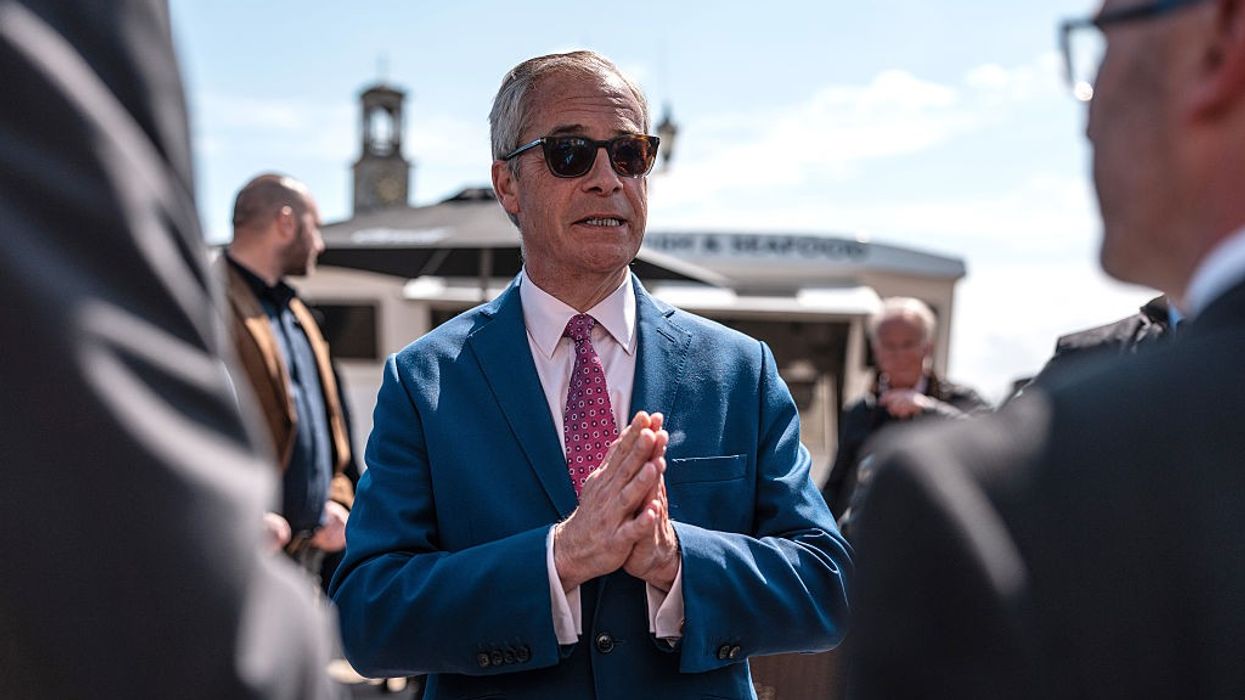

NIGEL FARAGE's Reform UK party is on track to win two key mayoral elections next week, according to a new YouGov poll that suggests a significant shift in England's political landscape.
The survey, conducted between April 9-23, shows Reform holding a commanding 15-point lead in Greater Lincolnshire and a 14-point advantage in Hull and East Yorkshire ahead of the May 1 local elections, reported the Telegraph.
In Greater Lincolnshire, former Conservative MP Dame Andrea Jenkyns is the clear frontrunner with 40 per cent of the vote, well ahead of Conservative candidate Rob Waltham on 25 per cent and Labour's Jason Stockwood trailing in third with 15 per cent.
Meanwhile, in Hull and East Yorkshire, Reform's Luke Campbell – a gold medal-winning boxer from the London 2012 Olympics – is polling at 35 per cent. This puts him comfortably ahead of Liberal Democrat Mike Ross on 21 per cent and Labour's Margaret Pinder on 20 per cent.
"We are working hard for every vote across the region. What's clear now though is that if you vote Reform, you get Reform," a spokesperson for the party said when asked about the poll results.
These contests are particularly significant as they represent the first time combined authority mayoral elections are being held in these areas, potentially giving Reform UK its first major elected offices since rebranding from the Brexit Party.
The poll comes amid ongoing Westminster speculation about a possible electoral alliance between Reform and the Conservatives. Shadow justice secretary Robert Jenrick recently sparked rumours after being recorded discussing his desire to unite right-wing voters to challenge Sir Keir Starmer's Labour party at the next general election.
However, both Kemi Badenoch and Farage have repeatedly denied any plans for a national deal between the two parties, though Farage suggested last week that cooperation at local council level might be possible.
The local elections will include four metro mayor contests in total. While Reform leads in two areas, Tories appear set for a victory in Cambridgeshire and Peterborough, where their candidate Paul Bristow holds a 12-point lead over Reform's Ryan Coogan.
The West of England contest looks more competitive, with Green Party candidate Mary Page leading at 27 per cent, followed by Labour's Helen Godwin on 23 per cent and Reform's Arron Banks with 18 per cent.
Reform will also be targeting the Runcorn parliamentary by-election on the same day. Having finished second in the constituency at the 2024 general election, the party hopes to build on its momentum and potentially secure its first MP under the Reform UK banner.
The growing support for Reform comes after a More in Common poll earlier this week suggested the party could become the largest in Parliament at the next general election, potentially winning more than 150 seats from Labour.
Farage himself has grown increasingly confident, recently said he believes he has a 45 per cent chance of becoming the next prime minister.
These local elections will be the first major electoral test for both Badenoch since becoming Tory leader and for Reform UK as it seeks to establish itself as a serious political force capable of challenging the traditional two-party system across England.