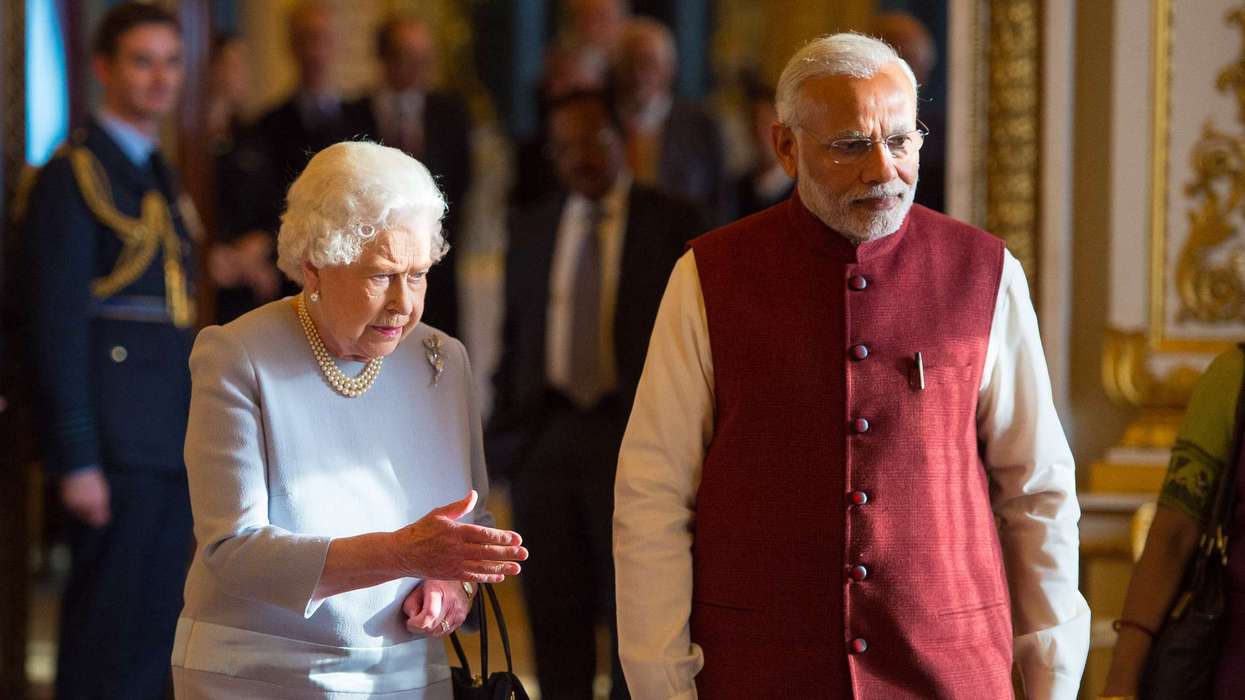

MEMBERS of the British Asian communities have been urged to share their memories of the late Queen as part of the Queen Elizabeth Digital Memorial project led by the Cabinet Office.
The online archive reached a new milestone last month with the publication of public recollections, new historical material, and a fully searchable record of her official engagements, an official statement said.
Available at www.queenelizabeth.com, the project included a first selection of memories submitted by people who met or saw Queen Elizabeth II during her 70-year reign. Launched in April to mark the 100th anniversary of the late monarch’s birth, these archives now include a digitised version of the Court Circular covering every official engagement from 1952 to 2022, alongside newly published archive photographs, videos and documents.
Zaki Cooper, a member of the Digital Memorial Committee and former palace press secretary, said the late Queen was known for building strong ties with Britain’s Asian communities over seven decades.
“This included the historic visits to different faith communities during her golden jubilee in 2002, including Highgate Hill Murugan Hindu Temple and Guru Nanak Gurdwara in Leicester.”
He recalled one engagement during his time working at Buckingham Palace, when she visited Krishna Avanti Primary School in Harrow, north London, as a highlight of her diamond jubilee tour in 2012.
Cooper said the Queen regularly met members of Asian communities at garden parties and investiture ceremonies.
“She was a true multi-faith monarch, engaging with all the different communities that form the rich tapestry of the UK. Over the course of her reign, she also visited India three times: in 1961, 1983, and 1997.”
He urged people to contribute their own recollections.
“We know that members of the community will have their own special memories of Queen Elizabeth. Perhaps they met her or know someone who did? Or they have a special memory of seeing her on a particular occasion on television? We’d love for people to share their memories by going to the website.”
Among the latest additions to the memorial is a personal video from William, the Prince of Wales, who recalls having tea with his grandparents, Queen Elizabeth II and Prince Philip, at Windsor Castle during his childhood.
According to the statement, the digital memorial forms one of three official commemorative projects honouring Queen Elizabeth, alongside the planned physical memorial in St James’s Park and the Queen Elizabeth Trust.
Further memories are expected to be published throughout 2026.