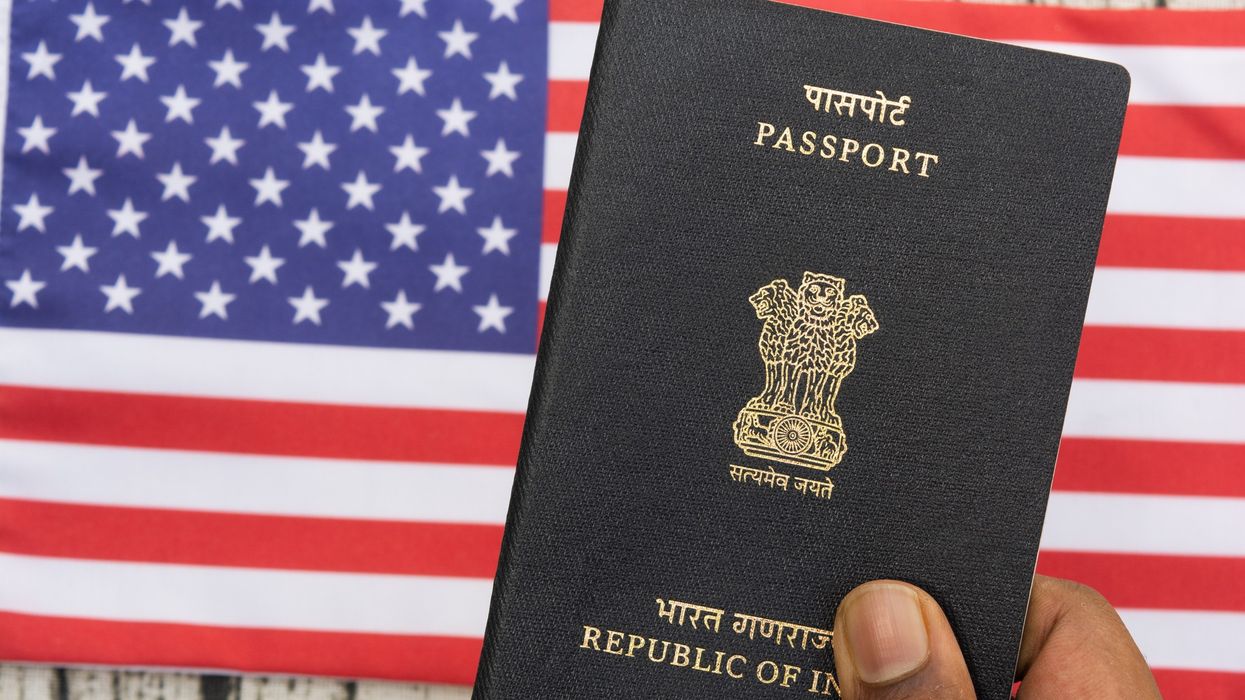

A record 96,917 Indians were arrested while crossing illegally into the US between October 2022 and September 2023, according to the latest US Customs and Border Protection (UCBP) data.
Indians arrested while crossing the US border unlawfully have reportedly witnessed a five-fold increase in the past years.
In 2019-20, 19,883 Indians were apprehended. In 2020-21, 30,662 Indians were arrested while in 2021-22 this number was 63,927, according to the data.
Of the 96,917 Indians arrested between October 2022 and September this year, 30,010 were caught on the Canadian border and 41,770 at the frontier with Mexico.
Those arrested are classified under four categories — accompanied minors, individuals in a family unit, single adults, and unaccompanied children.
Single adults make up the largest category. In fiscal year 2023, 84,000 Indian adults crossed into the US illegally. 730 unaccompanied minors were among the arrested people.
The US federal government's fiscal year runs from October 1 to September 30.
Meanwhile, Senator James Lankford said on the Senate floor on Thursday (2) that these people take about four flights including through countries like France to be able to get to Mexico, the closest airport, and then literally take a bus rented by the cartels up to the border to be dropped off for their last delivery.
"So they can say, ‘I have fear in my country,” Lankford said. “So far this year we’ve had 45,000 people from India that have crossed our southern border, paid the cartels, crossed into our country, and said they have fear in their country,” Lankford said.
He reiterated what he’s said many times, that the criminal cartels in Mexico are coaching migrants from all over the world on what to say and where to go in order to “game” the asylum process and get into the country while they await an asylum hearing.
“Listen this doesn’t make sense to just about everyone in the world. Just about everyone in the world has shifted on this except for us. We’re literally inviting people from all over the world to exploit our system,” he said in his remarks about America’s broken asylum system and the areas that need to be addressed in policy.
“We take refugees here from all over the world. Asylum seekers are on the same standard. They’re supposed to go to the next safe place, get there, and request asylum. That is the international standard, but we don’t do that here,” he said.
(PTI)






 Curator Emma Slocombe with ikat robes and arabachi coats in the Peter the Great Room in Blickling Hall Amit Roy
 View of the entrance to Blickling Hall on a rainy autumn dayAmit Roy
 Kente cloth from Ghana in the Long Gallery in Blickling Hall
 Decoration in the Great Hall at Blickling Hall Amit Roy
 Palampore fragment made in coastal south-east India in the Brown Room in Blickling Hall Amit Roy
 Bed valance dating from early 1700s in the Italian Print Room at Blickling Hall Amit Roy
 Indian inspired fabric draped on sofas in the South Drawing Room in Blickling Hall Amit Roy
 Indian inspired fabric draped on sofas in the South Drawing Room with Indian carpet in Blickling Hall Amit Roy
 Karun Thakar has picked out the geometric patterns in the bookcase and the Kente cloth in the Long Gallery in Blickling Hall Amit Roy
 Large tapestry depicting Peter the Great defeating the Swedish army at the Battle of Poltava in 1709 Amit Roy
 ikat robes and arabachi coats in the Peter the Great Room in Blickling Hall Amit Roy
 Baghs and kanthas made by women provide contrast to the men only portraits in the Great Hall at Blickling Hall Amit Roy
 Baghs and kanthas in the entrance Great Hall at Blickling Hall Amit Roy
 Baghs and Kanthas in the Great Hall in harmony with stained glass window at Blickling Hall Amit Roy
 Kimonos reflect Japanese influence in Upper Ante Room in Blickling Hall Amit Roy
 Kimono in Upper Ante Room in Blickling Hall
 A view of the Palace and fort at Agra shows romantic side of India Amit Roy
 Blickling Hall Amit Roy
 Table carpet, European 1670-1680 Amit Roy
 Unfinished 17th century Italian embroidery in the Print Room at Blickling Hall Amit Roy
 Picture of Kashmir shows a romantic view of India Amit Roy
 A panel of Ashburnham bed hangings made in Gujarat for sale in Europe in the Brown Room in Blickling Hall Amit Roy
 Colcha made in the 1600s by women in Bengal for the Portuguese market in the Long Gallery at Blickling Hall Amit Roy




