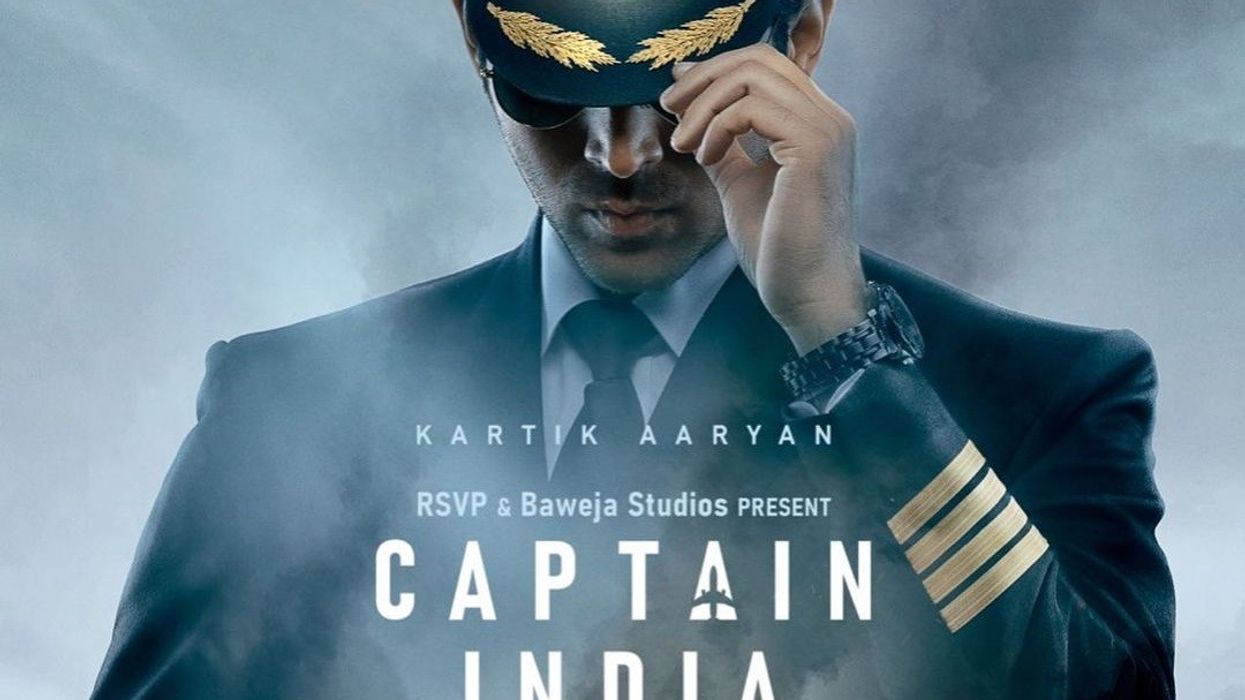

Days after the official announcement of Kartik Aaryan’s next film Captain India, producer Subhash Kale had accused the makers of plagiarism. Kale had said that his upcoming film Operation Yemen is based on the same real-life incident as Aaryan’s Captain India.
The producer was talking about Operation Raahat, a 2015 operation wherein the Indian Armed Forces under the leadership of General V K Singh evacuated Indian and foreign citizens from Yemen during the Yemeni crisis.
The latest we hear is that the plagiarism row has been resolved after Kale spoke to producer Harman Baweja. “I spoke to Harman Baweja yesterday. We were misinformed about certain things and the timelines. We thought we registered the film first. Harmanji told me that they have been working on the film for a long time. But due to the Covid-19 pandemic, they had not approached anybody. He spoke to me with clarity. My best wishes are with him and the entire team of Captain India. I realized that even they have put a lot of effort into their project. We had feared that somebody leaked our story and gave it to them,” Kale tells a publication.
He goes on to confirm that both films are based on the same incident. “Yes, both films are indeed based on the same episode. Since it is a true incident and all the details are there in the public domain, one cannot claim to have the rights over a subject. Not just 2, even 4 films can be made on the same episode. Also, I never used the word “plagiarism”. I just meant that both films are similar. They registered the script in 2017. We, meanwhile, started working in 2016. The cousin of our director Sanjay Sankla was the pilot in this mission. So, we began work in 2016, but we started developing the script only in 2019-20. And then we completed writing it on June 7, 2021. We had started approaching artists,” he concludes.
Captain India is jointly produced by Harman Baweja and Ronni Screwvala of RSVP Films. Hansal Mehta is attached to direct.