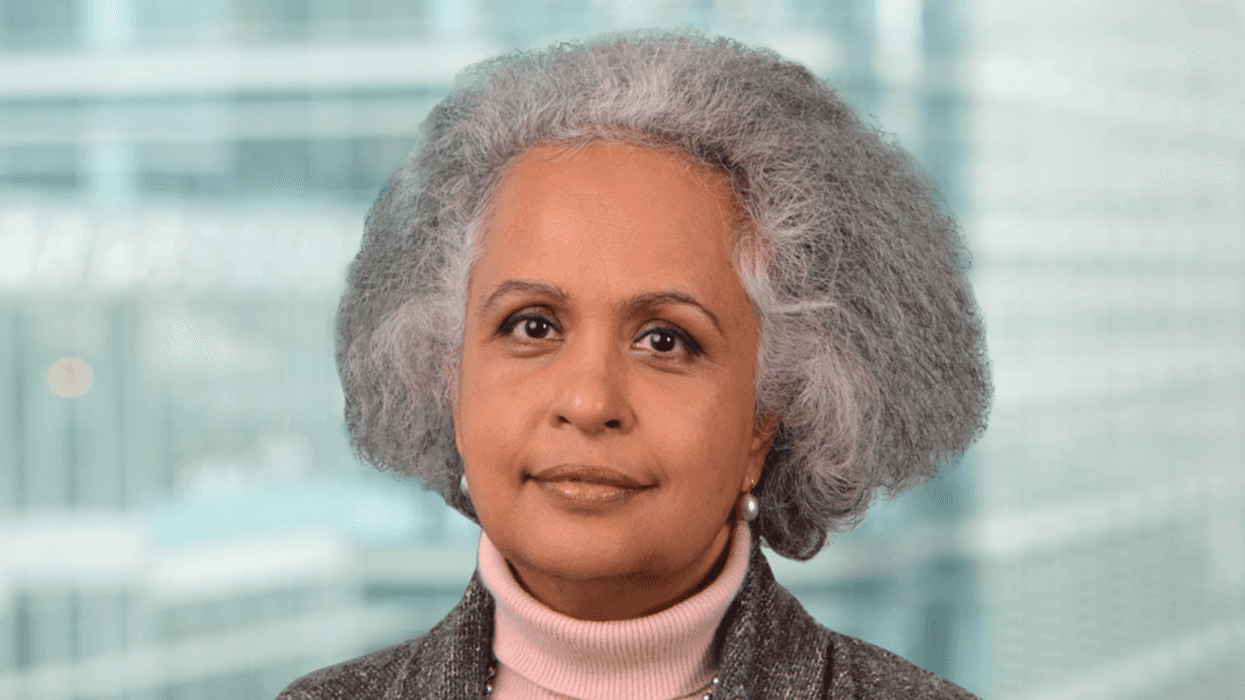

WHEN HSBC Holdings announced Pam Kaur as group chief financial officer in October 2024, it was, on the surface, a milestone appointment. Kaur became the first woman to hold the role in the bank’s 160-year history. Yet within HSBC, the decision was understood less as a symbolic breakthrough than as a strategic signal – a recognition that the nature of financial leadership itself was changing.
Kaur stepped into the role at a moment of deliberate reinvention. Under chief executive Georges Elhedery, HSBC was dismantling layers of complexity built over decades of global expansion. The old model – once captured in the slogan “the world’s local bank” – had begun to show strain in an era defined less by seamless globalisation than by geopolitical fragmentation.
The scale of that challenge was structural. With more than 210,000 employees and overlapping regional and global reporting lines, HSBC’s size had become, in parts, a drag on its own agility. Decision-making slowed, capital allocation became cumbersome, and complexity started to act as a hidden tax on performance. For a modern CFO, this is not an operational inconvenience but a strategic vulnerability.
Kaur’s arrival coincided with a radical answer. From January 2025, HSBC reorganised into four core businesses: Hong Kong, the group’s high-growth Asian engine; the UK, serving as the domestic anchor; a global Corporate and Institutional Banking unit; and International Wealth and Premier Banking, targeting affluent cross-border clients.
Behind the new structure lies a strategic logic that reflects the realities of a more divided world. By separating the UK and Hong Kong into standalone divisions, HSBC has effectively constructed what analysts describe as a “geopolitical firewall”. The design allows the bank to navigate diverging regulatory pressures from London and Beijing without shocks in one jurisdiction automatically reverberating through the other. In this sense, structure itself becomes a tool of risk management.
This is the essence of what has come to be described as the “Kaur effect”: a shift in the CFO’s mandate from optimising global synergies to insulating the institution against geopolitical volatility. It is a philosophy shaped by Kaur’s own career, which has unfolded less in the calmer cycles of expansion and more in periods of stress, scrutiny and reset.
“I don’t see my career as a series of isolated milestones,” she recently told the Indian newspaper The Tribune. “Each role added to my experience and eventually led me to HSBC.” That sense of accumulation – of learning through disruption – has become a defining feature of her leadership.
Born in Chandigarh, India, Kaur studied at Panjab University before moving to the UK, qualifying as a chartered accountant and joining Ernst & Young in 1986. “Moving from India to the UK required intent, resilience, and confidence,” she recalled. “Those were very different times, with very few women in senior leadership roles.”
Her early career included roles at Citigroup, Deutsche Bank, Royal Bank of Scotland and Lloyds TSB, often during periods of restructuring or regulatory pressure. One defining moment came during the 2008 global financial crisis, when managing relationships with regulators and stakeholders sharpened her approach to risk and resilience.
By the time she joined HSBC in 2013 as group head of audit, she had developed a profile that diverged from the traditional finance chief. Rather than rising through treasury or deal-making, Kaur built her expertise in audit, risk and compliance – disciplines that now sit at the heart of modern financial strategy.
Her ascent within HSBC was steady but consequential. From audit, she moved into wholesale market and credit risk, before being appointed group chief risk officer in January 2020. In June 2021, her remit expanded further to include compliance, placing her at the centre of the bank’s engagement with regulators across jurisdictions.
Since formally assuming the CFO role in January 2025, Kaur has anchored her approach around what she describes as three pillars: “discipline, performance and delivery”. “Our strategy is built on careful assessment of macroeconomic conditions, disciplined capital allocation, and strong risk management,” she explained.
Those principles have translated into tangible actions. HSBC has streamlined its top leadership structure, replacing an 18-member executive committee with a tighter operating group to improve decision speed. A targeted efficiency programme, focused on senior management layers, aims to reduce costs while preserving front-line capability. At the same time, the bank has exited lower-return Western markets, including Canada and Argentina, freeing capital to reinvest in higher-margin Asian wealth corridors.
Through it all, Kaur has maintained a consistent emphasis on balance. “HSBC’s strength lies in its robust capital and liquidity position,” she said. “We continue to invest selectively to support long-term growth while balancing resilience and performance.”
Her influence extends well beyond the finance function. As an executive director on the board and a member of the group operating committee, she also oversees global sustainability and external communications – responsibilities that place her at the intersection of financial strategy, governance and corporate reputation.
Yet for all the scale of her remit, Kaur’s leadership style remains notably grounded. “My leadership is anchored in courage, humility, and integrity,” she has said. “Building strong teams and bringing out the best in people drives high performance.”
Kaur’s appointment carries undeniable symbolic weight in an industry still grappling with diversity at the top. She herself describes the milestone as “deeply humbling”, adding: “When I started my career, this role felt unimaginable.”
But symbolism alone does not define influence. As HSBC advances deeper into its strategic reset, the true measure of the “Kaur effect” will lie in outcomes – in whether the bank’s new architecture proves resilient in a world where economic power is increasingly split between East and West. If it does, Kaur will not simply have broken a glass ceiling; she will have helped redraw the blueprint of the modern global bank.
