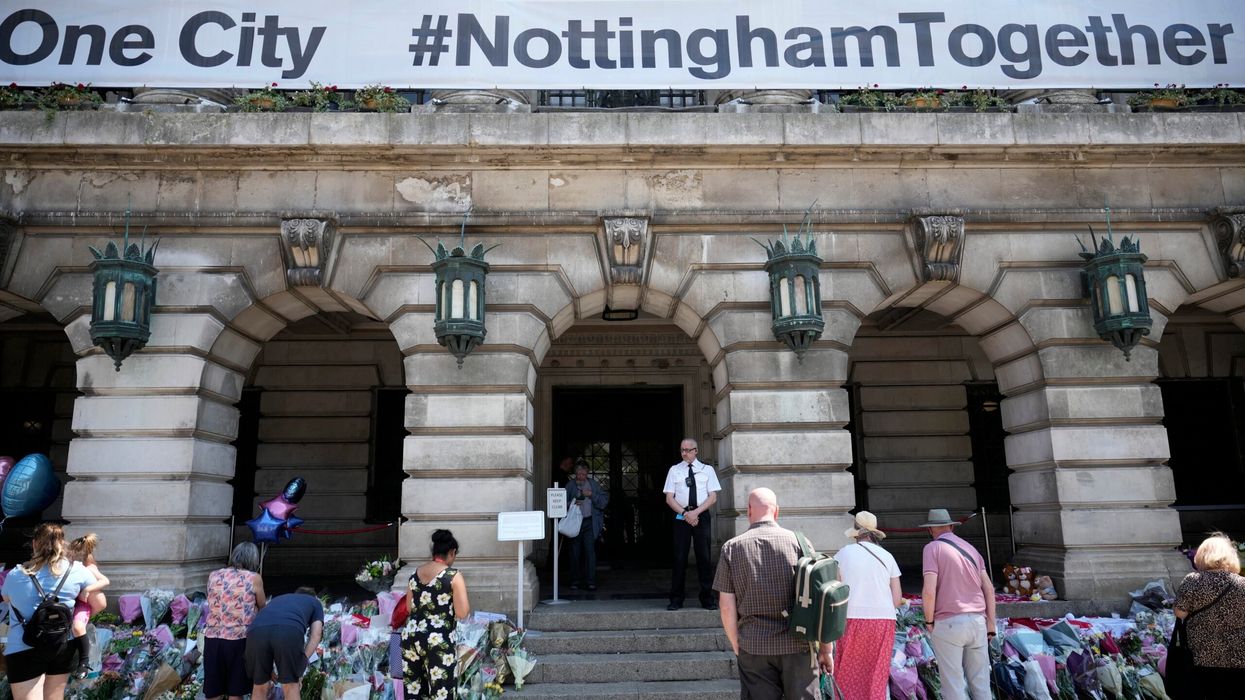

THE FAMILIES of the Nottingham attack victims have accused the NHS and police of having "blood on their hands" for the systemic failures that led to the deaths of Barnaby Webber, Grace O'Malley-Kumar, and Ian Coates on 13 June, 2023.
Valdo Calocane, who committed the murders, was psychotic and suffering from paranoid delusions. A report by the Care Quality Commission (CQC), published on Tuesday, highlighted "a series of errors, omissions, and misjudgements" by mental health services involved in Calocane's care, reported the BBC.
The CQC report found that key risk factors in Calocane's case, including his refusal to take medication and escalating violence, were either missed or omitted.
In a joint statement, the victims' families said, "Clinicians involved at every stage of Calocane’s care must bear a heavy burden of responsibility for their failures and poor decision-making. Along with the Leicestershire and Nottinghamshire police forces, these departments and individual professionals have blood on their hands."
Health secretary Wes Streeting met with the victims' families and acknowledged the "deeply distressing" failures outlined in the report. He noted that if the NHS had acted appropriately, "three innocent people might still be alive." He added, "It is a hard criticism to hear but one the NHS has to take on the chin." The families continue to insist that the inquiry into the case must be statutory, with the power to compel witnesses to provide evidence.
Emma Webber, Barnaby Webber's mother, expressed her grief and frustration, saying, "If any one of those missed opportunities had been addressed, I honestly think Barnaby would still be here today. But, they're not." She highlighted that these issues are systemic across the NHS and not limited to one mental health trust.
Dr Sanjoy Kumar, father of Grace O'Malley-Kumar, emphasised the need for a comprehensive inquiry with real authority, stating, "We would like it to be a statutory public inquiry led by a judge, and one that has real teeth to make a difference and change things in our country."
The CQC's review of Calocane's interactions with Nottinghamshire Healthcare NHS Foundation Trust from May 2020 to September 2022 revealed that, despite being sectioned multiple times under the Mental Health Act, critical risks were consistently overlooked, reported the BBC. The report also found "poor planning and engagement" with Calocane's family, who had raised concerns about his mental state.
Ifti Majid, chief executive of the NHS trust, offered his "sincere apologies" to the victims' families and acknowledged the trust's failures. He stated that processes and standards have been significantly improved since the review. The government announced that NHS England will conduct further scrutiny into Calocane's case as part of an independent homicide review.
Emma Webber warned that similar tragedies are inevitable unless there are drastic changes in the mental health care system, stating, "It’s not a one-off tragedy. There are more Valdo Calocanes out in our community," The Telegraph reported her as saying.






 Curator Emma Slocombe with ikat robes and arabachi coats in the Peter the Great Room in Blickling Hall Amit Roy
 View of the entrance to Blickling Hall on a rainy autumn dayAmit Roy
 Kente cloth from Ghana in the Long Gallery in Blickling Hall
 Decoration in the Great Hall at Blickling Hall Amit Roy
 Palampore fragment made in coastal south-east India in the Brown Room in Blickling Hall Amit Roy
 Bed valance dating from early 1700s in the Italian Print Room at Blickling Hall Amit Roy
 Indian inspired fabric draped on sofas in the South Drawing Room in Blickling Hall Amit Roy
 Indian inspired fabric draped on sofas in the South Drawing Room with Indian carpet in Blickling Hall Amit Roy
 Karun Thakar has picked out the geometric patterns in the bookcase and the Kente cloth in the Long Gallery in Blickling Hall Amit Roy
 Large tapestry depicting Peter the Great defeating the Swedish army at the Battle of Poltava in 1709 Amit Roy
 ikat robes and arabachi coats in the Peter the Great Room in Blickling Hall Amit Roy
 Baghs and kanthas made by women provide contrast to the men only portraits in the Great Hall at Blickling Hall Amit Roy
 Baghs and kanthas in the entrance Great Hall at Blickling Hall Amit Roy
 Baghs and Kanthas in the Great Hall in harmony with stained glass window at Blickling Hall Amit Roy
 Kimonos reflect Japanese influence in Upper Ante Room in Blickling Hall Amit Roy
 Kimono in Upper Ante Room in Blickling Hall
 A view of the Palace and fort at Agra shows romantic side of India Amit Roy
 Blickling Hall Amit Roy
 Table carpet, European 1670-1680 Amit Roy
 Unfinished 17th century Italian embroidery in the Print Room at Blickling Hall Amit Roy
 Picture of Kashmir shows a romantic view of India Amit Roy
 A panel of Ashburnham bed hangings made in Gujarat for sale in Europe in the Brown Room in Blickling Hall Amit Roy
 Colcha made in the 1600s by women in Bengal for the Portuguese market in the Long Gallery at Blickling Hall Amit Roy