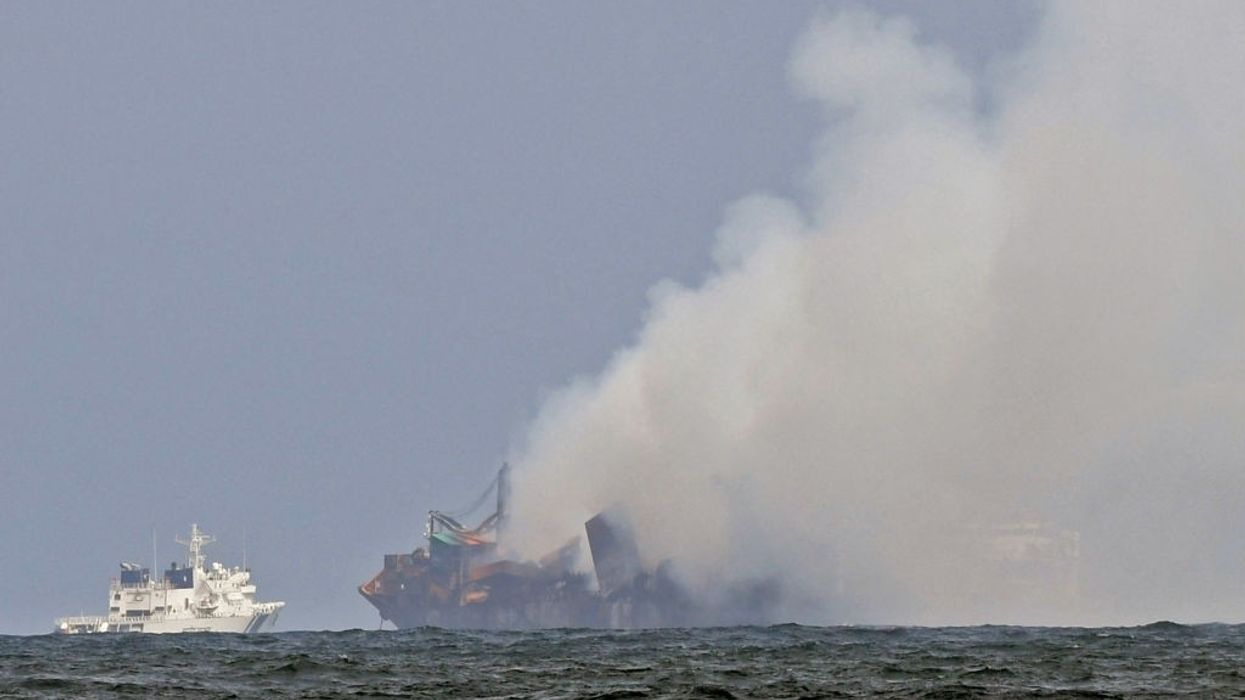

SRI LANKAN authorities said they will sue the owners of a Singapore-registered cargo carrier that has burned for 11 days off the island's west coast and caused its worst-ever marine pollution.
Police said a criminal investigation was also launched into the blaze aboard the MV X-Press Pearl, which was carrying 25 tons of nitric acid and a huge quantity of plastic raw materials.
The intense fire, still burning at the rear of the 186-metre (610-feet) vessel, has destroyed much of the cargo, some of which also fell into the Indian Ocean.
Tons of microplastic granules have inundated the south Asian nation's famed beaches, forcing a fishing ban and sparking fears of ecological devastation.
Sri Lanka's Marine Environment Protection Authority said it met attorney general Sanjaya Rajaratnam on Sunday (30) to plan legal action against the owners of the vessel, its crew, as well as insurers.
"We have gone through the details and will be taking action against those responsible," MEPA chairperson Dharshani Lahandapura told reporters in Colombo.
She said they were, however, yet to assess the environmental damage, but she believed it was the "worst marine pollution" Sri Lanka has ever suffered.
Sri Lanka's navy chief, vice-admiral Nishantha Ulugetenne, who was also at Sunday's talks with the island's chief prosecutor, said the X-Press Pearl was still on fire, but the blaze was now under control.
"It will take a few more days to completely extinguish the fire," Ulugetenne said, adding that there was no danger of the vessel breaking up.
But he ruled out towing it away from Sri Lankan waters until the fire was completely put out and experts examined the vessel for any structural weaknesses.
International salvage firm SMIT is leading efforts to douse the flames and is being assisted by Sri Lanka's navy and the Indian coastguard.
The three-month-old ship was heading to Colombo from Gujarat, India. It had previously visited Qatar and Dubai and was due to go to Malaysia and Singapore after calling at Colombo.
The 25-member crew, who have already been evacuated from the ship, will be questioned, police said.
Authorities said last week they believed the fire was caused by a nitric acid leak that the crew had been aware of since May 11.
"The captain and the crew were in quarantine, but health authorities have told us that we can question them from tomorrow," Ajith Rohana, a police spokesperson, said.
"We have already sent samples of polluted seawater and burnt debris from the vessel for a forensic report."
The ship's owners, X-Press Feeders, said the vessel's hull remained intact and there was no damage to its fuel tanks.
Fishermen have been banned from the 80-km (50-mile) stretch of the coast, where tons of plastic pellets have washed up, sparking a massive clean-up effort.
Fisheries minister Kanchana Wijesekera said the government would compensate them for their expected losses.
At least 4,500 fishermen were affected at the fishing and tourist resort of Negombo, officials from the Roman Catholic church in the area said as they pleaded for financial aid.
Priest Sujeewa Athukorale said there were also fears of reduced demand for seafood from the area over contamination fears.