

Preet Kaur Gill, a British Sikh member of Parliament for the Opposition Labour Party, has written to UK ministers calling for “urgent action” over a spike in anti-Sikh hate crimes in the country.
In her role as Chair of the All Party Parliamentary Group (APPG) on British Sikhs, Gill has written a joint letter to Indian-origin Home Secretary Suella Braverman and Communities Secretary Simon Clarke pointing to recent Home Office statistics on hate crimes for the year-ending March 2022.
“I am deeply concerned by these new statistics. 301 hate crimes against Sikhs were reported in 2021-22, up from 112 in 2020. The 169% increase is compared to a 38% increase in reported religious hate crimes overall,” she writes in her letter, posted on Twitter on Monday.
“I am writing therefore to ask that you take urgent action to reverse this alarming trend and protect the Sikh community by implementing the recommendations of the APPG reports, specifically regarding the i) term ii) definition and iii) support for anti-Sikh hate crime reporting,” she said.
The Labour MP also referenced the recent case of a British Sikh community leader and priest, Avtar Gill, who was brutally attacked in June while walking home in Manchester and remains in hospital with life-changing injuries. Last week, his attacker was jailed for three years after pleading guilty to the assault.
“This was a horrific attack of a much loved family member and community leader which deeply shocked the public,” Detective Inspector Mark Astbury from Greater Manchester Police said after the verdict at Manchester Crown Court.
The 2021-22 Home Office statistics released last week showed a record high in hate crimes, with anti-Muslim or Islamophobic cases at the highest among religious hate crimes at 3,459 cases reported during the period, followed by anti-Jewish or antisemitic crimes at 1,919 cases. There were 701 anti-Christian and 161 cases of anti-Hindu hate crimes reported in the same period.
Overall, 156,000 offences were recorded by police across England and Wales in 2021-22, considered the biggest annual jump since the Brexit referendum in June 2016. Racially-motivated crimes accounted for 70 per cent of offences, followed by sexual orientation (17 per cent), disability (9 per cent), religion (6 per cent) and transgender identity (3 per cent).
The number of hate crimes recorded has been on the rise in recent years, a trend the Home Office believes is likely to have been “mainly driven by improvements in crime recording by the police”.
Hate crime in Britain is defined as any criminal offence which is perceived, by the victim or any other person, to be motivated by hostility or prejudice towards someone based on a personal characteristic.
(PTI)






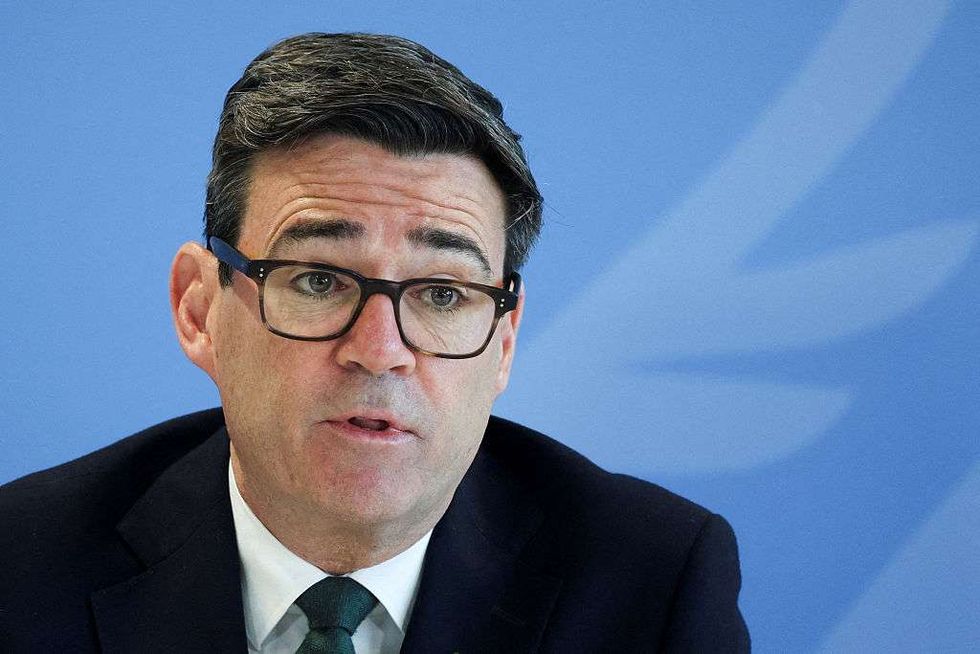 Andy Burnham (Photo by Temilade Adelaja / POOL / AFP via Getty Images)