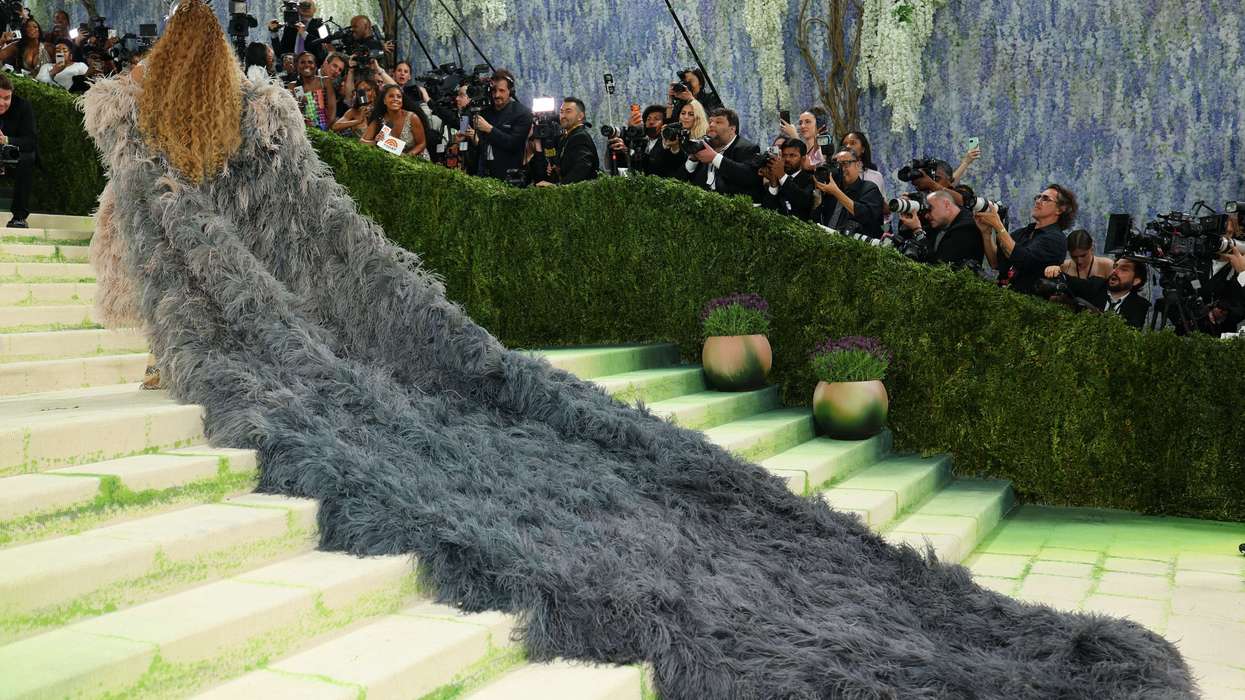

Highlights
- Kerala-based Extraweave and Neytt Homes created the Met Gala carpet for the fourth time
- The 2026 carpet took nearly 90 days to complete and involved close to 480 workers
- This year’s design focused on technical precision and material refinement rather than visible motifs
A global design story that began in Kerala
Before the cameras arrived at the Met Gala in New York, months of work were already unfolding inside weaving facilities in Cherthala, Kerala.
For decades, Extraweave Pvt. Ltd. has specialised in large-format natural-fibre carpets, operating largely as a B2B manufacturer for international retailers and hospitality projects. Its work has supplied brands including Crate & Barrel, Pottery Barn and Restoration Hardware, while its luxury design arm Neytt Homes has focused on bringing Kerala craftsmanship into a more contemporary global design space.
Their association with the Met Gala began through Fireworks, a long-term US client that has worked with Extraweave for over 15 years on high-end projects. According to the company, the first Met commission arrived as a confidential assignment with strict technical and aesthetic requirements. Only later did the team realise the carpet was intended for fashion’s most photographed event.
The 2026 edition marked their fourth Met Gala collaboration following earlier contributions in 2022, 2023 and 2025.
Designing a carpet that supported the spectacle without overpowering it
This year’s Met Gala theme, “Fashion Is Art”, shaped not only the exhibition but also the philosophy behind the carpet itself.
Rather than approaching the surface as a decorative centrepiece, the Kerala team focused on creating what they described as a refined foundational layer capable of supporting the wider artistic vision unfolding above it.
The entrance concept for 2026 moved away from the traditional carpeted staircase and towards a more immersive artistic environment. Because the final artistic treatment and hand-painted interventions would later be completed in New York, the role of the Kerala team became more technical and material-driven.
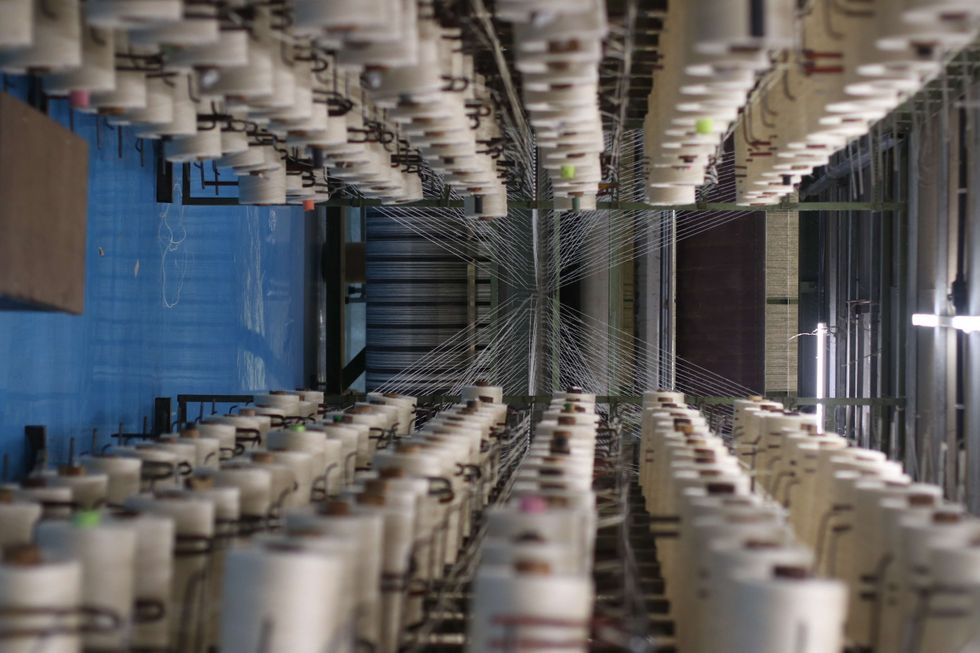 To achieve that finish, the team used a premium fine-grade sisal fibre sourced from MadagascarNeytt
Instead of bold motifs or visible patterns, the emphasis was placed on consistency, durability, weave precision and surface elegance. The carpet was intentionally designed to quietly support the larger visual narrative rather than compete with it.
To achieve that finish, the team used a premium fine-grade sisal fibre sourced from Madagascar. Compared with previous years, the expectations around refinement and uniformity were significantly higher.
The carpet passed through nearly 14 specialised processes from fibre stage to completion, excluding repeated quality checks carried out throughout production. Much of the innovation centred on tighter weave construction, smoother finishing and achieving greater consistency while preserving the natural character of the fibre.
The craftsmanship hidden beneath every photograph
While the carpet appeared seamless on screen, much of the work involved solving problems most guests would never notice.
One of the biggest technical concerns was the weave structure itself. It needed to be tight enough to prevent high heels from sinking into the carpet or catching in the weave, while also remaining smooth enough to protect delicate couture garments from snagging as guests moved across it.
Maintaining consistency across 57 large-format rolls became another challenge because natural fibres behave differently depending on humidity, finishing conditions, tension and handling during production.
From fibre preparation to dispatch, the process took close to 90 days. Nearly 480 people contributed across departments including yarn processing, weaving, finishing, inspection, logistics and quality control.
The completed carpet eventually covered around 6,840 square metres before being transported to New York for its final artistic transformation.
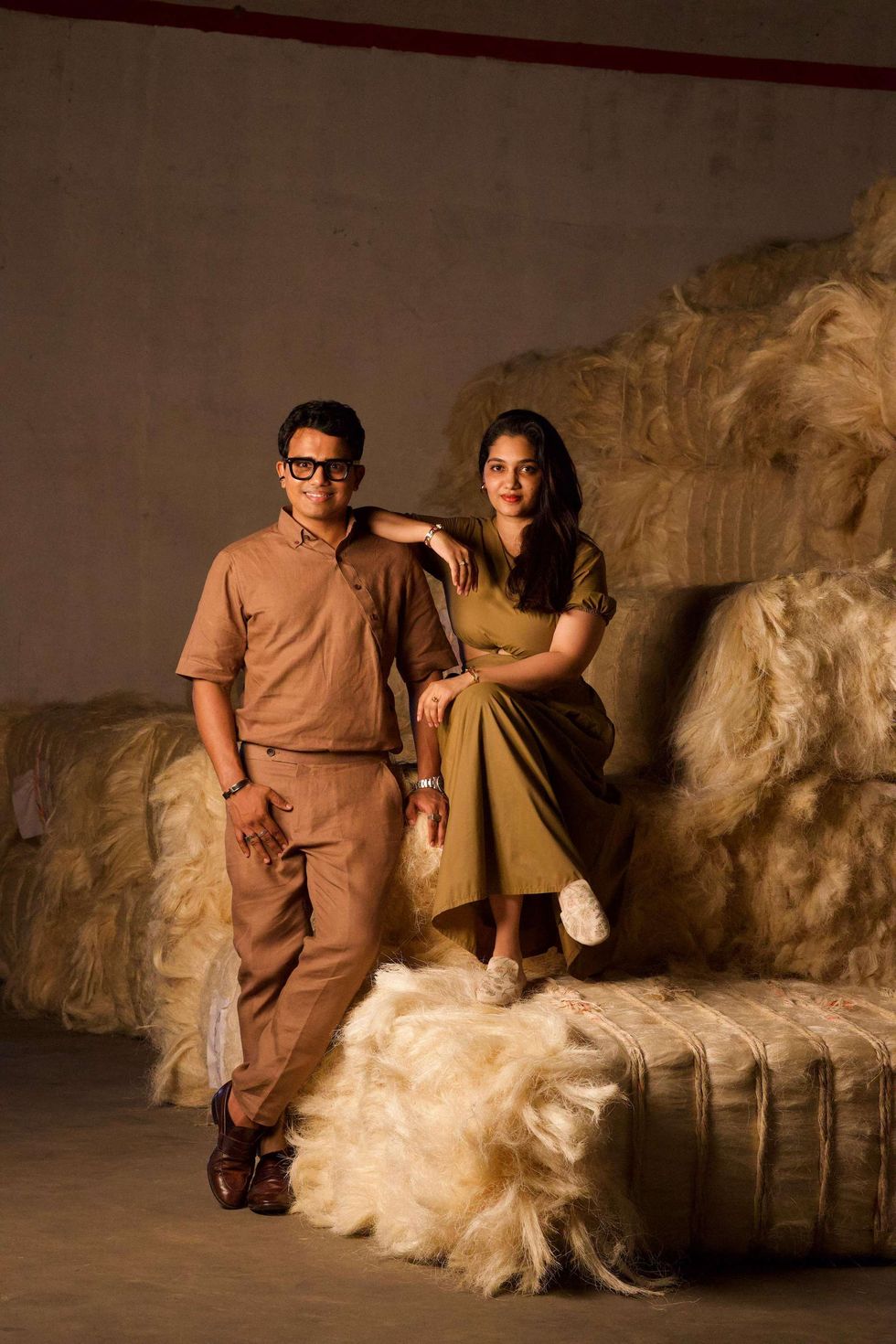 SIVAN and NIMISHANeytt
For the team behind Neytt Homes and Extraweave Pvt. Ltd., the most emotional moment often arrives only after the work is complete. As live visuals from the Met Gala begin appearing online, artisans and workers in Kerala watch something created by their hands become part of one of the world’s most closely watched cultural events.
Founder and chief executive Sivan Santhosh and his wife, creative director Nimisha Sivan, see that connection between local craftsmanship and global visibility as central to the brand’s identity. For them, the carpet is never simply a backdrop, but the starting point for the fashion moments, stories and artistic expressions that unfold across it.