
Highlights
- Lalbaugcha Raja began in 1934 after traders and fishermen in the area faced losing their marketplace
- A vow to Lord Ganesha gave rise to the tradition of the ‘Navsacha Ganpati’
- The Kambli family has been creating the distinctive idol since 1935
- Bollywood stars, cricketers and prominent business families now visit the pandal during Ganesh Chaturthi
- The celebration attracts huge crowds, with reports of around 1.5 million devotees visiting each day
Every year, Lalbaugcha Raja becomes one of the biggest attractions of Ganesh Chaturthi in India.
Huge crowds queue for darshan, while Bollywood stars, sports personalities and some of India's most prominent business families also make their way to the famous Ganapati idol.
For many devotees, however, the fascination with Lalbaugcha Raja goes far beyond its celebrity visitors. The story began more than 90 years ago, with a community of traders and fishermen facing the loss of the marketplace on which their livelihoods depended.
So how did a local Ganapati tradition become a major cultural and celebrity destination?
How did Lalbaugcha Raja begin?
The origins of Lalbaugcha Raja are linked to the working communities of Lalbaug, including local fishermen and traders who depended on the area's market for their livelihoods.
When a major market was shut, the community was left looking for a permanent place to continue its trade. According to accounts of the mandal's history, the traders and fishermen made a navas, or religious vow, to Lord Ganesha, asking for a permanent marketplace.
When their efforts to secure a new market succeeded, the community installed a public Ganesha idol in September 1934 as an expression of gratitude.
The Lalbaugcha Raja Sarvajanik Ganeshotsav Mandal was established that year, turning the community's vow into an annual tradition.
That origin is important to understanding why the idol became known as Navsacha Ganpati, referring to the belief that Lalbaugcha Raja fulfils the wishes of devotees who make a vow.
The tradition has continued for more than nine decades, with the mandal also carrying out social and educational activities alongside its annual celebrations.
Why do devotees call Lalbaugcha Raja ‘Navsacha Ganpati’?
The belief surrounding Lalbaugcha Raja is one of the biggest reasons for the extraordinary crowds.
Devotees visit the idol with personal wishes, prayers and vows, hoping that their wishes will be fulfilled. The tradition has passed from one generation to another, turning a local Ganapati celebration into a major pilgrimage during Ganesh Chaturthi.
There are also different forms of darshan. Devotees can join the queue for Mukh Darshan to see the idol, while the Navsachi or Charan Sparsh route is associated with devotees seeking closer darshan.
The scale of the crowds is significant. The Indian Express has reported an average of around 1.5 million devotees a day, with numbers increasing at particularly busy points during the festival.
For many visitors, therefore, the long wait is not simply about seeing a famous idol. It is part of a personal act of faith.
How did the idol get its famous look?
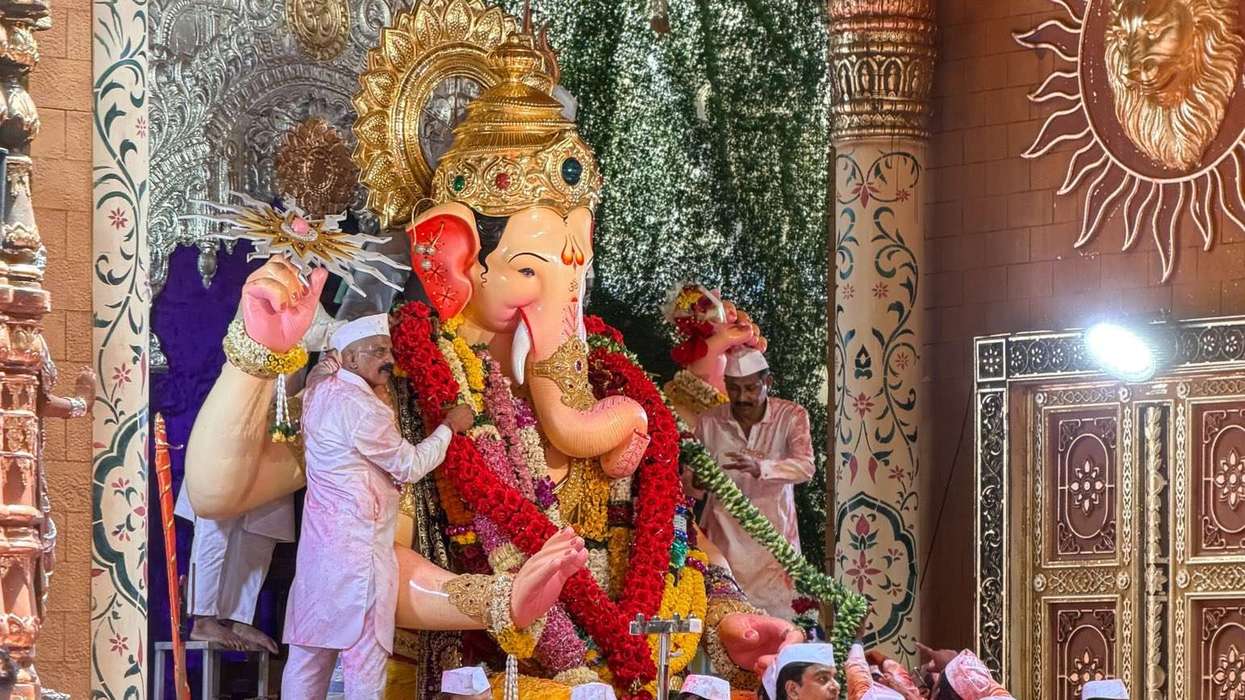
Another important part of Lalbaugcha Raja's story belongs to the Kambli family.
The family began creating the idol in 1935, when sculptor Madhusudan Donduji Kambli took up the work. Three generations of the family have since continued the tradition.
Over the decades, the Kambli family helped establish the distinctive face, posture and overall appearance associated with Lalbaugcha Raja.
The design became so closely connected with the identity of the idol that the family has also been associated with efforts to protect its intellectual property.
This recognisable appearance has helped distinguish Lalbaugcha Raja from the thousands of other Ganapati idols installed across India during Ganesh Chaturthi.
When did Lalbaugcha Raja become a celebrity attraction?
As the annual celebration grew, Lalbaugcha Raja's fame moved far beyond the neighbourhood where it began.
The pandal became a regular destination for well-known names from Bollywood, cricket and business. Amitabh Bachchan, Sachin Tendulkar, Shah Rukh Khan and Ranveer Singh are among the high-profile figures associated with visits to the Raja, while the Ambani family has also been seen seeking blessings.
Their visits have given the celebration another layer of visibility, particularly through photographs and social media coverage during Ganesh Chaturthi.
But celebrity attention is a relatively recent part of a much older tradition.
The stars did not create Lalbaugcha Raja's reputation. They became part of a celebration that had already built a huge following through generations of devotees.
That helps explain why the idol continues to attract enormous crowds beyond its celebrity connections.
How did a local Ganapati become so famous?
The answer lies in the combination of faith, history, community and growing public visibility.
Lalbaugcha Raja began with ordinary people hoping to secure a place to earn their living. That story gave the idol a strong connection with the local community before its popularity spread far beyond Lalbaug.
Over the decades, the annual darshan became increasingly associated with enormous crowds and high-profile visitors. Bollywood stars, sports personalities, business families and other public figures have all been seen seeking blessings at the pandal, adding to its visibility.
But the mandal's role has also extended beyond the annual festival. Its official website says it has carried out social and educational activities since 1934, including initiatives intended to support underprivileged communities.
That has helped Lalbaugcha Raja become more than an annual spectacle.
Why does Lalbaugcha Raja attract such huge crowds?
The sheer scale can be difficult to understand without knowing the story that came first.
The idol is not famous simply because it is large or because celebrities visit. Its reputation has been built over generations around the belief that it is Navsacha Ganpati, the Ganapati associated with wishes being fulfilled.
For devotees, the journey to Lalbaug can therefore be deeply personal. Some arrive carrying prayers for their families, careers, relationships or financial stability. Others return every year because visiting the Raja has become a family tradition.
The numbers also demonstrate how far that tradition has grown. In the first three days of the 2026 celebrations, the mandal received donations worth around £250,000, including cash, gold and silver.
But the money is only one measure of the idol's reach.
The bigger story is that a Ganapati celebration that began with a community's search for a permanent marketplace in the 1930s has grown into one of India's most recognisable Ganapati traditions.
More than 90 years later, people still make the journey to Lalbaug for the same basic reason: faith in the Raja and the hope that their wishes will be heard.


 BAPS
BAPS