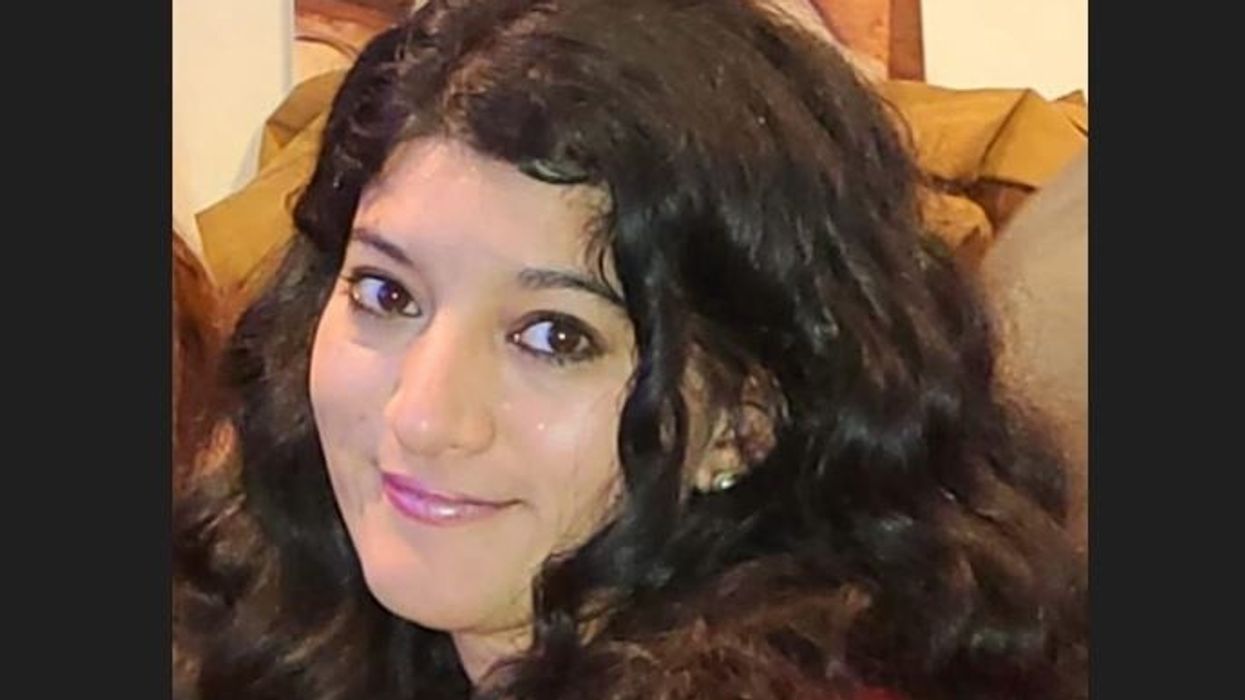

ZARA ALEENA's family has expressed their anguish over her "preventable" death, as revealed in an ongoing inquest.
Aleena, a 35-year-old law graduate, was killed by Jordan McSweeney while walking home in Ilford, east London, in June 2022. McSweeney received a life sentence with a minimum of 38 years in December 2022 after admitting to her murder and sexual assault.
Farah Naz, Aleena’s aunt, told the inquest that a "crumbling justice system" played a role in her niece’s death.
McSweeney had been released from prison on licence on 17 June 2022 and, after breaching the conditions of his release, was slated to be recalled to prison on 24 June, just two days before the attack on Aleena.
Naz stressed the family's torment over the preventability of Zara's death and criticised the justice system meant to protect citizens. She recounted Zara's vibrant life, her role as a caregiver for her mother and grandmother, and her aspirations to work as a legal assistant at the Royal Courts of Justice.
“Since her death we have been campaigning so that our daughters, sisters, friends can be safe and protected as Zara never was. This is Zara’s legacy," Naz told the jury at East London Coroner’s Court in Walthamstow.
She described Aleena as a “carefree spirit with the most caring heart” who had dedicated her time to helping resettle refugees in the UK. She highlighted Zara’s plans for 2022, which included buying a home, finding a life partner, and starting a family. Tragically, these dreams were cut short when Aleena was attacked and killed while walking home from an evening out, she said.
The inquest, led by Coroner Nadia Persaud, aims to explore the circumstances surrounding Zara's death and whether any actions or omissions by state bodies contributed. McSweeney, who had a lengthy criminal history starting from age 13, was deemed a high-risk individual by the Probation Service.
Read Also: Sunak pledges annual caps on visas
Kim Thornden-Edwards, the chief probation officer, testified that McSweeney should have been classified as high risk since 2021. She acknowledged the complexities in assessing McSweeney’s risk level, noting his history of burglaries and thefts. Thornden-Edwards also discussed the challenges in distinguishing between medium and high risk in assessments.
Additionally, Thornden-Edwards mentioned that probation staff are trained to thoroughly investigate information in risk assessments and avoid inflating or downplaying risks. She noted that electronic monitoring tags cannot be issued without an address, a factor that could have influenced McSweeney's case.
The inquest also heard from a forensic pathologist who stated that the cause of Aleena’s death was blunt force head injury and neck compression.
The proceedings are expected to last four weeks, as the court continues to delve into the factors leading to Zara Aleena's tragic death, reports said.






 Curator Emma Slocombe with ikat robes and arabachi coats in the Peter the Great Room in Blickling Hall Amit Roy
 View of the entrance to Blickling Hall on a rainy autumn dayAmit Roy
 Kente cloth from Ghana in the Long Gallery in Blickling Hall
 Decoration in the Great Hall at Blickling Hall Amit Roy
 Palampore fragment made in coastal south-east India in the Brown Room in Blickling Hall Amit Roy
 Bed valance dating from early 1700s in the Italian Print Room at Blickling Hall Amit Roy
 Indian inspired fabric draped on sofas in the South Drawing Room in Blickling Hall Amit Roy
 Indian inspired fabric draped on sofas in the South Drawing Room with Indian carpet in Blickling Hall Amit Roy
 Karun Thakar has picked out the geometric patterns in the bookcase and the Kente cloth in the Long Gallery in Blickling Hall Amit Roy
 Large tapestry depicting Peter the Great defeating the Swedish army at the Battle of Poltava in 1709 Amit Roy
 ikat robes and arabachi coats in the Peter the Great Room in Blickling Hall Amit Roy
 Baghs and kanthas made by women provide contrast to the men only portraits in the Great Hall at Blickling Hall Amit Roy
 Baghs and kanthas in the entrance Great Hall at Blickling Hall Amit Roy
 Baghs and Kanthas in the Great Hall in harmony with stained glass window at Blickling Hall Amit Roy
 Kimonos reflect Japanese influence in Upper Ante Room in Blickling Hall Amit Roy
 Kimono in Upper Ante Room in Blickling Hall
 A view of the Palace and fort at Agra shows romantic side of India Amit Roy
 Blickling Hall Amit Roy
 Table carpet, European 1670-1680 Amit Roy
 Unfinished 17th century Italian embroidery in the Print Room at Blickling Hall Amit Roy
 Picture of Kashmir shows a romantic view of India Amit Roy
 A panel of Ashburnham bed hangings made in Gujarat for sale in Europe in the Brown Room in Blickling Hall Amit Roy
 Colcha made in the 1600s by women in Bengal for the Portuguese market in the Long Gallery at Blickling Hall Amit Roy




