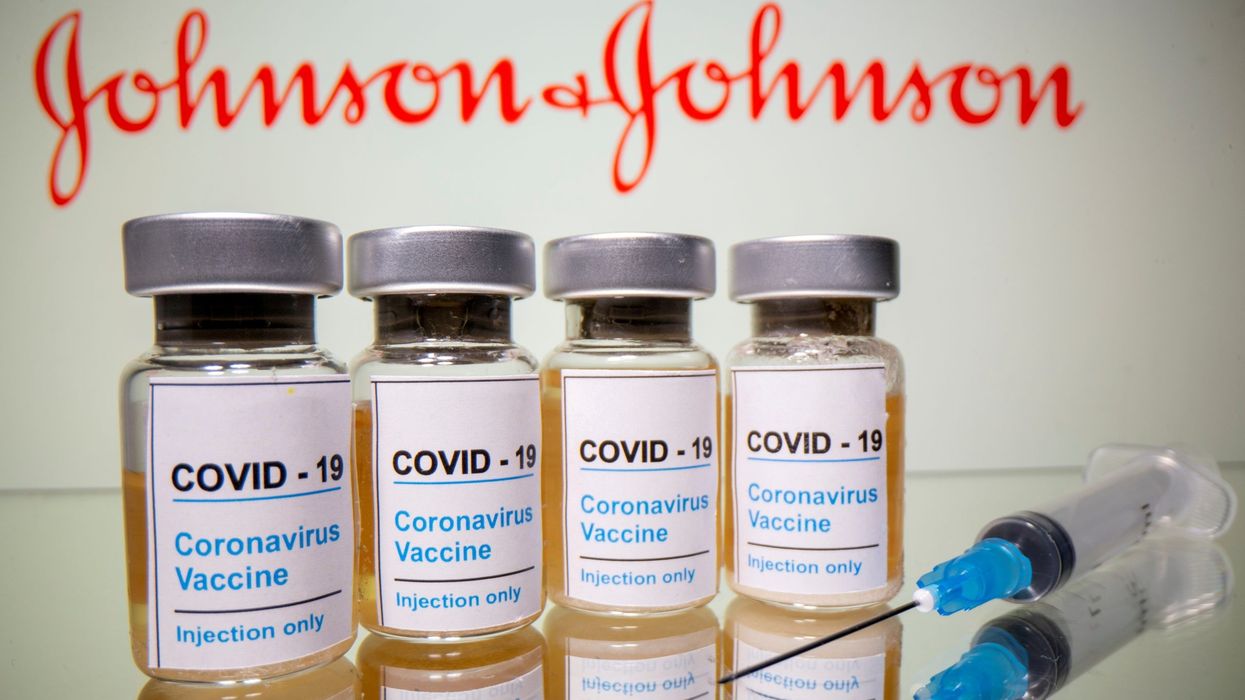

Johnson and Johnson's single-shot Covid-19 vaccine is expected to be imported to India for "fill and finish" by June or July, as reported by an Indian financial daily on Friday (23).
Fill and finish is the final step in the manufacturing process of putting the vaccine into vials or syringes, sealing them and packaging them up for shipping.
India has said it would fast-track emergency approvals for Covid-19 vaccines authorised by western countries and Japan, paving the way for possible imports of Pfizer, Johnson & Johnson and Moderna shots.
This will exempt companies from carrying out local safety trials for their vaccines.
India recorded the world's highest daily tally of coronavirus cases for a second day in a row on Friday (23) with 332,730 new cases, while daily deaths from Covid-19 also jumped by a record.
"The Johnson & Johnson vaccines are expected to be imported to India by June-July 2021. Johnson & Johnson is working closely with Biological E to facilitate the ongoing tech transfer to India," Renu Swarup, secretary, Department of Biotechnology, Ministry of Science and Technology, told Reuters partner ANI on Thursday (22).
Pharmaceutical company Biological E Ltd had told Reuters in February it was looking to contract-manufacture roughly 600 million doses of Johnson and Johnson's Covid-19 vaccine annually.
The Department of Biotechnology, Ministry of Science and Technology and a local representative for J&J did not immediately respond to Reuters requests for comment.